
An anonymous online campaign asking people in Italy to report the locations of Jews, Israelis and businesses connected to them has been shut down following an intervention by the country’s national coordinator for combating anti-Jew hatred.
The online form, which was circulated through social media and messaging groups, asked users to provide information about Jewish and Israeli guests staying at hotels, resorts and vacation rentals. It also requested reports about businesses, property purchases, events and other activities supposedly connected to what its authors called “Zionist tourism” and “Zionist neo-colonization” in Italy.
The campaign appears to have circulated primarily through networks in and around Milan. Users were asked to identify cities, streets, hotels and resorts where Israelis or Jews had been seen, provide sources that could be used to verify the reports and name local people or organizations considered trustworthy.
The form also asked whether activists in the area were already “managing the phenomenon,” suggesting that the information was not simply being collected for research, but could be used to coordinate future action against the people, properties and businesses being identified.
Although the questionnaire included a disclaimer claiming that it was not intended to profile anyone according to religion or nationality, Jewish leaders said the questions did exactly that.
Walker Meghnagi, president of the Jewish Community of Milan, compared the campaign to the identification and cataloguing of Jews during the 1930s.
“I think we’re going back to the 1930s, to hunting Jews,” Meghnagi said.
He warned that publishing or circulating information about where Jews can be found could place people in direct physical danger. The Jewish community forwarded the questionnaire to the appropriate authorities and called for Italy’s judiciary to intervene.
The form was removed after General Pasquale Angelosanto, Italy’s national coordinator for the fight against antisemitism, became involved.
Victor Fadlun, president of Rome’s Jewish community, described the campaign as “simply horrifying” and said it represented an attack on fundamental rights and the constitutional principles of the Italian republic.
Fadlun said Jews were being identified and exposed solely because of their religion or because of an alleged relationship with Israel. He described the campaign as a manhunt and thanked Angelosanto for helping to have the questionnaire removed.
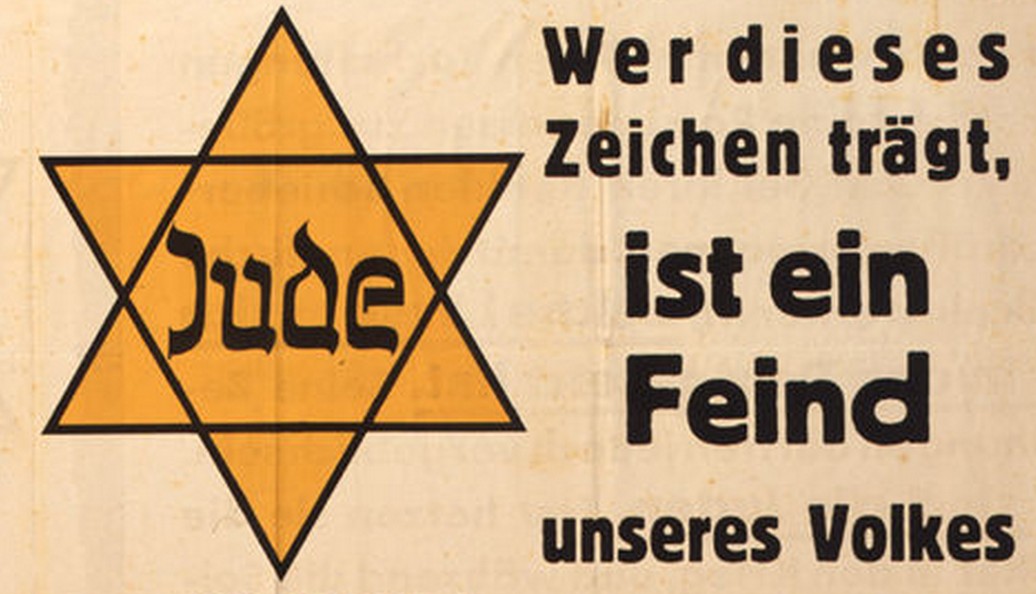
Livia Ottolenghi, president of the Union of Italian Jewish Communities, said the form amounted to the creation of “new yellow stars.”
She accused those behind the campaign of using the word “Zionist” to disguise a familiar form of anti-Jew hatred, in which Jews are portrayed as outsiders participating in a secret effort to control land, businesses or government.
Ottolenghi said claims that Israelis were establishing hidden “colonies” on Italian territory recalled the conspiracy theories that helped prepare the ground for Italy’s racial laws of 1938. She also accused much of Italian civil society of remaining silent as anti-Jew rhetoric has become increasingly acceptable.
The questionnaire stated that the information it collected would be received by the Global Sumud Movement, an international network associated with flotilla campaigns attempting to reach Gaza.
Representatives of the movement in Italy denied creating or commissioning the form. They said they knew nothing about the questionnaire before it was reported by the media and had not reviewed it before it was removed from the internet.
“Zionism is one of the issues we work on, but we do not hunt Jews,” the organization said, adding that it was considering its own response to the unauthorized use of its name.
The identity of the person or group that created the questionnaire has not been established publicly.
Italian Deputy Secretary of State Alessandro Morelli said he was prepared to file a complaint against unknown individuals responsible for the campaign. Morelli called the questionnaire abhorrent and said those responsible must not be allowed to act with impunity.
Italy’s Senate President Ignazio La Russa also condemned the initiative, describing it as a map of Jews disguised as a survey of “Zionist tourism.” Members of Prime Minister Giorgia Meloni’s governing coalition said the campaign recalled some of the darkest periods of European history.
The campaign comes during a sharp increase in reported anti-Jew incidents across Italy.
The Milan-based Foundation of the Contemporary Jewish Documentation Center recorded 963 incidents in 2025, based on 1,492 reports submitted to its observatory. Of those incidents, 643 occurred online and 320 involved conduct in the physical world.
The 2025 figure represented an increase of approximately 10 per cent over 2024, double the number recorded in 2023 and four times the number documented in 2022. Physical assaults rose by 225 per cent.
Hostility toward Israelis has also become increasingly visible in Italian tourist destinations. Protest campaigns in Sardinia have called for Israeli tourists and soldiers to be prevented from vacationing on the island, while demonstrators have appeared at airports to confront passengers arriving from Israel.
Jewish groups and individuals have also faced exclusion from public events. Members of the Jewish Brigade, which fought alongside Allied forces during the liberation of Italy from fascism, have been harassed at events commemorating Italy’s Liberation Day, while a Jewish LGBTQ organization was removed from an Italian Pride march.
The questionnaire has now disappeared from the internet, but the information already submitted, who received it and what was intended to be done with it remain unclear.
For Italy’s Jewish community, the language may have changed from “Jew” to “Zionist,” and the lists may now be compiled through an online form instead of on paper, but the purpose remains disturbingly recognizable: identify Jews, record where they can be found and encourage others to treat their presence as a threat.




Leave a Reply