
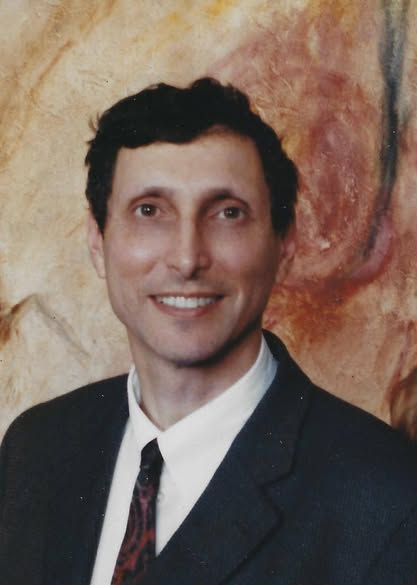
Rabbi Ronnie Cahana, the longtime Montreal spiritual leader, poet and activist whose rabbinate continued even after a devastating brain-stem stroke left him largely paralyzed, died unexpectedly on Thursday, August 13. He was 72.
Cahana was Rabbi Emeritus of Shaare Zion Beth-El Congregation and had served as spiritual leader of Congregation Beth-El in Town of Mount Royal beginning in 2001. His rabbinic career, however, stretched far beyond Montreal. Born in Borås, Sweden on November 15, 1953 and raised in the United States, Cahana came from a long rabbinic family and served Jewish communities in Bolivia, Sweden, the United States and Canada.
He was the son of Rabbi Moshe Hillel Cahana and renowned Holocaust survivor and artist Alice Lok Cahana. His mother’s experiences during the Holocaust, and the family she lost, remained an important part of his life and his understanding of Jewish responsibility. Cahana’s brother, Rabbi Michael Cahana, also entered the rabbinate.
Long before illness changed the physical course of his life, Cahana had established himself as a rabbi who was not particularly interested in remaining safely behind a pulpit. He was deeply involved in interfaith work and social activism, co-founded the Nordic Center for Inter-religious Dialogue and participated in a peace mission during the Bosnian War. He received a Swedish Peace Prize for that work and, in 2012, was awarded the Queen Elizabeth II Diamond Jubilee Medal for his contribution to Canada.
His son, Rabbi Dvir Cahana, recalled one story this week that captured that side of his father particularly well.
While Cahana was serving as a rabbi in Sweden, revelations emerged about IKEA founder Ingvar Kamprad’s involvement with pro-Nazi and fascist movements as a young man. Kamprad publicly apologized, describing his actions as the mistakes of a misguided youth. Cahana was not satisfied with a public relations apology.
According to Dvir, his father wrote directly to Kamprad and told him, in effect, that what Kamprad could dismiss as youthful misadventure had left Cahana without aunts and uncles and had left him serving a congregation filled with Holocaust survivors. If the apology was genuine, Cahana argued, Kamprad needed to face the people who had actually been harmed. Dvir said Kamprad subsequently apologized directly to members of his father’s community.
Kamprad’s involvement with Swedish pro-Nazi and fascist groups, and his later public apology for it, are well documented.
Then, on July 15, 2011, Cahana’s life changed almost instantly.
At 57, while serving as rabbi of Beth-El, he suffered a massive brain-stem stroke. He remained fully conscious but was initially unable to move virtually any part of his body other than his eyelids, a condition known as locked-in syndrome. His family developed a system through which he could communicate by blinking as letters were called out, allowing him, painstakingly, to dictate thoughts, prayers, sermons and poetry.
One of the messages he blinked out in those early days became almost a statement of purpose for everything that followed: “I am in a broken place, but there is holy work to do.”
And Cahana did the work.
Over time he regained some ability to speak, although he remained paralyzed and eventually lived at the Donald Berman Maimonides Geriatric Centre in Côte Saint-Luc. He continued writing Torah commentary and poetry, continued teaching, continued speaking about faith and human dignity and, perhaps most remarkably, refused to allow his physical condition to become the definition of his life.
During the COVID-19 pandemic, when residents of long-term care facilities were among the most isolated people in Quebec, Cahana also became a powerful voice for those living inside the system. In a 2020 message shared by Rabbi Lisa Grushcow of Temple Emanu-El-Beth Sholom, Cahana insisted that he was not a statistic, but a fully sentient human being whose humanity needed to be honoured.
His daughter, award-winning photojournalist and filmmaker Kitra Cahana, documented part of that extraordinary second chapter of his life in the National Film Board documentary Perfecting the Art of Longing. The film followed Cahana and his family during the pandemic and explored the strange intersection of physical confinement, family, love, faith and an inner life that remained very much alive.
Those themes were never far from Cahana’s own writing. After the stroke he continued producing poetry and divrei Torah and received support from the Canada Council for the Arts for his writing. His body had imposed extraordinary limitations on him, but intellectually and spiritually he continued doing much of what he had always done: teaching, questioning, writing and looking for holiness in places where most people would have difficulty seeing it.
Cahana was also, very clearly, a family man. He and his wife Karen Knie-Cahana shared more than four decades together and raised five children Kitra, Tamira, Briah, Dvir and Sapira, who remained intimately involved in his life and care after the stroke. He also lived to know his granddaughters, something Dvir wrote brought his father enormous joy.
In announcing his father’s death, Dvir described a man who approached seemingly impossible problems as merely challenges that had not yet been overcome. He wrote about a rabbi who could speak to a powerful CEO or a taxi driver with the same conviction, who loved people intensely and who somehow maintained what his son called “radical optimism” despite circumstances that would have crushed many others.
It is difficult to think of a more appropriate description of the last 15 years of Ronnie Cahana’s life.
The stroke took away much of his physical independence. It did not take away the rabbi, the poet, the husband, the father, the activist or the teacher. If anything, those years forced each of those parts of him into sharper focus.
Rabbi Ronnie Cahana is survived by his wife Karen, his children Kitra, Tamira, Briah, Dvir and Sapira, his grandchildren, his siblings and extended family.
The funeral will take place Sunday, August 16 at 11 a.m. at Paperman & Sons, followed by burial in the Beth-El section of Eternal Gardens Cemetery in Beaconsfield. Shiva will be observed at the family home in Montreal.
His son Dvir ended his tribute by describing his father with a play on the family’s priestly lineage: “My Aba truly was a Kohen Gadol.”
Baruch Dayan HaEmet.



Leave a Reply