






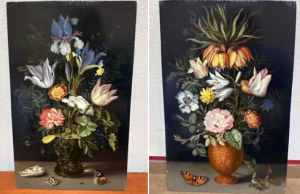
Two paintings once hanging in Adolf Hitler’s Munich offices nearly went under the hammer in a small town auction in Ohio for less than the price of a cheap used car. The floral still lifes, painted on copper by seventeenth century Dutch master Ambrosius Bosschaert, were part of the famed Schloss collection seized from a Jewish family in Paris in 1943. Nazis carted off three hundred and thirty three works from the Schloss home, shipping most to Munich to be earmarked for Hitler’s grand museum scheme in Linz. These two delicate works were tagged with inventory numbers S 16 and S 17 and locked into German records before vanishing into the fog of war.
Last week they reappeared in Newark Ohio at the Apple Tree Auction Center listed as unclaimed property. One had drawn bids of three thousand two hundred and fifty dollars. The other languished at a shocking two hundred and twenty five. Their true market value is estimated at one million dollars each. An anonymous tip reached the Monuments Men and Women Foundation and within hours founder Robert Edsel was on a plane to Ohio. The foundation compared old black and white photographs and wartime shipping manifests to the paintings. The match was exact. The numbers, the labels, even the crate markings lined up with the German inventory.
The sale was stopped cold. The auction house pulled the lots after being confronted with the evidence. The paintings are now being held securely while restitution is arranged with the heirs of the Schloss family. Edsel explained that the discovery was possible because of the foundation’s Art Leads program which encourages the public to send in tips about suspicious works. Without that program two of Hitler’s looted jewels would have been lost once again, sold off to buyers who had no idea of their bloodstained history.
The story of the Schloss collection is one of the darkest chapters of Nazi art theft. In April 1943 German forces stormed the Paris apartment of the family and stripped it bare. The collection included masterworks by Dutch and Flemish painters. Forty nine pieces were taken to the Louvre, twenty two were sold off, and the rest were shipped to Hitler’s Munich headquarters. Rose Valland, the French resistance heroine who secretly recorded Nazi plunder at the Jeu de Paume, later wrote that Hitler grumbled about getting only crumbs from the Schloss trove. Those crumbs are now worth millions and represent stolen heritage that was never meant to be bartered at bargain basement prices.
The two Bosschaert paintings are not just flowers on copper. They are the evidence of a crime and the reminder of a family stripped of its culture and legacy. For decades they were hidden in private hands before surfacing in Ohio with a pitiful price tag. Now they are on their way back to the descendants of the people who once cherished them. The discovery proves that the world of Nazi looted art is far from finished and that treasures with tragic pasts can surface anywhere even in the most unlikely corners of America.


Discover more from Montreal Jewish News
Subscribe to get the latest posts sent to your email.