

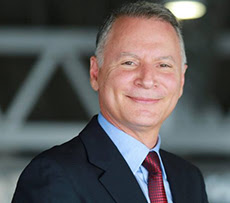
When nearly two hundred American plaintiffs filed suit in Washington DC in April 2025 it thrust into the spotlight a name seldom associated with warfare or terrorism, Bashar Masri, a Palestinian American billionaire celebrated for his urban development projects and Western partnerships. The one hundred eighty nine page complaint that accompanied the filing read like a thriller set beneath Gaza’s sands, describing a vast subterranean network of tunnels allegedly powered by solar grids from civilian projects, hotels turned into operational centers, and infrastructure financed by international development funds converted into weapons of war.
The case, Shalom et al versus Masri et al, is a civil action brought under the United States Anti Terrorism Act and the Justice Against Sponsors of Terrorism Act. The plaintiffs, survivors and family members of the victims of Hamas’s October 7 attack, allege that Masri and his corporate web knowingly provided material support to Hamas. Masri’s companies, Massar International, PADICO, PIEDCO, and their subsidiaries, stand accused of facilitating Hamas’s operations through their properties in Gaza, including the Gaza Industrial Estate, the Al Mashtal Hotel also called Ayan, and the Blue Beach Resort. The heart of the complaint is the claim that beneath these projects lay an elaborate tunnel network used by Hamas to cross into Israel and stage attacks, with surface level solar arrays providing electricity to the underground system. Plaintiffs describe how an anti tank battery was mounted on a GIE water tower and how tunnel shafts opened beneath the grounds of beachfront hotels where Hamas operatives allegedly lived and planned.
The lawsuit asserts that Masri’s business empire was an integral part of Hamas’s grand deception, providing legitimacy and cover for the group’s military buildup. The plaintiffs claim Masri was not a passive investor but an active facilitator, a man who deliberately integrated his commercial projects with Hamas’s terrorist infrastructure. They accuse his companies of partnering directly with Hamas leadership, using Western aid and development funds to build infrastructure that secretly served dual purposes, commerce on the surface and war beneath. One passage in the complaint states, “Above ground, the GIE was a showcase of peace and progress; below ground, it was a fortress of war.”
Among the most striking allegations are the accusations of coordination between Masri’s development officials and Hamas operatives on engineering projects that concealed weapons or tunnel shafts. The complaint lists project schematics, photos, and maps that the plaintiffs say demonstrate direct physical overlap between company managed infrastructure and Hamas’s operational grid. It claims that energy generated by solar installations was redirected underground to power tunnel ventilation and communications. There are references to blueprints of underground corridors intersecting with factory zones and guest wings of hotels, all allegedly owned or managed by Masri controlled entities.
Masri, who has long cultivated an image as a modernizer and advocate of Palestinian economic growth, has dismissed the claims as baseless political theater. In his statement he insists he has never supported or had contact with Hamas, framing the lawsuit as a politically motivated attempt to criminalize development. Internationally, his defenders describe him as one of the few Palestinian entrepreneurs capable of bridging Western capital and local economies. But for the plaintiffs’ legal team, led by veteran attorneys known for Anti Terrorism Act litigation, Masri is emblematic of a more sophisticated form of terror support, economic, logistical, and infrastructural rather than ideological.
“The world needs to understand,” one of the plaintiffs’ lawyers said after the filing, “that terror is not only financed with cash, it is built with concrete, steel, and power lines. The tunnels did not appear on their own. Someone drew the plans, someone funded the materials, and someone allowed it to happen.”
The case documents also describe alleged misuse of United States and international development funds. They claim millions in Western backed investment were funneled through entities that became fronts for Hamas, with proceeds used to build or maintain facilities later integrated into its military network. The complaint names foreign governments, NGOs, and development agencies whose grants were allegedly exploited under Masri’s watch. The tone throughout is damning and cinematic, suggesting an architectural conspiracy spanning continents.
Despite its gravity, the lawsuit faces immense procedural challenges. Plaintiffs have struggled to serve Masri, who resides primarily abroad, and have asked the court to authorize alternative service methods. Even if the case proceeds, the burden of proof remains formidable, the plaintiffs must establish that Masri’s companies acted knowingly and that their properties were materially used by Hamas for terrorist acts. In civil ATA litigation that evidentiary standard has historically proven difficult to meet. Yet the plaintiffs’ filings suggest they possess documents, photographs, and expert analysis tying Masri’s developments to tunnel locations later revealed by Israeli military operations after the 2023 war.
What makes this case especially potent is its symbolism. It shifts the focus from the battlefield to the boardroom, arguing that terrorism can be engineered under the guise of development. It asks whether blueprints, investment portfolios, and solar panels can serve as weapons in modern warfare. The complaint’s narrative reads less like a legal brief and more like an indictment of the blurred lines between enterprise and extremism.
Masri, once a regular at Harvard conferences and World Bank panels, has reportedly withdrawn from several Western boards since the suit’s filing. In Gaza, his projects remain scarred or destroyed, some reclaimed by Hamas, others by Israeli strikes. For the plaintiffs, the case is not just about compensation, it is about exposure. “We will show that those who built beneath the soil of Gaza were as responsible as those who fired from it,” another attorney said in a statement.
For now, the case awaits its first hearing. The tunnels it describes are invisible, their traces buried under rubble or silence. But the lawsuit’s imagery lingers, a billionaire developer accused of paving the ground for war, solar panels casting light into darkness, and luxury hotels standing above hidden corridors. If any of it is proven, it will redefine the boundaries of accountability in modern conflict. If not, it will remain a story about accusation and symbolism, an attempt to bring light to what was always meant to stay underground.


Discover more from The Montreal Jewish News
Subscribe to get the latest posts sent to your email.