




By Joseph Marshall
Thirty years ago this week, Israel was shaken by the assassination of Prime Minister Yitzhak Rabin. On the night of November 4, 1995, at the end of a peace rally in Tel Aviv, three bullets ended the life of a leader who had fought Israel’s wars and sought to reshape its future. The shock of that night still lingers, but so does the debate over what Rabin’s legacy truly represents. To some, he was a hero of peace. To others, he took the country down a dangerous path that ignored the risks of trusting an enemy sworn to its destruction.
The Soldier Who Built a Nation
Yitzhak Rabin was born in Jerusalem in 1922, long before Israel became a state. From his youth, he dedicated his life to defending the Jewish people. As a member of the Palmach, the elite fighting force of the pre-state Jewish community, he fought in the War of Independence and helped ensure the survival of the fledgling nation in 1948.
That same year, Rabin found himself at the center of one of Israel’s most controversial moments, the Altalena Affair. The ship Altalena, carrying arms and fighters from the Irgun, arrived on Israel’s coast despite government orders to halt it. Rabin, following directives from Prime Minister David Ben-Gurion, commanded troops who fired on the ship after it refused to surrender. The incident resulted in Jewish fighters firing on Jewish fighters, a trauma that haunted Rabin and shaped his belief that the state must have one army and one authority.
By 1964, Rabin was Chief of Staff of the Israel Defense Forces. Three years later, he led the military to victory in the Six Day War, a campaign that reunited Jerusalem and gave Israel control over Judea, Samaria and Gaza. The triumph cemented his reputation as one of Israel’s great commanders.
The Political Leader
After leaving the military, Rabin served as ambassador to the United States and later entered politics. He became prime minister in 1974, leading Israel through the aftermath of the Yom Kippur War. His first term ended in 1977 after a minor financial scandal, but he returned to power in 1992 at the head of the Labour Party, promising security and an end to conflict.
By then, the world was changing. The Cold War was over, and Israel faced new pressures to find peace with its neighbors. Rabin believed that peace required strength, but he also believed strength could allow Israel to take risks. That belief would define the rest of his political career.
The Oslo Accords
In 1993, secret negotiations in Norway led to the Oslo Accords, an agreement between Israel and the Palestine Liberation Organization. For the first time, Israel recognized the PLO as a legitimate representative of the Palestinian people, and Yasser Arafat recognized Israel’s right to exist. The deal called for Palestinian self-rule in parts of Gaza and the West Bank, with the promise of future negotiations toward a final agreement.
When Rabin shook Arafat’s hand on the White House lawn beside U.S. President Bill Clinton, the image was broadcast worldwide as a symbol of hope. “Enough of blood and tears,” Rabin said in his speech. But many Israelis were uneasy. Arafat’s organization had the blood of civilians on its hands, and the PLO Charter still called for the destruction of Israel. Many questioned whether Israel could afford to gamble its security on a man who had led decades of terror.
In the years that followed, waves of suicide bombings and terror attacks shattered the optimism that Oslo had inspired. To many Israelis, the dream of peace had become a nightmare.
Rabin’s Growing Divide with the Right
As opposition to Oslo grew, Rabin faced mounting anger from the political right and from Israelis who believed the government was giving away too much for too little. Settlers saw the peace process as a direct threat to their homes and security. Right-wing politicians, including Likud leader Benjamin Netanyahu, warned that the accords would bring violence rather than peace.
Netanyahu spoke at massive rallies where demonstrators carried signs accusing Rabin of betrayal. The tone of protest became more intense, and the divisions within Israeli society deepened. Rabin, a man of discipline and order, viewed many of his critics as extremists who did not understand the responsibilities of leadership.
Still, he underestimated the growing hatred. When warned about threats to his life, he reportedly refused to wear a bulletproof vest, insisting that no Israeli would ever murder another Israeli.
The Night of the Assassination
On the night of November 4, 1995, tens of thousands filled Tel Aviv’s central square for a rally supporting the peace process. Rabin was greeted with applause as he declared his commitment to peace and to the future of Israel. When the rally ended, he walked down the steps toward his car.
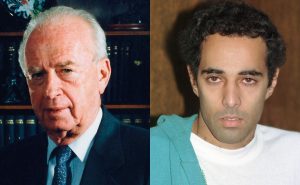
A young law student named Yigal Amir stepped out of the crowd and fired three shots. Two bullets struck Rabin in the back. He was rushed to hospital, but doctors could not save him. In his jacket pocket, they found the lyrics to the song “Shir LaShalom,” stained with his blood.
The Assassin and His Reason
Yigal Amir believed he was acting to save Israel from disaster. A deeply religious nationalist, he saw the Oslo Accords as a violation of Jewish law and a betrayal of the biblical land of Israel. In his view, Rabin was handing sacred land to enemies who would never make peace. During his trial, Amir said calmly, “I have no regrets. I did it for the people of Israel.”
His words shocked the nation. Yet his crime also exposed the deep fault lines within Israeli society. For many Israelis, the assassination was not only the murder of a leader but the moment when political disagreement became deadly.
The Aftermath and Legacy
Israel mourned as never before. Hundreds of thousands poured into the streets. Students held vigils. Soldiers wept. At Rabin’s funeral, President Clinton ended his eulogy with the now-famous words, “Shalom, chaver.” The country was united in grief, even as it remained divided in ideology.
Within months, the peace process began to unravel. Terror attacks increased. Israelis lost faith in the promises of Oslo, and in 1996, Benjamin Netanyahu was elected prime minister. Many believe that Amir’s bullets killed not only Rabin but also the momentum toward peace. Others argue that Oslo was doomed from the start because it demanded trust from a side that had never truly renounced terror.
Thirty Years Later
Three decades later, Rabin’s image still watches over Tel Aviv from the square that bears his name. Schoolchildren learn about him as a man who dreamed of peace. Yet the debate over his legacy continues. Was he a visionary who saw a path others could not, or a soldier who misunderstood the true nature of Israel’s enemies?
Rabin once said, “We must fight terrorism as if there is no peace, and work for peace as if there is no terrorism.” Those words captured both the hope and the paradox of his leadership.
Thirty years after that night in 1995, Israel is still wrestling with the same questions Rabin faced: how to pursue peace without sacrificing security, and how to hold a nation together when its divisions run so deep. His story remains a lesson in courage, leadership, and the high price of vision in a land where dreams and danger have always walked side by side.


Discover more from Montreal Jewish News
Subscribe to get the latest posts sent to your email.