

By Howie Silbiger
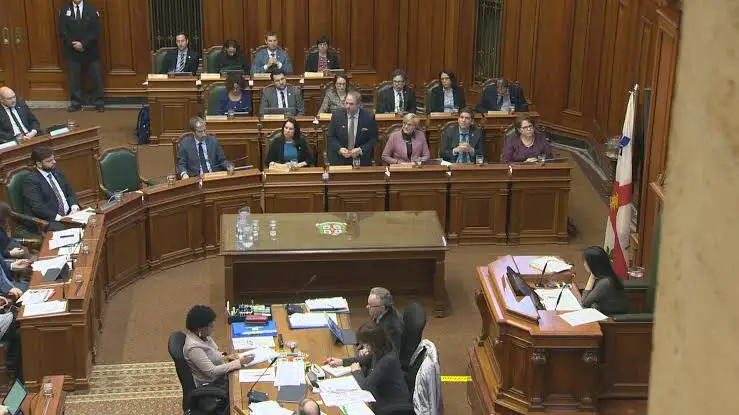
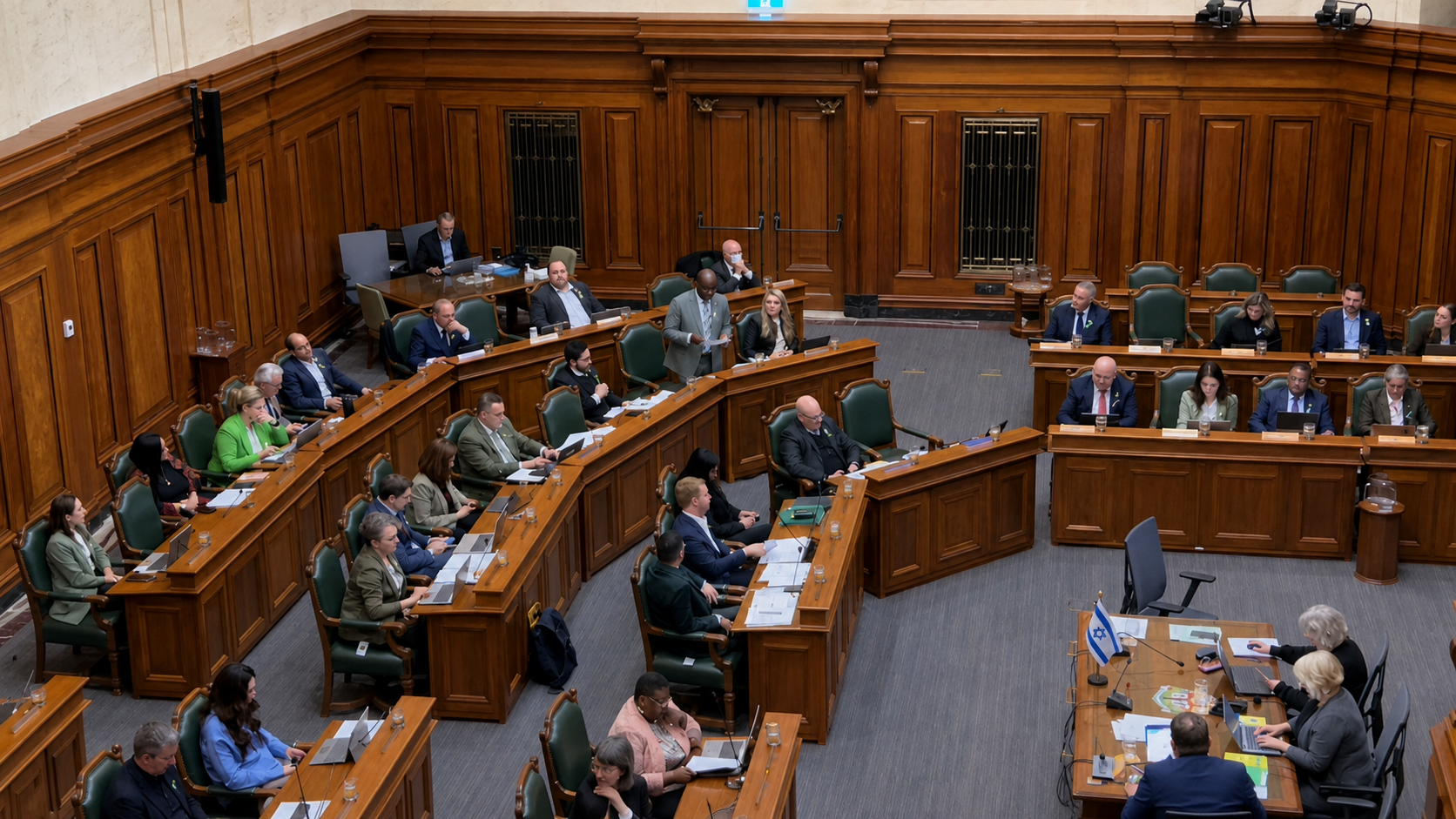
There has been a lot of discussion since Monday night’s vote at Montreal City Hall about whether the outcome should be considered a victory for Montreal’s Jewish community. The original Projet Montréal motion was gutted, the demand that Montreal cut its institutional ties with Israel was removed, and the accusations of genocide and apartheid were taken out. Mayor Soraya Martinez Ferrada deserves credit for forcing those amendments through council, but I have a hard time celebrating a night when 22 elected Montreal politicians voted to keep that language in the motion and 54 councillors eventually voted for what remained.
The original motion was not subtle. Projet Montréal councillor Nathalie Goulet, supported by opposition leader Ericka Alneus and councillor Alex Norris, wanted the City of Montreal to formally accuse Israel of genocide and apartheid and to suspend its institutional relationships with the Israeli government, Israeli institutions and Israeli municipalities. This was brought before a municipal council in Montreal, Quebec, less than three years after Hamas terrorists invaded Israel on October 7, 2023, murdered more than 1,200 people, kidnapped hundreds more and started the war that Projet Montréal suddenly wanted to adjudicate from City Hall.
Federation CJA revealed Tuesday just how much work went into stopping the original motion. More than 6,000 people signed its action alert and more than 150,000 emails were sent to City Hall. Federation, CIJA, CJPAC, grassroots organizations, community leaders and individual Montrealers spent weeks lobbying politicians, while members of Montreal’s Italian and Hellenic communities also wrote letters opposing the motion. That is an extraordinary amount of community effort required to convince municipal politicians not to accuse the world’s only Jewish state of genocide and apartheid and begin cutting Montreal’s ties with it, and that is one of the reasons I have difficulty calling the result a victory.
The Jewish community was forced to mobilize thousands of people and send 150,000 emails to stop something that never should have been considered legitimate municipal business in the first place. Yes, that effort worked, and yes, the worst parts of the motion were removed, but the standard cannot become that Jews should celebrate every time we manage to stop politicians from passing something even worse.
Federation CJA President and CEO Yair Szlak was unusually direct in his assessment of what happened during the debate. He wrote that Projet Montréal councillors spent nearly an hour repeating misinformation about Israel and the war while failing to refer to Hamas as a terrorist organization until that designation was added through the amendments. He called that omission “a lapse that disgraces this council,” and it is difficult to disagree.
Hamas is a terrorist organization under Canadian law. There is no ambiguity about that, yet elected officials were prepared to spend an hour discussing Israel’s actions, accusing the Jewish state of some of the most serious crimes imaginable, while somehow having difficulty properly identifying the terrorist organization that invaded Israel and started this war. That omission becomes even more serious when the entire argument being presented depends upon removing or minimizing how the war began.
The debate also exposed the double standard that has become increasingly acceptable whenever Israel is involved. Alex Norris compared Israel to Russia and argued that Montreal could not condemn crimes committed by Russia while refusing to condemn Israel. Russia invaded Ukraine in an unprovoked war of territorial conquest. Israel was invaded by Hamas terrorists who murdered, raped, kidnapped and deliberately targeted civilians. Those are not remotely comparable circumstances, yet the comparison was made in the Montreal City Council chamber as though October 7 were merely an inconvenient detail that could be pushed aside to make the political argument easier.
Federation raised another point that is difficult to ignore. Of all the atrocities, wars and human-rights abuses taking place around the world, somehow the international issue that Montreal City Council found necessary to debate at length was Israel. There have been no comparable municipal campaigns to sever Montreal’s relationships with governments responsible for some of the world’s worst human-rights abuses, nor has there been a parade of motions demanding that city councillors pronounce judgment on every other war taking place around the world. Israel, however, somehow keeps finding its way onto the agenda.
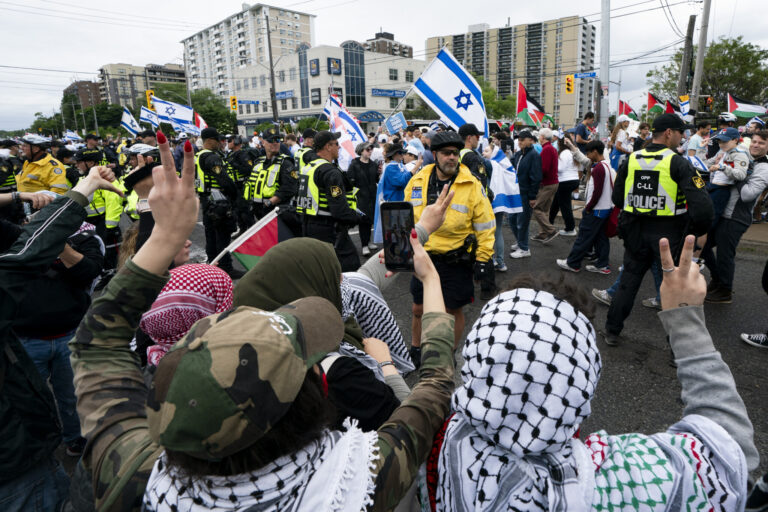
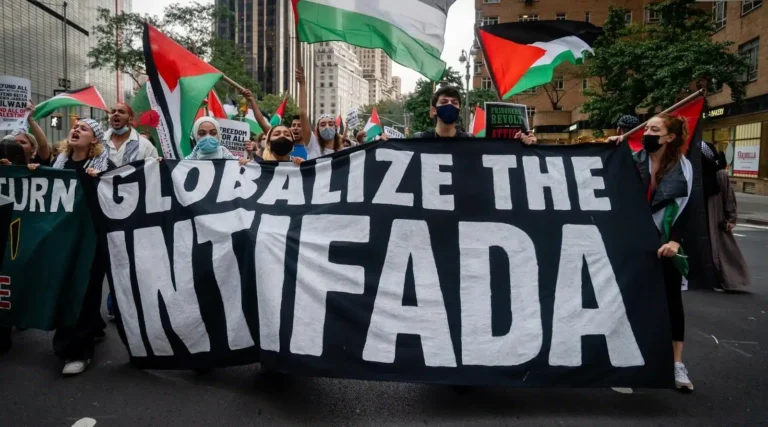
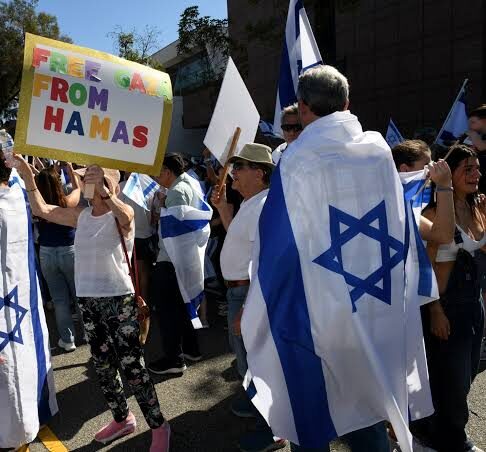
That obsession is taking place while Jews in Montreal are dealing with conditions in this city that would have been almost unthinkable a few years ago. Jewish schools have been shot at. Jewish institutions have been firebombed. Synagogues, schools and community organizations have spent enormous amounts of money and time on security. Jewish Montrealers have watched demonstrations filled with increasingly aggressive rhetoric take place throughout the city, while politicians repeatedly insist that hostility toward Israel exists in some completely separate universe from the hostility Jews are experiencing here. Against that backdrop, members of Projet Montréal thought it was appropriate to bring a motion to City Hall demanding that the Jewish state be branded genocidal, declared an apartheid state and isolated.
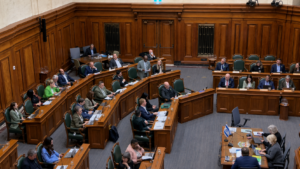
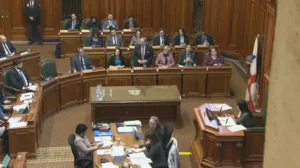
There is also something disturbing in the numbers from Monday night’s votes that should not disappear beneath the headlines about the amended motion. The amendments passed 38–22. That means 22 councillors voted against removing the accusations of genocide and apartheid and against removing the provision calling for Montreal to cut its institutional ties with Israel. Those councillors knew exactly what was in the original motion when they raised their hands, and that should be remembered long after the discussion over the watered-down final version is over.
The final amended motion passed 54–6. I understand why some Jewish organizations see that outcome as considerably better than what could have happened, because it obviously was. The campaign worked, the mayor intervened, the most damaging language was removed and Projet Montréal failed to achieve what it originally set out to do. Goulet herself complained afterward that the motion had been watered down. Preventing the original motion from passing was important, but preventing a much worse outcome is not the same thing as achieving a good one.
Mayor Martinez Ferrada said during the debate that foreign policy is the responsibility of the federal government and not Montreal City Council. She was right, and that should have ended the discussion. If Montreal has no jurisdiction over foreign affairs, there was no reason to salvage the motion, amend it and then vote on what remained. Council could simply have rejected it and returned to dealing with the city it was actually elected to govern.
Montreal certainly has enough problems. Our roads are falling apart, homelessness is growing, public transit is struggling, businesses are complaining about conditions downtown, residents are concerned about public safety and taxpayers continue to wonder what they are getting for the enormous amount of money they send City Hall every year. In the middle of all of that, councillors still found the time and political energy to debate whether the City of Montreal should isolate Israel and formally pass judgment on a war taking place thousands of kilometres away.
Federation’s statement ends up raising the most important question from the entire episode: why did such a motion come before Montreal City Council at all? Jewish Montrealers need to spend more time asking that question rather than congratulating ourselves for successfully weakening it, because the larger issue is how quickly positions that once would have been considered fringe are moving into mainstream political institutions.
Since October 7, calls to boycott Israel have moved from demonstrations into universities, unions, professional organizations and now municipal politics. Accusations that once belonged on protest signs are being introduced as formal motions before elected governments. Each time another line is crossed, we argue over the wording, fight to have the worst language removed and then breathe a sigh of relief when the final result is slightly less offensive than what was originally proposed. If that continues, the debate is no longer about whether the line will move, but how far it will move the next time.
Projet Montréal did not get what it wanted Monday night, and the Jewish community can take some satisfaction from the fact that thousands of Montrealers stood up, fought back and forced politicians to listen. The mayor also deserves recognition for refusing to allow the original motion to pass unchanged. But I am not prepared to celebrate the fact that we successfully convinced Montreal City Council not to accuse Israel of genocide and apartheid, especially after Jewish schools have been shot at, Jewish institutions have been attacked and Montreal Jews have spent nearly three years watching anti-Israel hatred become increasingly acceptable in our streets and institutions.
The original Projet Montréal motion failed Monday night, but the fact that it got as far as it did, that 22 councillors voted against removing its most offensive provisions and that the final motion still passed 54–6 should concern every Jew in Montreal.


Discover more from Montreal Jewish News
Subscribe to get the latest posts sent to your email.