
By Howie Silbiger, Editor-in-Chief
Canada is quietly becoming a golden goose for international terror networks. A federal risk assessment just released makes it impossible to ignore. Hezbollah and Hamas are not only fueling their operations overseas. They are using Canada as a base of operations. They are tied to drug trafficking stolen vehicle rings cryptocurrency scams and the abuse of charities.
“This is not a theoretical threat. These are ongoing networks with deep Canadian connections,” a senior security official told The Montreal Jewish News. “Every stolen car and every fentanyl shipment is a cash injection for groups that thrive on violence abroad.”
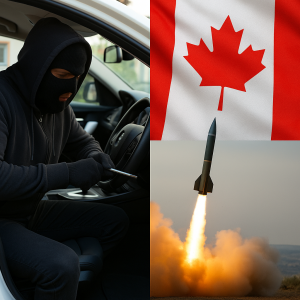
The scheme is simple but devastating. Luxury cars vanish from driveways in Toronto, Montreal and Laval. Sometimes they are stolen outright, other times obtained with fraudulent loans. They are stuffed into containers at the Port of Montreal and shipped out of the country. In Beirut Lagos and Dubai those vehicles reappear on black markets and the profits flow back through informal brokers and banks that look the other way.
A veteran investigator explained, “You think you lost a Lexus. What you really lost was money that will end up paying for rockets in southern Lebanon. That is the true cost.”
The drug trade adds another layer. Hezbollah has embedded itself in cocaine heroin and fentanyl pipelines. Cash made in Latin America is pushed north into Canada. Here it is cleaned through real estate deals car dealerships and money service businesses. From there it moves abroad, feeding the war chest of a group whose violence spans continents.
“Hezbollah is not a local gang,” one analyst who worked on the federal risk report told The Montreal Jewish News. “It is a multinational enterprise. Canada is attractive because our financial system is stable but the oversight still leaves cracks. They exploit every one.”
This is not new. Hezbollah’s presence in Canada goes back decades. In the 1990s their operatives in Vancouver and Montreal openly raised funds. They bought equipment here and shipped it to Lebanon. They even used Canadian life insurance policies to pay the families of fighters killed in action.
A retired counterterrorism officer remembered those years well. “We knew they were here years ago. The difference now is the scale. They moved from grassroots fundraising to full blown international crime. The overdose on your street or the SUV missing from your neighbor’s driveway could be part of their balance sheet.”
Hamas is also exploiting Canadian soil. Charities that present themselves as humanitarian organizations have funneled funds into their operations. Crypto wallets and informal transfer systems known as hawalas make tracing the money nearly impossible.
“These groups adapt faster than regulators,” a former intelligence operative said. “Close one channel and they switch to another. Shut the banks and they go to crypto. Trace crypto and they turn to hawalas. Canada is always catching up.”
The numbers are damning. Auto theft in Ontario and Quebec has risen by more than fifty percent over the last decade. Fentanyl deaths continue to climb. These are not disconnected problems. They are the visible signs of an invisible pipeline running from Canadian streets to foreign terror cells.
Law enforcement officials know the stakes. One source admitted, “People ask why auto theft matters. It matters because it is not random. The networks stealing these cars are plugged into global pipelines. You are not just insuring a vehicle. You are indirectly financing an arsenal.”
Ottawa spends millions every year on anti money laundering programs. FINTRAC, the agency tasked with tracking suspicious transactions, receives thousands of reports. But collecting data does not stop the money from moving.
“We can map the funds all day long,” said a compliance officer who works with banks. “The issue is stopping it. Until prosecutors and courts treat terror financing with the urgency it deserves, we will always be one step behind.”
The path forward is clear. Informal transfer systems must be policed. Charities must be scrutinized. Crypto platforms need strict oversight. Ports must be monitored. And the enablers who profit from this system need to be brought down alongside the extremists they serve.
For now Canadian authorities are calling the situation a growing national security threat. The federal report signals new measures are on the way but officials concede that international cooperation will be required. Until then Canada remains a key target for terrorist financing networks and the government faces mounting pressure to show that it can shut down the flow of money before it fuels further bloodshed abroad.




Leave a Reply