




Just when you thought the radical left could not possibly eat itself any faster, along comes another splinter group to prove you wrong. Jewish Voice for Peace used to be the enfant terrible of Jewish activism. They disrupted events, shouted about apartheid at bagel shops, and chained themselves to embassy doors. But apparently that is not extreme enough anymore.
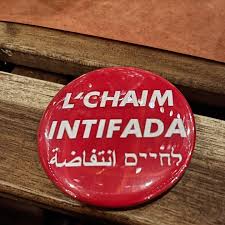
Enter the Anti Zionist Jewish Student Front, also known as L’Chaim Intifada. Yes, they actually believe that smashing together a Yiddish drinking toast and the word for violent uprising makes for inspiring branding. Next time maybe they will go with Mazel Tov Molotov.
Their mission statement is pure gold. “We work to dismantle Zionism in its entirety by confronting Zionist institutions on campus, to struggle for divestment, and to pursue the criminalization of Zionism as a white supremacist weapon of war.” Criminalization. Not debate. Not protest. Not reform. Straight to the handcuffs. Forget exams, these kids want Zionism in prison orange.
They even brag that they are “rejecting Zionism and upholding Palestinians’ right to return, remain, and resist.” Resist what exactly? Nobody knows. Probably their parents’ phone calls asking when they will finally graduate.
And let us talk about the logo. Subtle as a brick. It says “L’Chaim Intifada” in Yiddish, surrounded by an Arabic slogan declaring “Where there is oppression, may there thrive resistance.” Because nothing says serious intellectual movement like mixing languages you do not speak into a protest sticker.
Meanwhile, Jewish Voice for Peace tried to play the adult in the room. Jonah Rubin explained with a straight face, “While we share the goal of mobilizing anti Zionist Jews working towards Palestinian liberation, our analyses of the strategy and tactics best suited to respond to the current moment of genocide in Gaza and rising fascism at home have diverged.” Translation: We wanted to lobby Congress. They wanted to cosplay Hamas.
So now we have the ultimate circus act. JVP, the professional outrage factory, suddenly looks like a group of middle aged moderates in sensible shoes. The breakaway faction is determined to prove who can scream fascism the loudest, who can shout genocide the most, and who can build the coolest logo for Instagram.
This is the radical left in a nutshell. A purity contest with no finish line. Every time one group decides it has reached peak extremism, another breaks away to say actually, you are not radical enough. It is like a clown car of outrage. Just when you think it is full, another pops out with a bigger slogan and an even louder megaphone.
So congratulations to the Anti Zionist Jewish Student Front. You managed to make Jewish Voice for Peace look like moderates. You took absurdity, rolled it in self importance, sprinkled it with buzzwords, and served it up as a movement. Comedy writers everywhere salute you.
L’Chaim Intifada. To life, to chaos, and to the never ending implosion of the radical left.


Discover more from Montreal Jewish News
Subscribe to get the latest posts sent to your email.


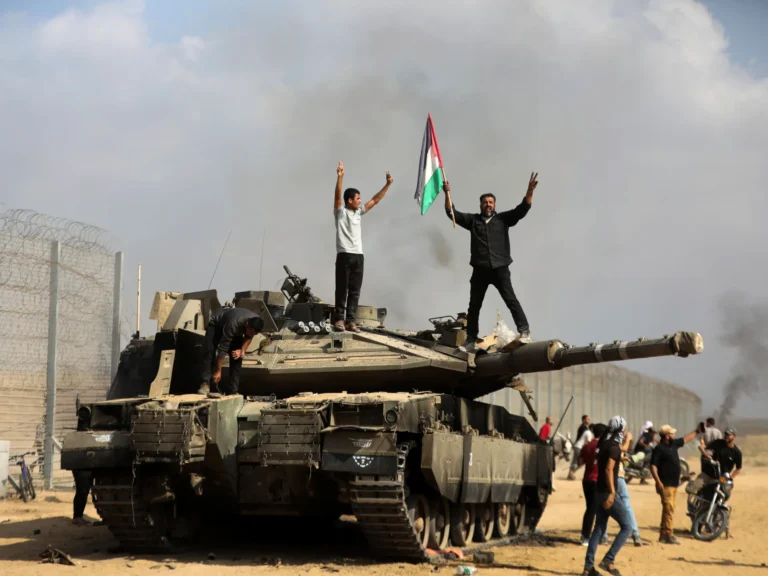

The Rise of a New Middle East. In 1948 post Shoah Jewry, compares to the mythical phoenix rising from the ashes.
https://www.youtube.com/watch?v=KkYRO4KLLsU
At the heart of the Jewish State beats the pulse of Shabbat observance. Zionist Israel – a secular State. How to understand and correctly interpret the קידוש sanctification of Shabbat that forbids the types of work necessary to build the Mishkan — specifically מלאכה. Off the דרך Yeshiva institutions emphasize what Jews can’t do on Shabbat.
This tuma צר עין expressed by religious Orthodox Judaism rabbis has defined the cultural identity of g’lut Jewry following the Roman forced expulsion of Jews and the renaming of Judea unto Palestine by European aliens. Arabs cannot even pronounce the letter “P” as in Balestine! Arafat’s opportunistic propaganda declares the Balestinian people descended from the Philistine boat people who invaded Gaza from the Greek Islands. As if Arabs originated from ancient European civilizations.
The connection between מלאכה כנגד מלאכים. The shabbat קידוש by emphasizing איסר מלאכה therein defines עבודת השם on the 6 days of chol. This Torah commandment, עבודת השם, Jews dedicate their obedience to the Torah by sanctifying the חכמה של תורה – שנקרא מלאכה, throughout the 6 days of Chol. Shabbat serves as the logical דיוק which specifies the wisdom of the Torah throughout the Ages and generations.
On the day of Shabbat a person rests from doing the עבודת השם of מלאכה which creates מלאכים created through the מלאכה of טהור זמן גרמא מצוות. Shabbat as a time-oriented commandment dedicates not to sanctify time-oriented commandments on that one day of the week. Hence totally not relevant whether a person first squeezes the juice of a lemon onto sugar in a glass, and their after fills that glass with tea. Rabbi Yisrael Meir Kagan (the Chofetz Chaim), author of the Mishnah Berurah (1947), his commentary to the assimilated statute halachic code originally written by Yosef Karo – both men walked completely off the דרך.
The day of Shabbat Jews דוקא do not do the עבודת השם required to construct the Mishkan – establish a מקום קבוע for the Shekinah. Meaning, Jews do not do mitzvot which requires k’vanna on the time-oriented mitzva day of Shabbat. The logical דיוק instructs a powerful mussar. On this day Jews rests from sanctifying acts of מלאכה; to sanctify the dedication to do acts of tohor time-oriented commandments which require k’vanna on the 6 Days of Chol – the definition of the Torah commandment known as עבודת השם. During the 6 Days of Chol – like shabbat – Jews dedicate not to doing acts of theft, oppression, sexual perversion, and judicial injustice to our bnai brit allied Cohen people.
Shabbat as a day set apart from the שישה ימים של חול, serves primarily as a day of rest from creating מלאכים על ידי זמן גרמא מצוות. During these 6 days of “shabbat” (shabbat understood as inclusive of the entire week and not simply one day of that week.), Jews חכמה של תורה creates more “allies” on our side than the multitudes of Goyim enemies who seek another Shoah; like the Armies of Arabs in both the 1948 and 1967 Wars. Therefore, viewed from this perspective the mitzva of Shabbat simply crucial for spiritual rejuvenation. A purpose rest from doing time-oriented commandments with k’vanna, such that a Jew re-invigorates his dedication of doing עבודת השם time oriented commandment wisdom throughout the coming 6 days of Shabbat, based upon the Order of Creation of the Universe.
The Prophetic Mussar of the Tohor midda of t’shuva
The Torah Parashat Vayishlach בראשית לד-לו addresses time-oriented commandments wherein “time” refers to wisdom rather than literal time tick-tock past history narratives. This Torah portion navigates complex stories which includes genealogies that embody deeper moral and ethical rebukes which later generations need to explore as understood through the wisdom of Mussar; a Jewish ethical, educational rebuke: active pursuit of fair restitution/compensation to the victim—rather than mere emotional guilt or substitutionary atonement. The relationship dynamics between Jacob’s family and the people of Shechem illustrate the significance of respecting sexual boundaries and ensuring that interactions conducted with both respect & honor. This contrasts sharply with certain Christian theological models of repentance, where forgiveness is framed through vicarious sacrifice, often without direct address of the victim’s pain or ongoing accountability.
T’shuva a key tohor middah. It fundamentally requires remembering the past through introspection, as exemplified through the month of Elul, Rosh HaShanna and Yom Kippur. This “wisdom” makes no attempt to justify past reactionary folly. But rather attempts to weigh the need to address the nature of damages inflicted upon others which requires some kind of mutually agreed upon fair compensation of damages. The Prince and people of Sh’Cem sought to profit from their crimes, they never considered the need to fairly compensate the Yaacov and his family for the rape of his daughter. Simeon and Levi massacre the males, rescue Dinah, and the other brothers plunder the city. Jacob rebukes them for endangering the family, but they retort: “Should he treat our sister as a harlot?” (p’suk 34:31)—highlights their raw demand for justice, even if their method exceeds Torah bounds. Jacob’s return to Bethel, Rachel’s death in childbirth, and Esau’s genealogy—highlighting continuity across generations
The genealogies imply that this wisdom of remembering past sexual folly, in order to due t’shuva – meaning pay some agreed upon terms or amounts to achieve some fair compensation of damages, greatly differs from the alien and utterly foreign substitute theology of repentance which totally ignores the pain suffered by the victims. Mussar principles of self-examination, character refinement, and moral accountability. T’shuva, a tohor middah, centers on honest remembrance of harm—especially sexual violation or disgrace (avoda zara dishonor in broader terms)—coupled with active, victim-centered restitution rather than emotional guilt or vicarious substitution. Esau’s extensive genealogy, underscore generational continuity: moral failings (or rectifications) simply don’t just disappear after the criminal generation dies out. War-crimes against Humanity never erased but must be confronted by descendants. Fear of Heaven means that peoples’ pursue t’shuva consequent to their ruined Good Name reputations, which might never heal across the span of generations.
Guilt theology, such as ‘this false messiah died for you’ not the same thing as remembering past personal, in this specific case sex disgrace or avoda zara dishonor. This significant distinction – a vital Mussar k’vanna throughout the T’NaCH, Talmud, and Midrashim. Which embodies the principles of accountability, respect, and reflection, absolutely symbolized through Torah judicial court-trials, which make fair restitution of damages inflicted – as exemplified by the 10 plagues and the splitting of the Sea of Reeds.
True t’shuva requires an honest acknowledgment of one’s sexual missteps, facilitating a path towards genuine correction and healing that others have suffered. The narratives compel us to reflect on past actions rather than ignore them, emphasizing that growth comes from inevitable missteps and the commitment to make amends. This t’shuva simply crucial for both individuals and communities seeking to forge healthy relationships. The detailed lineages rebuke the generations that moral failings (or corrections) pass down. Each generation must reflect on predecessors’ actions, rectify where possible, and avoid repeating past folly. This collective responsibility rejects “be here now” spiritual hippie individualism. Instead it fosters an ongoing ethical growth in families and communities.
The actions of Shechem and his father highlight a critical ethical breach: the attempt to profit from wrongdoing without appropriate restitution. In contrast, the expectation of justice in Jewish law mandates compensatory measures for harm done. This underscores the significance of fairness and moral responsibility in interactions. The judicial trials and structures presented serve as models for community accountability. They reinforce the idea that restitution: not simply limited to mere transactional affair, but an ethical obligation that reflects respect for the victim and for communal harmony. The 1939 British White Paper triggered the Shoah as did American pride which now viewed refugee populations as inferior scum on par with Christ-Killer slanders.
American attitudes in the 1930s–1940s reflected restrictive immigration quotas, intensified by the Great Depression, isolationism, and widespread antisemitism—including lingering “Christ-killer” slanders that portrayed Jews as collectively responsible for Jesus’ death, fueling prejudice. The 1938 Évian Conference (convened by FDR) exposed global reluctance: most nations (including the U.S.) refused to expand quotas for Jewish refugees, even post-Kristallnacht. Polls showed strong American opposition (e.g., ~72% against more Jewish immigrants in late 1938), sometimes viewing refugees as undesirable or inferior—echoing demeaning stereotypes. This collective failure to act, prioritizing national interests over humanitarian rescue, parallels the Shechemites’ self-serving avoidance of true restitution.
The genealogical refrains in these chapters further embody the continuity of responsibility across generations. They remind us that recognizing and rectifying past wrongs not limited to an individual personal journey. But rather a collective one, where each generation – called to learn from and address the failings of those before them. The ‘born again Xtian’ represents a total negation that limits faith to “be here now”. The narratives of this Torah prophetic mussar therefore serves as a powerful Aggadic/Midrashic story in the T’NaCH tradition which punctuates the importance of accountability, respect, and fair restitution.
Through introspection and a commitment to t’shuva, individuals and communities strive to navigate their moral landscapes, with the common goal of achieving integrity in communal relationships and actions. This wisdom encourages a richly nuanced understanding of justice which emphasizes and prioritizes the transformative power of genuine reflection and ethical responsibilities, promoting healing and mutual respect among and between Jewish marriages and families. This prophetic call in Vayishlach urges ethical integrity, respect for boundaries (sexual and otherwise), and ongoing responsibility, vital for Jewish continuity and mutual honor in relationships.