By Howie Silbiger
The Canadian Museum for Human Rights has scheduled in 2026, a full Nakba exhibit at a time when Jewish Canadians are facing the most disturbing rise in anti Jewish hostility in the country’s recent history. The Nakba narrative claims that the creation of Israel was a catastrophe for Palestinians. It presents the displacement of Palestinians in nineteen forty eight as an injustice divorced from the reality that surrounding Arab armies attempted to destroy the new Jewish state at birth. It ignores the rejection of the United Nations partition plan. It ignores the call for war against the Jews. It ignores why the refugees were created in the first place. The Canadian Museum for Human Rights has chosen to present this version of history without context and without balance, and it is doing it with federal money in a country shaken by violent anti Jewish attacks.
This decision cannot be separated from the political environment created by the Federal Liberal Party during its many years in power. The Liberals built the framework that allowed Palestinian political narratives to dominate national institutions. They shifted the public conversation away from balanced context. They enabled activists who reject the legitimacy of Israel. They reshaped Canada’s cultural landscape in ways that placed Jewish safety behind political symbolism.
The most direct Liberal decision was the move to normalize Palestinian state recognition long before it became official government policy. Senior Liberal ministers openly advocated for Palestinian statehood without negotiations. They pressured federal agencies to adopt language that framed Israel as the aggressor and Palestinians as the aggrieved party. They promoted motions in the House that condemned Israel during periods of conflict while refusing to name Hamas as a terrorist group in the same texts. They allowed Liberal Members of Parliament to attend rallies where speakers praised resistance without acknowledging that such language was being used to justify violence against Jewish civilians.
Another Liberal decision with significant consequences was the refusal to enforce federal guidelines against hate speech at pro Palestine demonstrations. The government repeatedly ignored clear evidence of chants advocating violence. Police services across the country adopted policies that treated such events as political speech rather than threats. Liberal leadership remained unwilling to confront the reality that Jewish communities were being targeted while these demonstrations were taking place. Their reluctance signaled that accountability was optional and that Jewish concerns were politically inconvenient.
The Senate event that allowed a partisan Palestinian tribunal to operate inside the upper chamber was another result of Liberal permissiveness. The Senate’s leadership failed to prevent the use of federal space for a politically charged event that was condemned by Jewish advocacy groups as unacceptable. The tribunal presented a one sided narrative that attacked Israel while ignoring the brutality of Hamas. This event became a symbol of how deeply Liberal era decisions had reshaped Canadian institutions. It demonstrated that the country’s legislative environment had become susceptible to activist influence that did not reflect balanced human rights principles.
The Liberals also weakened public understanding of the Israel conflict by endorsing educational material that removed context from the events of nineteen forty eight. They funded programs that highlighted Palestinian displacement without acknowledging the war initiated by surrounding Arab states. They encouraged agencies to adopt language that equated Israeli security actions with aggression while downplaying the threats faced by Israeli civilians. This educational shift eroded public literacy and made it easier for institutions like the Canadian Museum for Human Rights to present incomplete versions of history without immediate scrutiny.
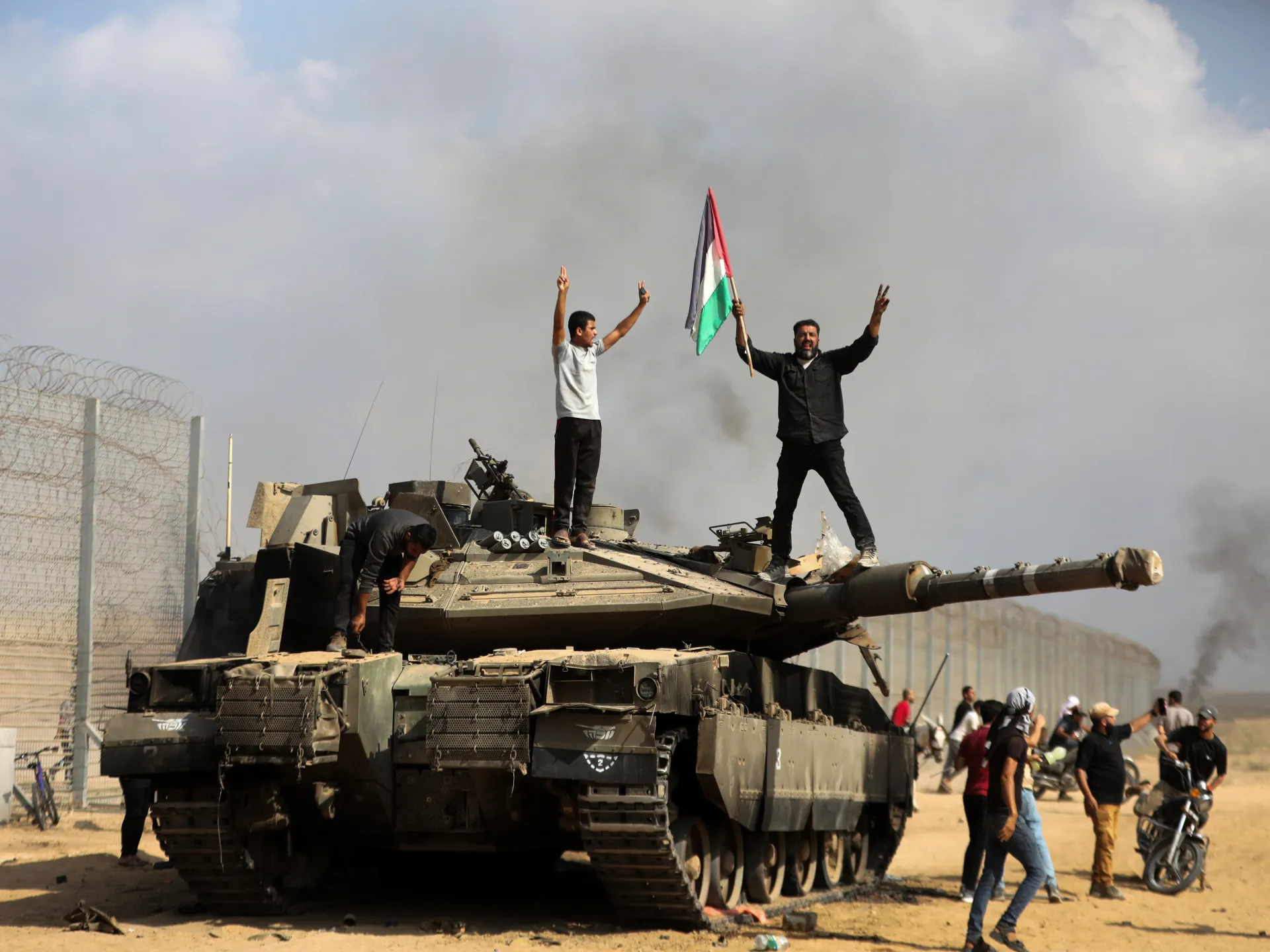
These decisions formed the national climate into which the museum released its Nakba exhibit. The exhibit presents the Palestinian story of displacement in nineteen forty eight without addressing that five Arab armies sought to destroy the new Jewish state. It ignores that the Palestinian leadership rejected the United Nations partition plan. It ignores that Jewish communities across the region were expelled by Arab governments during the same period. It also ignores the modern invocation of the Nakba as a justification for the October seventh massacre, which was celebrated by supporters of Hamas across multiple regions including within Canada.
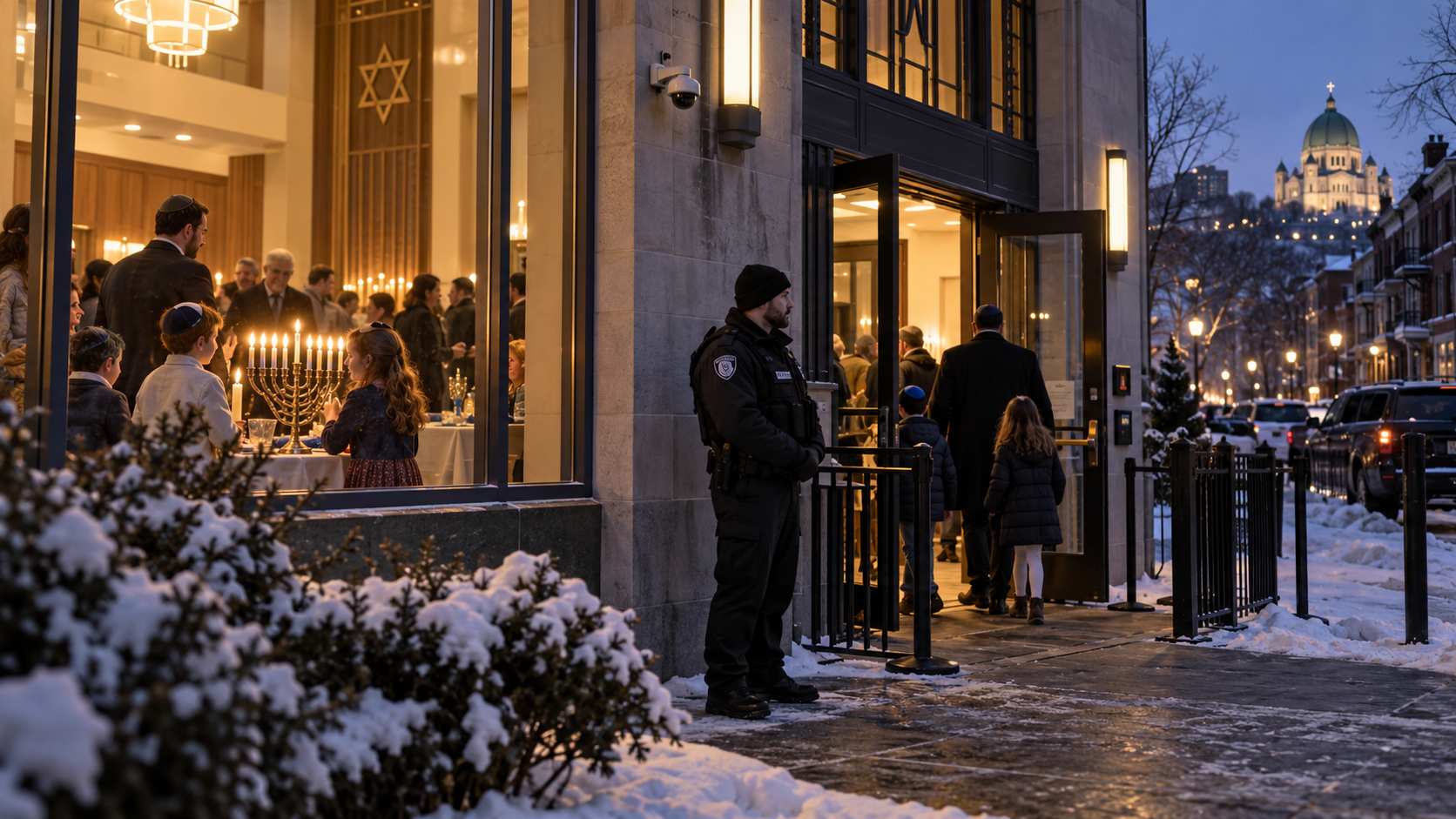
Jewish communities see the same pattern. They saw it when the Liberals condemned Israel more loudly than Hamas. They saw it when Jewish schools were shot at in Montreal and the government offered statements without action. They saw it when synagogues were firebombed and the federal response was muted. They saw it when Jewish students were threatened on university campuses and political leaders refused to confront administrators. They saw it when the Senate held its tribunal. They see it now as the museum elevates a narrative that aligns with the world the Liberals created.
The Nakba exhibit is not simply a curatorial choice. It is a continuation of a political arc that began under the Liberals and continues today. It reflects federal decisions that placed Palestinian political claims above Jewish safety. It reflects a narrative that has been cultivated by years of government silence in the face of rising anti Jewish violence. It reflects the ideological space that the Liberals opened when they allowed federal institutions to be used for partisan activism that targeted the Jewish state.
The Federal Liberal Party bears responsibility for the environment that made this exhibit possible. They legitimized one sided narratives. They weakened public understanding. They tolerated anti Jewish hostility until it became normalized. They laid the foundation for a national culture that elevates Palestinian grievance while minimizing Jewish trauma. They created a system where a federal museum can promote an incomplete and politically charged version of history without accountability. They built the conditions in which Jewish Canadians no longer feel that federal institutions stand with them. The museum is following the path the Liberals carved. The consequences are now unfolding in real time.
Howie Silbiger is the host of The Howie Silbiger Show on truetalkradio.com and political Hitman on Israel Newstalk Radio. He is the Editor-in-Chief of The Montreal Jewish News
The Prophetic Mussar of the Tohor midda of t’shuva
The Torah Parashat Vayishlach בראשית לד-לו addresses time-oriented commandments wherein “time” refers to wisdom rather than literal time tick-tock past history narratives. This Torah portion navigates complex stories which includes genealogies that embody deeper moral and ethical rebukes which later generations need to explore as understood through the wisdom of Mussar; a Jewish ethical, educational rebuke: active pursuit of fair restitution/compensation to the victim—rather than mere emotional guilt or substitutionary atonement. The relationship dynamics between Jacob’s family and the people of Shechem illustrate the significance of respecting sexual boundaries and ensuring that interactions conducted with both respect & honor. This contrasts sharply with certain Christian theological models of repentance, where forgiveness is framed through vicarious sacrifice, often without direct address of the victim’s pain or ongoing accountability.
T’shuva a key tohor middah. It fundamentally requires remembering the past through introspection, as exemplified through the month of Elul, Rosh HaShanna and Yom Kippur. This “wisdom” makes no attempt to justify past reactionary folly. But rather attempts to weigh the need to address the nature of damages inflicted upon others which requires some kind of mutually agreed upon fair compensation of damages. The Prince and people of Sh’Cem sought to profit from their crimes, they never considered the need to fairly compensate the Yaacov and his family for the rape of his daughter. Simeon and Levi massacre the males, rescue Dinah, and the other brothers plunder the city. Jacob rebukes them for endangering the family, but they retort: “Should he treat our sister as a harlot?” (p’suk 34:31)—highlights their raw demand for justice, even if their method exceeds Torah bounds. Jacob’s return to Bethel, Rachel’s death in childbirth, and Esau’s genealogy—highlighting continuity across generations
The genealogies imply that this wisdom of remembering past sexual folly, in order to due t’shuva – meaning pay some agreed upon terms or amounts to achieve some fair compensation of damages, greatly differs from the alien and utterly foreign substitute theology of repentance which totally ignores the pain suffered by the victims. Mussar principles of self-examination, character refinement, and moral accountability. T’shuva, a tohor middah, centers on honest remembrance of harm—especially sexual violation or disgrace (avoda zara dishonor in broader terms)—coupled with active, victim-centered restitution rather than emotional guilt or vicarious substitution. Esau’s extensive genealogy, underscore generational continuity: moral failings (or rectifications) simply don’t just disappear after the criminal generation dies out. War-crimes against Humanity never erased but must be confronted by descendants. Fear of Heaven means that peoples’ pursue t’shuva consequent to their ruined Good Name reputations, which might never heal across the span of generations.
Guilt theology, such as ‘this false messiah died for you’ not the same thing as remembering past personal, in this specific case sex disgrace or avoda zara dishonor. This significant distinction – a vital Mussar k’vanna throughout the T’NaCH, Talmud, and Midrashim. Which embodies the principles of accountability, respect, and reflection, absolutely symbolized through Torah judicial court-trials, which make fair restitution of damages inflicted – as exemplified by the 10 plagues and the splitting of the Sea of Reeds.
True t’shuva requires an honest acknowledgment of one’s sexual missteps, facilitating a path towards genuine correction and healing that others have suffered. The narratives compel us to reflect on past actions rather than ignore them, emphasizing that growth comes from inevitable missteps and the commitment to make amends. This t’shuva simply crucial for both individuals and communities seeking to forge healthy relationships. The detailed lineages rebuke the generations that moral failings (or corrections) pass down. Each generation must reflect on predecessors’ actions, rectify where possible, and avoid repeating past folly. This collective responsibility rejects “be here now” spiritual hippie individualism. Instead it fosters an ongoing ethical growth in families and communities.
The actions of Shechem and his father highlight a critical ethical breach: the attempt to profit from wrongdoing without appropriate restitution. In contrast, the expectation of justice in Jewish law mandates compensatory measures for harm done. This underscores the significance of fairness and moral responsibility in interactions. The judicial trials and structures presented serve as models for community accountability. They reinforce the idea that restitution: not simply limited to mere transactional affair, but an ethical obligation that reflects respect for the victim and for communal harmony. The 1939 British White Paper triggered the Shoah as did American pride which now viewed refugee populations as inferior scum on par with Christ-Killer slanders.
American attitudes in the 1930s–1940s reflected restrictive immigration quotas, intensified by the Great Depression, isolationism, and widespread antisemitism—including lingering “Christ-killer” slanders that portrayed Jews as collectively responsible for Jesus’ death, fueling prejudice. The 1938 Évian Conference (convened by FDR) exposed global reluctance: most nations (including the U.S.) refused to expand quotas for Jewish refugees, even post-Kristallnacht. Polls showed strong American opposition (e.g., ~72% against more Jewish immigrants in late 1938), sometimes viewing refugees as undesirable or inferior—echoing demeaning stereotypes. This collective failure to act, prioritizing national interests over humanitarian rescue, parallels the Shechemites’ self-serving avoidance of true restitution.
The genealogical refrains in these chapters further embody the continuity of responsibility across generations. They remind us that recognizing and rectifying past wrongs not limited to an individual personal journey. But rather a collective one, where each generation – called to learn from and address the failings of those before them. The ‘born again Xtian’ represents a total negation that limits faith to “be here now”. The narratives of this Torah prophetic mussar therefore serves as a powerful Aggadic/Midrashic story in the T’NaCH tradition which punctuates the importance of accountability, respect, and fair restitution.
Through introspection and a commitment to t’shuva, individuals and communities strive to navigate their moral landscapes, with the common goal of achieving integrity in communal relationships and actions. This wisdom encourages a richly nuanced understanding of justice which emphasizes and prioritizes the transformative power of genuine reflection and ethical responsibilities, promoting healing and mutual respect among and between Jewish marriages and families. This prophetic call in Vayishlach urges ethical integrity, respect for boundaries (sexual and otherwise), and ongoing responsibility, vital for Jewish continuity and mutual honor in relationships.