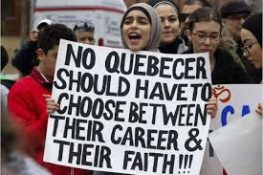
Quebec is preparing to introduce a sweeping new secularism bill and Jewish schools across the province know exactly what is coming. The government intends to outlaw prayer rooms in universities and colleges and expand the religious symbol ban to teachers in daycares, elementary schools, high schools, subsidized private institutions and CEGEPs. This is the broadest attempt yet to remove religion from public life. For Jewish schools and yeshivot, the impact could be immediate and devastating.
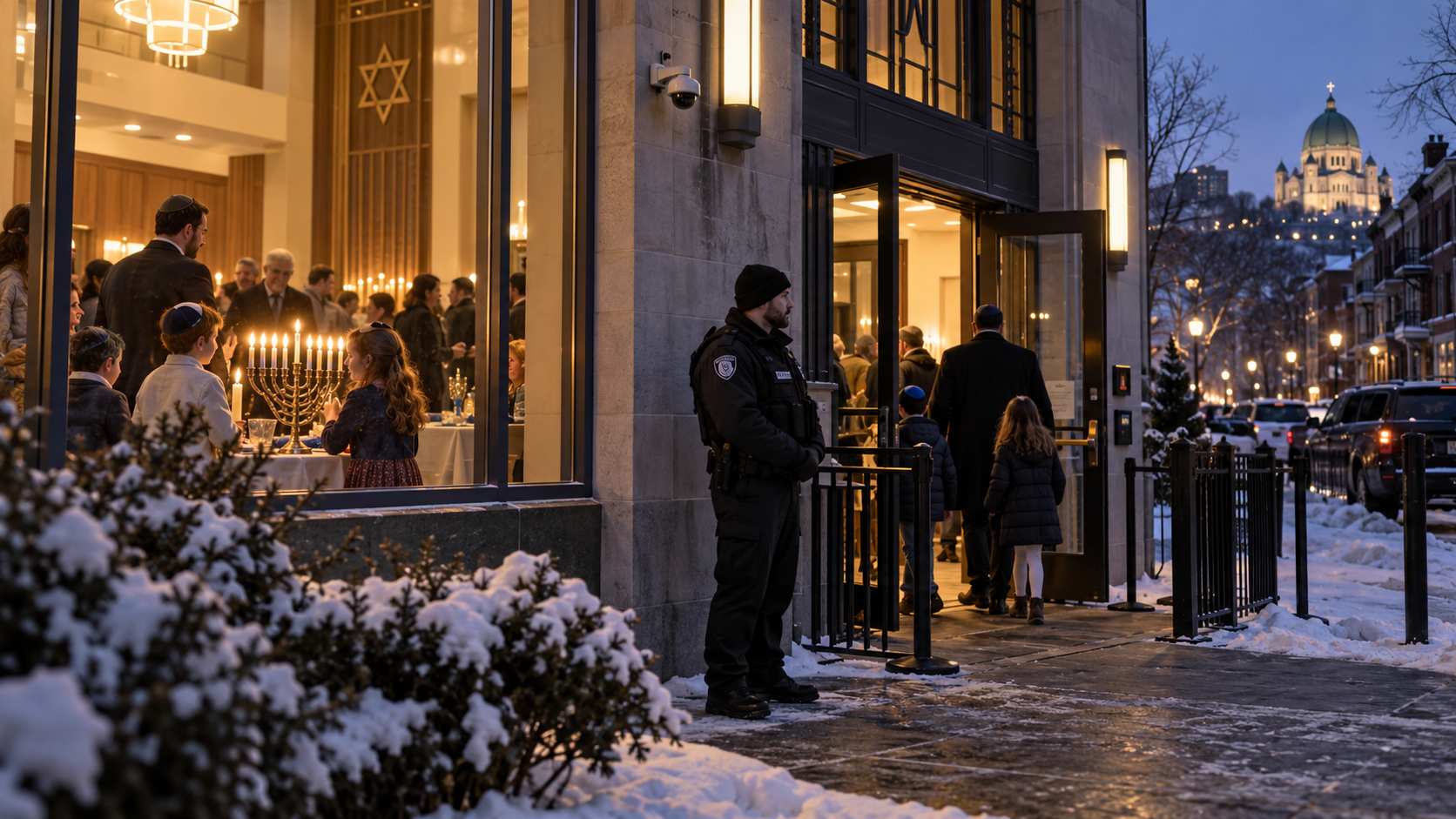
Jewish education is built on visibility. A rebbe cannot hide his identity. A Jewish teacher does not set aside his beliefs when he walks through the school doors. A yeshiva classroom is a place where a teacher’s kippa is not an accessory. It is part of who he is. Under the new bill a simple kippa on the head of a teacher could become a violation of provincial law if the government decides that any outward religious sign is prohibited in publicly subsidized programs. This is not theoretical. This is the reality Jewish schools now face. Teachers who have worn a kippa every day of their adult lives could be told to remove it or lose their jobs.
For the yeshivot the consequences are even more extreme. Yeshiva faculty cannot teach Torah, Talmud and halacha without openly embodying Jewish observance. The entire rhythm of the school day is built on religious life. Morning prayers. Afternoon prayers. Halachic instruction. Chumash classes. A teacher who removes his kippa to comply with government law would be violating his own religious obligations and undermining the essence of the environment he is hired to model. Many rabbis and teachers have already stated privately and publicly that they will never remove their kippas. They will not compromise their identity to appease a provincial decree. They will not pretend to be secular for the benefit of bureaucrats.
This is where the new bill becomes existential. If Quebec bans visible religious symbols from any educator whose institution receives public funds, Jewish schools could be forced into an impossible position. Either they refuse subsidies, absorb enormous financial strain and operate entirely independently, or they comply with a law that demands the erasure of Jewish identity from Jewish education. Neither option represents a free society. Both options punish the schools for daring to be authentically Jewish.
The bill also threatens the internal structure of Jewish curriculum. It could restrict religious instruction during funded instructional hours. It could dictate what food is served in Jewish daycares. It could regulate everything from prayer breaks to the scheduling of Judaic studies. A government that claims neutrality is now designing legislation that reaches into the kitchen, the classroom and the clothing of teachers. A government that claims openness is now planning to shut down prayer rooms and public prayer on campuses. A government that insists it protects diversity is preparing to legislate diversity out of sight.
The timing is no accident. Quebec has watched months of anti Jewish hostility on campuses and in the streets. Instead of addressing the threats, intimidation and harassment faced by Jewish students, the government is turning its attention to the visibility of those same students and teachers. The new bill suggests that prayer rooms and religious identity are the problem rather than the climate of hostility that has made prayer rooms necessary. It suggests that modest dress or a kippa is the issue rather than the rising aggression against those who wear them.
For Montreal’s Jewish schools the message is painfully familiar. The province is once again rewriting the rules of secularism to squeeze religious communities out of the public frame. Yeshivot that have served generations of students now face a government that sees their teachers as political threats. Schools that built their programs around Torah learning now face bureaucratic oversight that sees religious instruction as something to be contained.
The Jewish community has weathered government intervention before. It has survived curriculum mandates. It has survived attempts to narrow religious instruction. It has adapted to countless regulatory demands. But the new bill crosses a new threshold. It targets the foundational symbol of Jewish identity worn every single day by observant men. The kippa is not a protest sign. It is not a political statement. It is a religious obligation. For many teachers it is as essential as prayer itself. Asking them to remove it is asking them to deny the law of their own faith.
Quebec can claim that this is about neutrality. Jewish schools know better. This is about erasing identity in the name of uniformity. It is about forcing public invisibility on communities that rely on visibility for survival. If this legislation passes it will not only reshape Jewish education. It will reveal exactly how far the government is willing to go to enforce a vision of Quebec where religion is not simply separated from the state, but pushed into silence.
Jewish schools will continue to teach. Teachers will continue to wear their kippas. Yeshivot will not strip themselves of their character. The government may demand compliance, but the community will not. The future of Jewish education in Quebec now depends on whether that defiance can survive another attempt at legislated erasure.
Howie Silbiger is the host of The Howie Silbiger Show on Truetalkradio.com and Political Hitman on Israel Newstalk Radio. He is the Editor-in-Chief of The Montreal Jewish News.


Leave a Reply