
The Jewish Federations of North America have announced a $35 million initiative to combat Jew hatred, including the hiring of 100 additional professionals and grants to 120 local federations. The program, called Frontline, will expand advocacy efforts, strengthen relationships with governments and educational institutions and develop strategies to confront the growing hostility directed at Jews throughout North America.
Thirty-five million dollars is an extraordinary amount of money, and I have no doubt that much of it will be put to good use. However, the announcement also highlights something that has troubled me for years. Our Jewish communal organizations have become remarkably effective at raising money and mobilizing resources to fight those who hate us, while the preservation of Judaism itself seems to be slipping further down their list of priorities.
As the principal of a Jewish school that has been shot at twice, I certainly understand the seriousness of Jew hatred. I have dealt with the police presence, the security measures and the responsibility of keeping children safe while ensuring that their education continues. I know what it means to protect a Jewish institution from people who would like to destroy it, and I would never suggest that we should be spending less on protecting our communities. However, protecting Jewish institutions and preserving Judaism are not necessarily the same thing, and somewhere along the way our communal leadership seems to have confused the two.
We have become very good at teaching Jewish children about the people who hate them. We educate them about the Holocaust, October 7, Hamas and the dangers of Antijewism. We organize marches, develop educational campaigns and teach young people how to respond when someone attacks Israel. Yet it is entirely possible for a child to graduate from a Jewish school knowing a great deal about the enemies of the Jewish people while possessing remarkably little understanding of the religion, history and traditions that have sustained Jewish life for thousands of years.
For many, Judaism has become an ethnic designation accompanied by a collection of cultural traditions and a shared history of persecution. They know about bagels, Jewish comedians, Holocaust survivors and the modern State of Israel. They might attend a Passover seder, light a menorah on Chanukah or visit a synagogue on the High Holidays, but their understanding of Torah, Jewish religious life and the responsibilities that have traditionally accompanied being Jewish remains superficial.
This did not happen by accident. Over the years, too many Jewish institutions have moved away from the religious foundations upon which they were established, convinced that traditional Judaism was too restrictive, too demanding or simply too old fashioned to appeal to a modern Jewish audience.
I have spent a good part of my adult life fighting Jewish organizations over things that should never have been up for negotiation. Jewish education in Jewish schools, kosher food in Jewish institutions, respect for Shabbos in Jewish communal buildings and the preservation of traditions that previous generations worked so hard to maintain. More often than not, I was told that times had changed, that society had evolved and that our community needed to modernize to remain relevant.
Rabbi Chaim Steinmetz, formerly of Montreal’s Tifereth Beth David Jerusalem congregation and now Senior Rabbi of Congregation Kehilath Jeshurun on Manhattan’s Upper East Side, was a regular contributor to my Radio Shalom program. During one of our conversations, he told me that I held people to too high a standard. I have thought about that comment many times over the years. Perhaps I do expect a great deal from people, but I certainly expect Jewish institutions to uphold the very principles they were established to preserve. I do not expect every Jew to be religiously observant. I do expect a Jewish school to teach Judaism, a Jewish communal institution to respect Jewish traditions and an organization that raises money in the name of Jewish continuity to actually contribute to that continuity. I hardly consider those unreasonable expectations.
The late Montreal philanthropist Alvin C. Segal was considerably less diplomatic in expressing his opinion of my expectations. I was sitting in a restaurant when he approached me and told me that he would not financially support Radio Shalom because I was involved with the station. He called me a dinosaur for insisting on religious values and told me that I needed to get with the times. Here was one of Montreal’s most prominent Jewish philanthropists, a man whose donations carried considerable influence within the established Jewish community, telling me that my insistence on maintaining Jewish religious traditions was outdated.
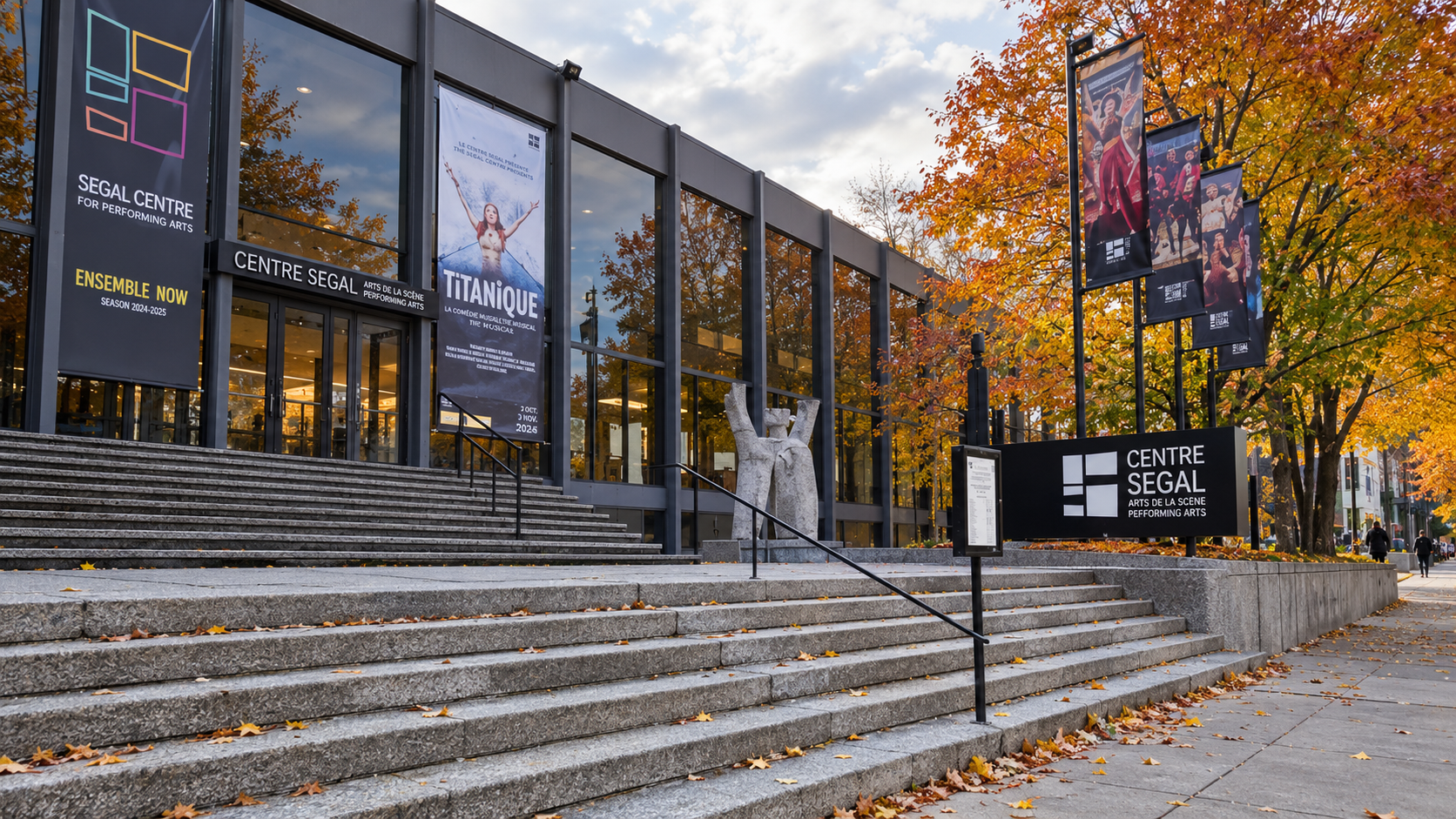
This was the same Alvin Segal whose financial contributions resulted in the renaming of the Saidye Bronfman Centre for the Arts in 2007. The centre had been established in 1967 with funding from the Bronfman family as a gift to Montreal’s Jewish community in honour of Saidye Bronfman. It was a Jewish cultural institution, located on the Jewish community campus, with a theatre that respected Shabbos and the religious standards of the community it served.
Following Segal’s financial support, Saidye Bronfman’s name was removed and the institution became the Segal Centre for Performing Arts. Its mandate expanded beyond its original Jewish focus, and the institution that had once respected Shabbos now schedules performances on Saturdays. From what I have seen, the earlier commitment to kosher food has also disappeared.
The irony has never been lost on me. The man who told me that I was a dinosaur for defending traditional Jewish values had his name placed on a Jewish communal institution that had moved away from those very values. An institution established with Jewish money, in honour of a Jewish woman, had its identity changed in the name of progress. Federation and the broader communal establishment accepted the change, I guess money talks, and the loss of its former religious character was treated as part of modernization.
The same thinking has found its way into Jewish education. Many schools have increasingly emphasized Jewish culture, Holocaust education and Israel advocacy while diminishing the importance of teaching Judaism itself. The justification has often been that religious education might alienate less observant families, and that a broader cultural approach would allow more children to feel connected to their heritage.
There is nothing wrong with teaching Jewish culture, the Holocaust or the importance of Israel, but these subjects cannot substitute for an understanding of Judaism. Teaching children about Auschwitz without giving them an appreciation of the extraordinary Jewish religious civilization that existed before the Nazis attempted to destroy it leaves them with an incomplete understanding of their own history. Teaching them to defend Israel without explaining the thousands of years of Jewish religious and historical attachment to the land deprives them of the foundation upon which that connection rests.
For generations, Jewish continuity depended upon participation. Children learned their traditions at home, in school and in synagogue. They were taught how to take part in religious services, observe Jewish holidays and eventually assume responsibility for passing those traditions to their own children. Jewish identity was not something that needed to be manufactured through promotional campaigns because it was woven into the daily lives of the people who practised it.
Today, our communal institutions spend considerable resources trying to create Jewish pride through cultural events, social programming and public demonstrations of solidarity. Yet pride without knowledge is a fragile foundation upon which to build a future. A child cannot be expected to develop a meaningful attachment to traditions that nobody has bothered to teach.
This is where Federation’s $35 million announcement becomes particularly troubling. The Jewish community has demonstrated that it can organize an extraordinary fundraising and professional effort when it considers something sufficiently urgent. I would like to see the same determination applied to making serious Jewish education accessible to every Jewish family, ensuring that schools can afford qualified teachers and providing young Jews with the religious knowledge necessary to become active participants in Jewish life.
Jewish education already receives substantial communal funding, but supporting institutions that carry the label Jewish is not the same as ensuring that the Judaism being taught within them is sufficiently meaningful to sustain another generation. A school can offer excellent academics, impressive facilities and extensive cultural programming while providing an inadequate religious education. A synagogue can maintain a beautiful building and a healthy membership list while failing to prepare its children to participate in synagogue life. The financial survival of an organization should never be confused with the preservation of the traditions it was established to serve.
October 7 and the explosion of Jew hatred that followed exposed another consequence of this approach. Jews who had spent much of their lives disconnected from their religion suddenly discovered that their lack of religious involvement made absolutely no difference to those who hated them. Many began searching for a deeper understanding of their Jewish identity, an identity they had previously considered little more than a cultural or ancestral connection. It is a terrible indictment of our communal priorities that so many Jews needed the hatred of others to awaken an interest in their own heritage.
Our ancestors did not preserve Judaism through centuries of persecution, expulsions, pogroms and poverty by reducing their religion to a cultural identity. They maintained their traditions, educated their children and accepted the responsibilities that came with belonging to the Jewish people. They understood that Jewish continuity required more than simply surviving the hatred directed against them.
We have inherited the benefits of those sacrifices, but too often seem unwilling to accept the responsibilities that accompanied them. Our communal leadership needs to stop treating the practice of Judaism as an inconvenience to be adjusted whenever it conflicts with contemporary social expectations. We need Jewish schools that teach Judaism without apology, synagogues that prepare children to become active members of religious life and organizations that recognize that their purpose extends beyond maintaining buildings, raising money and attracting audiences.
There is nothing wrong with spending $35 million fighting Jew hatred. There is, however, something profoundly wrong with a communal culture that can mobilize enormous resources to defend Jewish identity while becoming increasingly reluctant to insist that the next generation actually understand what that identity means.
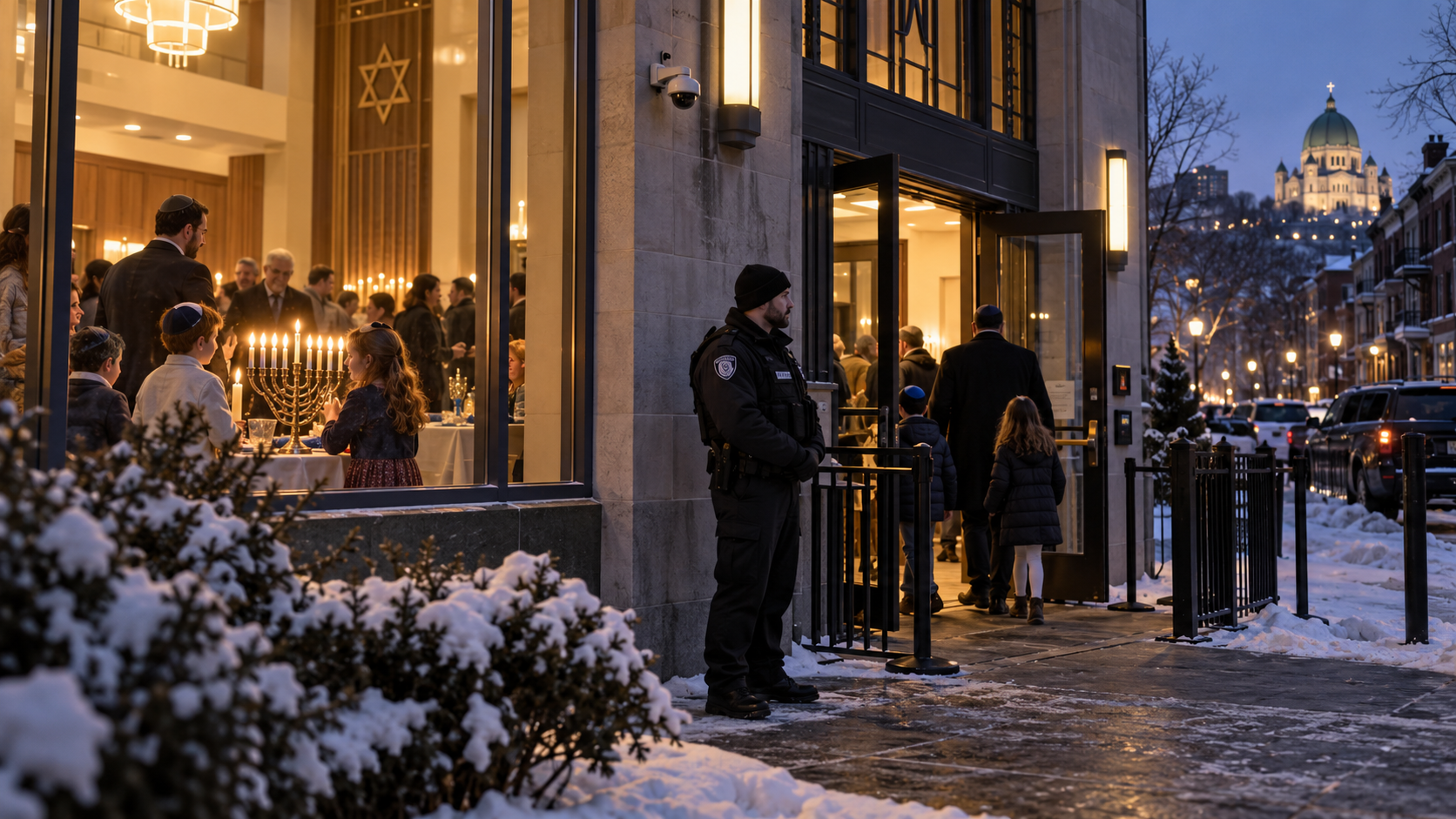
We can surround every Jewish institution with concrete barriers, place armed guards at every entrance, hire hundreds of professionals to combat Antijewism and spend millions attempting to change the attitudes of the world around us. But if we continue removing Judaism from Jewish life, we will eventually find ourselves protecting institutions that have very little Jewish life left inside them.
And when that happens, we will have accomplished something that centuries of persecution failed to achieve. We will have dismantled our own traditions, not because our enemies forced us to, but because our own communal leadership decided they were no longer important enough to preserve.




Leave a Reply