

Over the past few weeks, I have received several emails from readers who are unhappy with some of the stories published in Montreal Jewish News. They aren’t complaining about spelling mistakes, factual errors or even my opinions. Their objection is that by reporting on scandals, criminal activity, questionable behaviour and controversies involving Jews. They say that I am making the Jewish community look bad, in fact, a few have gone so far as to accuse me of committing a chilul Hashem, a desecration of G-d’s name.
Apparently, reporting something embarrassing about a Jew is now considered a greater offence than whatever the Jew may have done to become newsworthy in the first place.
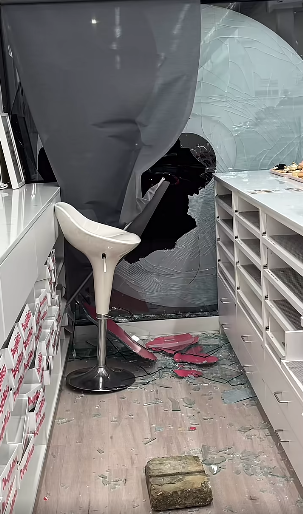
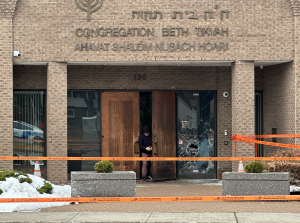
I understand the concern. We are living in a particularly ugly period for Jewish communities in Canada. Jewish schools have been shot at, synagogues have been attacked, businesses have been vandalized and people are increasingly uncomfortable displaying their Jewish identity in public. There are people who will seize upon anything negative involving a Jew and use it to reinforce their own prejudices. I’m not particularly interested in helping those people, which leaves me with a rather serious question; Are Jewish newspapers supposed to report the news, or are we supposed to act as public relations departments for the Jewish community?
I’ve been involved in journalism and broadcasting for decades, and I founded Montreal Jewish News in 2009 because I believed our community needed a news outlet that would actually report what was happening. That means covering the good, the bad and occasionally the downright ridiculous. It means celebrating accomplishments, recognizing people who deserve recognition and defending the community when it is attacked. It also means asking difficult questions when Jewish institutions, organizations, businesses or individuals find themselves involved in controversy.
Somewhere along the way, however, certain people seem to have decided that Jewish journalism should operate under a different set of rules. If a non-Jewish business is involved in a scandal, report it. If a public institution mishandles a serious complaint, investigate it. If a politician abuses his authority, expose him. But if the person involved happens to be Jewish, suddenly we must consider whether publication will damage the community’s reputation. I find that standard rather insulting to the Jewish community.
Consider what happens when allegations of misconduct arise inside a Jewish institution. There are legitimate questions about what should be reported, whether the allegations have been substantiated and whether identifying someone could unfairly destroy a reputation. Those questions deserve serious consideration. In fact, when I wrote about abuse allegations involving Jewish institutions, I deliberately withheld identifying information because the circumstances did not justify publicly naming the people involved.
That was an editorial decision based on fairness, evidence and the consequences of publication. It was not an attempt to pretend that the situation didn’t exist.
There is an enormous difference between protecting an innocent person’s reputation and protecting an institution from embarrassment. Unfortunately, the two are frequently confused, particularly when the institution has wealthy supporters, influential board members or respected religious figures associated with it. The instinct is often to deal with matters quietly, keep the story within a small circle and hope it disappears before somebody outside the community hears about it. Sometimes discretion is entirely appropriate. Other times it simply allows the problem to continue, often at the expense of people who trusted the institution in the first place.
Which brings me back to chilul Hashem. The term has a serious meaning in Jewish law. It is not supposed to be a convenient expression used whenever somebody publishes something that makes us uncomfortable. Judaism also takes loshon hara extremely seriously, and the fact that something is true does not automatically give someone permission to spread it. There are legitimate halachic considerations involving purpose, accuracy, necessity and the potential harm caused by disclosure.
But there is also the concept of to’eles, revealing information for a constructive purpose, particularly when doing so can protect others from harm. In an interview published in Jewish Action, Rabbi J. David Bleich, a respected authority on Jewish law, addressed the relationship between journalism and chilul Hashem. His observation was particularly interesting: “Not everything of which I disapprove is ipso facto a chillul Hashem.”
Rabbi Bleich was not giving journalists unlimited permission to publish whatever they pleased. Quite the opposite. He discussed the serious restrictions Jewish law places on disclosing private information, including cases where public exposure might be unnecessary. But he also rejected the notion that a report becomes a chilul Hashem simply because somebody finds its subject embarrassing. That distinction seems to be missing from some of the emails I’ve received.
I would be very interested to know where the same people draw the line. Should a Jewish newspaper report when a Jewish teacher is arrested for a serious criminal offence? Should we investigate questionable practices involving communal funds? Should we cover disputes involving kosher certification, allegations against religious authorities or decisions by Jewish organizations that affect the lives of thousands of people? If the answer is no, who exactly benefits from that silence?
Certainly not the parents who want to know what is happening in their children’s schools. Not the consumers who depend on accurate information about businesses they support. Not the donors who expect charitable institutions to use their money responsibly. And certainly not the ordinary Jewish Montrealer who has every right to know what is happening inside organizations that claim to represent him.
I also reject the suggestion that Jews are somehow incapable of distinguishing between the actions of an individual and the character of an entire people. We rightly object when outsiders take the misconduct of one Jewish person and use it to condemn every Jew. Why should we then conduct our own journalism as though that ridiculous standard is legitimate?
When a Jewish person commits a crime, the crime belongs to the person who committed it. When a Jewish institution makes a bad decision, that institution is responsible for explaining itself. Neither represents the behaviour of hundreds of thousands of other Jews who had absolutely nothing to do with it.
There is another uncomfortable aspect to this discussion. Some of the people most concerned about what outsiders might think of us appear considerably less concerned about what Jews themselves are entitled to know. The reputation of the community becomes the overriding consideration, while accountability is treated as something that can be negotiated privately among people who know one another. That is an excellent arrangement for anyone who would prefer not to answer difficult questions. I am not convinced it is particularly good for the rest of us.
None of this means that journalists are beyond criticism. I have made mistakes over the years, and I am quite certain I will make more. If I publish something inaccurate, I expect to be challenged and I have an obligation to correct it. If I report allegations, I must distinguish them from established facts. If an accused person deserves an opportunity to respond, that opportunity should be provided. Publishing an allegation merely because it will attract attention is irresponsible, regardless of the religion of the people involved.
I also believe that Jewish journalists have a particular responsibility to understand the environment in which their reporting will be received. A headline can be technically accurate and still create a completely misleading impression. Context matters, as does the decision to identify someone as Jewish when that identity has absolutely nothing to do with the story. I have criticized mainstream media outlets for precisely that kind of reporting, and I have no intention of applying a more forgiving standard to myself.
But being responsible does not require being silent. The people who hate Jews have never needed Jewish newspapers to manufacture reasons for their hatred. They have spent centuries inventing stories about us, attributing sinister motives to ordinary Jewish behaviour and holding entire communities responsible for imaginary offences. Suppressing legitimate news about Jewish institutions will not change their minds, although it may make life considerably easier for people who would rather avoid public scrutiny.
And perhaps that is what bothers me most about this entire argument. We talk endlessly about Jewish values, honesty, justice, responsibility and the importance of doing what is right. We teach our children that truth matters and that wrongdoing must be corrected. Yet when an uncomfortable story involves someone within our own community, some people seem to believe that the greater Jewish obligation is to make sure nobody hears about it.
I don’t accept that.
Montreal Jewish News will continue reporting on Jewish achievements, community events, religious life, charitable organizations and the remarkable people who contribute to this city. It will also continue covering controversies, scandals, criminal proceedings and institutional failures when those stories are newsworthy and supported by evidence.
Readers are welcome to disagree with my reporting, challenge my conclusions and criticize my editorial decisions. In fact, I encourage it, I’ll run your letters on the site if you submit them. But, invoking chilul Hashem as a blanket objection to publishing uncomfortable news is not a substitute for explaining what, exactly, was wrong with the reporting.
If there is a halachic objection to a particular article, I am prepared to hear it. If there is an error, point it out. If somebody believes I have treated another person unfairly, make the case. What I am not prepared to do is accept that a Jewish newspaper has a religious obligation to conceal information simply because the person involved is Jewish. In my opinion, the Jewish community deserves honest journalism, even when the news is unpleasant, actually, especially when the news is unpleasant.
As for those who believe that reporting wrongdoing constitutes a chilul Hashem, I would suggest they direct at least some of that concern toward the wrongdoing itself, because keeping a scandal out of the newspaper doesn’t make the scandal disappear. It just makes life easier for the people who don’t want you to know about it.





Leave a Reply