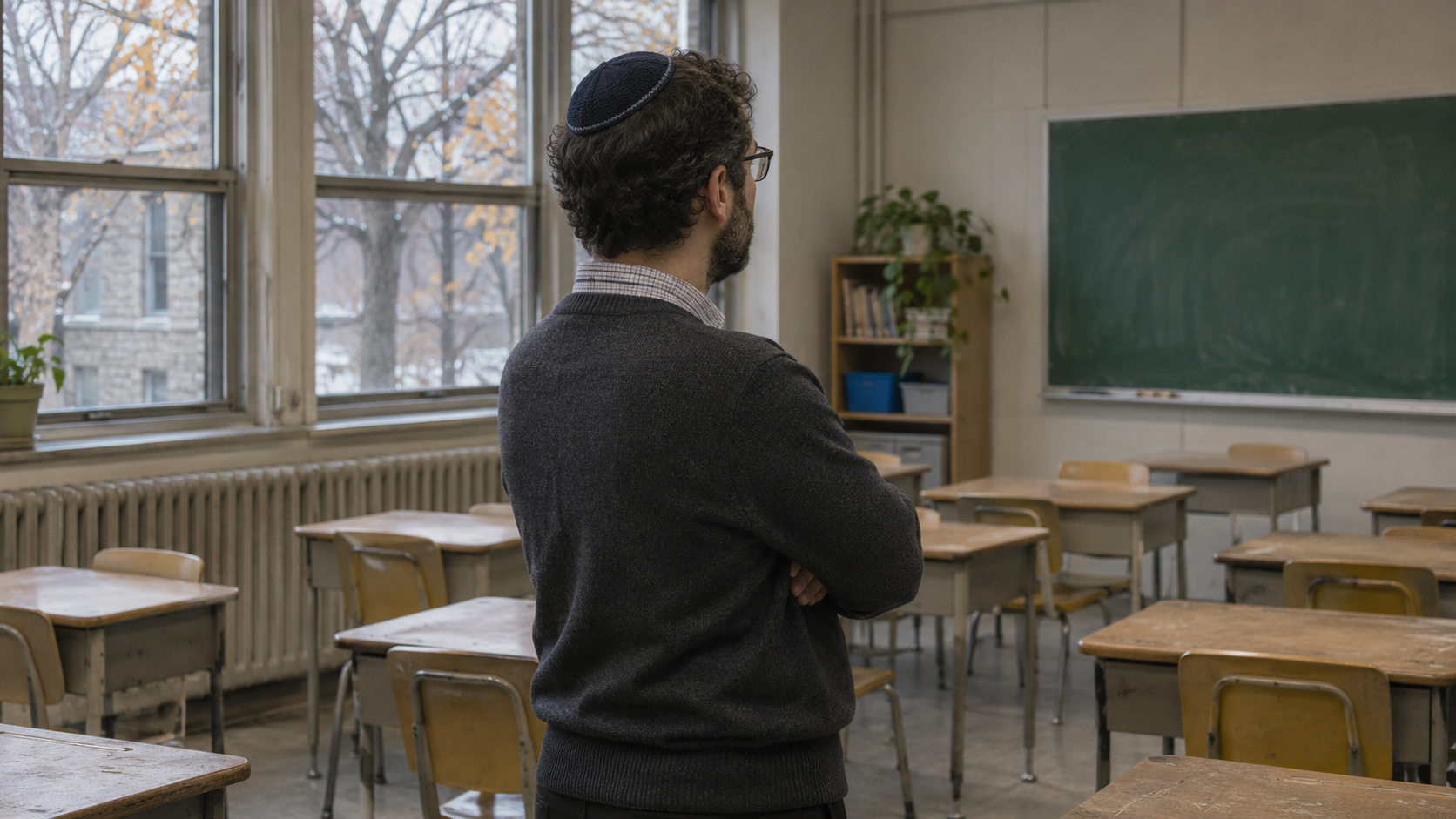
A teacher who applies for a job at an English public school in Montreal can be turned away because he wears a kippa. The English Montreal School Board has spent years fighting for the right to hire that teacher. On Friday, Nov. 27, at 9:45 a.m, the Supreme Court of Canada will release its decision on Quebec’s secularism law, Bill 21.
Quebec passed Bill 21 in 2019, barring people in certain public jobs, including school teachers, principals, police officers and Crown prosecutors, from wearing religious symbols at work. The English Montreal School Board argues that the Charter gives Quebec’s English-speaking minority the right to run its schools, including the right to decide who works in them. Quebec Superior Court sided with the board on that point in 2021. The Quebec Court of Appeal overturned the exemption in 2024, and the Supreme Court heard four days of arguments in March.
In December 2021, parents at Chelsea Elementary School in western Quebec learned that their children’s Grade 3 teacher, Fatemeh Anvari, had been reassigned to a literacy project. She was taken out of the classroom because she wore a hijab. The EMSB argues that Muslim women have been hit especially hard by the law and that the ban runs up against the Charter’s guarantee that rights apply equally to women and men.
Montreal’s Lord Reading Law Society was fighting the bill before it became law. The Jewish legal association submitted a brief to the National Assembly in 2019 and is now one of the appellants. Hamshuchas Hadoirois International Association also intervened at the Supreme Court, backing the World Sikh Organization and Amrit Kaur in asking the judges to strike down the law.
Quebec invoked the notwithstanding clause when it passed Bill 21 and renewed it in 2024. The clause lets legislatures override certain Charter protections, including freedom of religion, for up to five years at a time. Ottawa argues that judges can still decide whether a law violates those rights and say so in a judgment while the law stays in force. The court could agree with Ottawa on that point and still leave Quebec’s ban in place.
An exemption for English public school boards would leave Montreal’s subsidized Jewish day schools and yeshivas dealing with Law 9, the later legislation that extended secularism requirements to private schools that take government funding. A ruling that limits how Quebec can use the notwithstanding clause could give those schools grounds to challenge their own restrictions. Meanwhile, the Parti Québécois government has promised to ban visible religious symbols on elementary students. It still hasn’t told Jewish parents whether that means their sons will have to take off their kippas inside a Jewish school.





Leave a Reply