
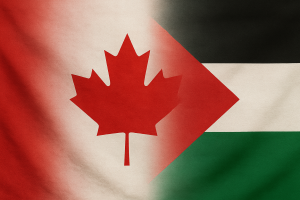
When Canada introduced special immigration measures following the October 7 attack and the war that followed, they applied to both Israelis and Palestinians. Israeli nationals and Palestinian Authority passport holders who were already in Canada could apply for open work permits, study permits and extensions of their temporary status, and when those measures were extended in 2024, the government continued to include both groups.
That is no longer the case. The measures covering Israelis expired, while the Palestinian measures continued and have now been extended again, this time through December 30, 2027. There is also a separate measure allowing some people approved under the Gaza family program, but unable to leave the region, to enter Canada as late as March 31, 2028. There is no corresponding new extension for Israelis.
The change received little attention when Immigration, Refugees and Citizenship Canada announced the latest extension on July 31. Ottawa described it as a “balanced extension” of measures for Palestinians affected by the war, without saying much about the fact that the original policy had included Israelis as well.
The June 2024 policy was quite specific. It applied to a foreign national who was either “an Israeli national” or held a passport or travel document issued by the Palestinian Authority, provided the person met the other requirements. That policy expired on July 31, 2025, and the policy that followed was directed specifically at Palestinians. The latest extension continues that policy until the end of 2027.
At the same time, the Palestinian measures have expanded beyond the original Gaza extended family program, which opened in January 2024 with a limit of 1,000 applications. The Trudeau government later increased the cap to 5,000, and the program closed to new applications in March 2025 after that number was reached. The 5,000 place program has not reopened, but other measures surrounding it have continued to grow.
Under the newest policy, a person holding a Palestinian Authority passport or travel document who is legally in Canada and whose authorized period of stay began on or before September 30, 2027 can apply for a fee exempt open work permit, study permit, temporary resident permit or extension of temporary status, provided the other conditions are met. The policy does not require that person to have entered through the Gaza extended family program, does not require a Canadian relative and does not say the applicant must have come from Gaza.
That means a Palestinian national entering Canada legally through another temporary immigration route can potentially qualify for the special measures once here. The policy also covers certain foreign national family members of Canadian citizens or permanent residents who left the Palestinian territories after October 7, 2023, subject to their own eligibility requirements.
There is a separate policy for people who were approved under the Gaza extended family program but have been unable to leave the region. Introduced in April, that measure remains in effect until March 31, 2028 and contains an interesting exemption from the normal rules governing temporary admission to Canada.
Ordinarily, someone seeking temporary admission has to satisfy an immigration officer that he or she will leave Canada at the end of the authorized stay. Eligible Gaza visa holders covered by the April policy can be exempted from that requirement. They can also be exempted from the financial inadmissibility provision of the Immigration and Refugee Protection Act, although other admissibility requirements remain, including security screening.
Ottawa continues to describe the Gaza program as temporary and has said it is not a refugee program. There is no automatic permanent residence attached to any of these measures, but a program created as an emergency response to a war that began in October 2023 now includes special immigration provisions extending into 2027 and, for some approved visa holders, 2028.
The numbers behind the original Gaza program are also somewhat different from the 5,000 application figure most often associated with it. According to IRCC figures prepared for Parliament, 6,350 applications had been accepted into processing under the public policy and what the department describes as public policy adjacent cases as of January 31, 2026, although only 5,000 counted against the official cap. Another 1,545 temporary resident visa and temporary resident permit applications were being processed outside the public policy.
Those figures should not be confused with the number of people who actually came to Canada. At the same point, 1,325 visas or temporary resident permits had been approved under the public policy category and another 610 outside it, while only 970 people had arrived through the public policy category and another 420 through the outside category, bringing total arrivals listed by IRCC to 1,390.
Getting people out of Gaza has been one of the major obstacles to the program, since Canada does not control the border and many people who have been approved have been unable to leave. That is also the reason Ottawa gives for extending entry provisions for already approved Gaza visa holders until March 2028.
Security screening has presented another problem. With no Canadian immigration operation inside Gaza, applicants provide enhanced biographical information while still there for preliminary screening, with biometrics and further admissibility checks taking place if they are able to reach a third country. The Canadian Security Intelligence Service said in its 2025 public report that special immigration programs had pushed its immigration security screening inventory to a historic high, specifically identifying Gaza as one of the programs requiring considerable effort.
Once eligible Gaza arrivals reach Canada, the assistance available to them goes beyond immigration status. Eligible adults can receive a one time, non taxable federal payment of $3,000, while children can receive $1,500. They can also receive temporary federal health coverage and settlement assistance, including help finding employment and housing, accessing language classes and registering children for school, although settlement services in Quebec operate under the province’s separate system.
That federal assistance was added even though the original Gaza family program required the Canadian citizen or permanent resident acting as the family anchor to undertake to support the arriving relatives for one year, including providing or helping to provide housing, food, clothing and other basic necessities.
There is also the possibility that someone who originally enters Canada as a temporary resident can subsequently make a refugee claim, although that is a completely separate immigration process and should not be confused with the Gaza program. As of June 30, 2026, 1,521 Palestinian refugee claims were pending before the Immigration and Refugee Board. The IRB figures do not identify how those people entered Canada, so there is no basis to claim that they arrived through the Gaza measures.
When IRCC announced the latest changes, it called them a “balanced extension.” It did not mention that Israelis were no longer included.




Leave a Reply