

By Howie Silbiger
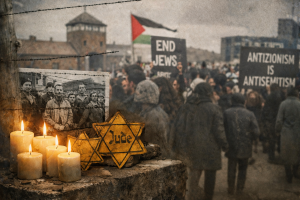
Yom HaShoah arrives, and like clockwork, the language settles into place. Six million. Never again. Ceremonies, candles, school programs, a pause that feels serious in the moment and then, almost as quickly, fades back into routine. It’s respectful, it’s necessary, but if that’s where it ends, it never leaves the realm of comfortable remembrance.
Yom HaShoah was never meant to be comfortable.
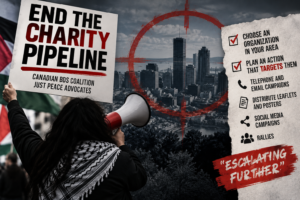
For years, Holocaust remembrance sat firmly in the past tense. Something that happened there, then, under conditions people tell themselves that no longer exist. That assumption is starting to crack. Not in theory, not in academic debate, but in what’s happening on the ground. Jewish institutions are operating under constant security, students are dealing with open hostility that gets excused as politics or freedom of speech. Public spaces where the line keeps shifting, a little more each time, about what’s acceptable when it comes to Jews.
Call it antisemitism, antijewism or whatever makes you comfortable, for me, the uncomfortable truth is that the pattern.
Before getting into where that pattern leads, it’s worth looking back to someone who spent decades insisting people were misreading exactly this kind of moment, Rabbi Meir Kahane.
Kahane was maligned during his time, scrutinized, condemned and even expelled from Israeli politics. He was also a game changer and a constant reminder that Jews are always in danger. Putting aside the controversial elements of his political life, He was the founder of the Jewish Defense League, created to protect Jews of New York who were under attack.
In his public life, outside of the Arab threat to Israel, his central argument was simple. Kahane believed that Jewish vulnerability didn’t end with the Holocaust, it just changed form. He pushed back hard against the idea that Western societies had somehow outgrown the kind of thinking that made the Holocaust possible. In his view, antijewism wasn’t an anomaly, it was a recurring reality that surfaces whenever conditions allow it to.
Right before he was assassinated, Kahane created the Museum of the Potential Holocaust. His exhibits, which I had the opportunity to tour not long after his assassination in 1990, were made up of newspaper articles and other media that he felt proved that under the right conditions, with a charismatic leader, a Holocaust in the magnitude of the 1940s can happen anywhere at any given time.
For a long time, it seemed like a radical conspiracy theory, it doesn’t land the same way today.
Look at what’s happening around the world, Incidents rising in cities that pride themselves on tolerance. Jewish schools and synagogues treated as high-risk locations. Campuses where Jewish students are targeted and the response is hesitation, deflection, or silence. Language that would be unacceptable if it was used against any other group is now getting a pass because it’s framed as “freedom of speech” or “political rhetoric”.
This is how it starts. Not with declarations, not with uniforms, not with anything that makes it easy to point and say, that’s the moment. It starts with normalization. With people adjusting to things they would have rejected outright before. With a slow erosion of standards until the abnormal feels routine.
Kahane’s warning was that by the time a threat is obvious to everyone, it’s already too late to stop it. That’s not ideologue trying to scare the masses, that’s a deep reading of history. The truth is that the Holocaust didn’t begin with extermination camps, it began with hesitation, with people convincing themselves that what they were seeing didn’t yet require a serious response.
So where does that leave Yom HaShoah?
If it’s just about memory, then it stays contained. A day, a ceremony, a set of words that get repeated and then put away. If it’s taken seriously, it becomes something else entirely. It becomes a checkpoint, a moment to look at the present and ask whether the early signs people ignored before are showing up again in different ways.
And they are, across multiple fronts and that’s what makes it harder to pin down and easier to dismiss. It doesn’t look like the past, so people convince themselves it isn’t connected to it.
And that’s the mistake. In order for Yom Hashoah to mean anything, it has to push itself beyond ritual, it has to initiate action. It has to motivate, it has to push the community to take action, stand strong and not allow Jew haters to win.
It means calling antijewism out clearly, not softening it to make it more acceptable. It means institutions being forced to draw lines and actually enforce them instead of managing optics. It means communities refusing to accept a baseline level of hostility that would never be tolerated anywhere else. It means understanding that security isn’t paranoia if the threat is real.
And it means dropping the assumption that someone else will step in if things get worse. That assumption has been tested and has consistently failed.
Kahane didn’t frame his arguments to be comfortable or widely accepted, he framed them to force urgency, to strip away everything else and to recognize that all that’s left is the question that sits right at the center of Yom Hashoah; If the conditions that made the Holocaust possible can reappear in new forms, and there’s no real evidence they can’t, then what exactly are you prepared to do when you see them starting to take shape again?
Because remembering without recognizing the pattern and responding isn’t remembrance at all.
Howie Silbiger is the host of The Howie Silbiger Show on truetalkradio.com and Political Hitman on israelnewstalkradio.com. He is the Editor in Chief of The Montreal Jewish News.


Discover more from The Montreal Jewish News
Subscribe to get the latest posts sent to your email.