By Howie Silbiger
When Yeshiva Gedola Elementary School was shot for the second time in November 2023, everyone wanted answers. By then, the fact that a Jewish institution had been targeted was no longer entirely surprising.
The weeks following October 7 had seen anti-Jewish attacks and incidents rise across Canada. Synagogues were hiring security guards, community organizations were reviewing emergency plans, and parents were having conversations they never imagined they would need to have.
This week, Toronto Police may have provided the first real clue.
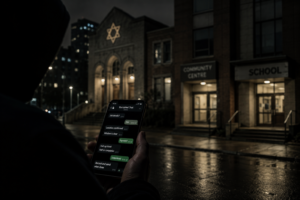
According to investigators, attacks on Jewish institutions may be connected to a gun-for-hire network operating in the Greater Toronto Area. Police allege individuals were recruited through encrypted messaging applications, paid to carry out shootings, and required to provide video evidence proving the attacks had been completed.
If that is true, then somebody was selecting the targets. For many Jews, it feels like the first indication that some of the attacks that followed October 7 may not have been as random as they appeared.
As a principal at Yeshiva Gedola Elementary School, I remember standing in the building after the shooting and looking at the damage. The windows would be replaced and insurance would cover most of the damage. Broken glass and bullet holes, frightening as they were, were still problems with solutions.
The harder part came afterwards.
The next morning, students returned to school. Teachers returned to work. Classes continued. On paper everything seemed normal, but it wasn’t normal. One of our kindergarten students became afraid to walk into the hallway by himself. Before the shooting, it was just a hallway, afterwards, it wasn’t.
Nobody had explained geopolitics to him, he did not know about Hamas, Iran, campus protests or the endless arguments taking place online. He simply knew that somebody had shot at his school, there was a dent in the locker near his classroom where the bullet bounced off and a hole in the door window right next to his classroom.
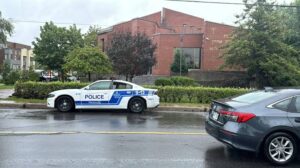
Parents were worried, could it happen again? What if the next attack happened during school hours? What if the person responsible decided not to wait until the building was empty? They wanted answers that law enforcement, the school or polticians couldn’t answer. The most we got, a police car parked in front of the school 24/7 for a few months. A nice deterrent, but not a solution.
As the months passed, it became harder to view what happened at Yeshiva Gedola as an isolated incident. Parents at Azrieli Talmud Torah in Montreal were asking many of the same questions after their school was struck by gunfire on the same night. Families connected to Bais Chaya Mushka in Toronto were doing the same. Synagogues increased security, community organizations reviewed emergency procedures and security guards, cameras, barriers and lockdown protocols became part of daily life.
The political response often felt strangely detached from what was happening on the ground. After Yeshiva Gedola and Azrieli Talmud Torah were targeted, then Montreal Mayor Valérie Plante in a press conference, in front of the shattered door of Yeshiva Gedola, condemned both antisemitism and Islamophobia. Then prime minister Justin Trudeau adopted a similar approach on a nation-wide broadcast a few days later.
Many Jews were left wondering why attacks on Jewish schools seemed to trigger conversations about everything except attacks on Jewish schools. Jewish institutions were being targeted, millions of dollars were being spent on security, children were asking questions they should never have had to ask, yet somehow the conversation often drifted elsewhere.
For nearly three years, Canadians have largely been encouraged to see these incidents as unrelated events. A shooting here. An attempted arson there. Graffiti somewhere else. Different cities, different police services, different investigations. Maybe they were unrelated, but the similarities were hard to ignore.
Yeshiva Gedola. Azrieli Talmud Torah. Bais Chaya Mushka. Congregation Beth Tikvah. Synagogues in Toronto. The targets were overwhelmingly Jewish. The attacks often happened at night. Firearms and arson appeared repeatedly. The perpetrators were usually gone before police arrived. For years, those similarities sat in plain sight. The Toronto investigation raises the possibility that at least some of them were connected.
So who was hiring them?
Criminal organizations do not generally wake up one morning and decide to shoot at Jewish schools. Somebody chooses the targets.
One possibility is that investigators are looking at a model in which ideological actors outsourced violence to ordinary criminals. The person pulling the trigger may have been motivated entirely by money. He may have known very little about the people directing the operation. The people giving instructions may have been several layers removed from the crime itself.
That would explain why solving these cases has proven so difficult.
Governments such as Iran have long been accused of operating through proxies, intermediaries and criminal networks rather than acting directly. Recent allegations by American prosecutors have added another layer to those suspicions.
Last year, U.S. prosecutors charged Iraqi national Mohammad Baqer Saad Dawood Al-Saadi with terrorism-related offences and alleged ties to Iranian-backed militias. American authorities further alleged links between Al-Saadi and attacks in Canada, including the shooting at the American consulate in Toronto and an attack targeting a synagogue.
While those allegations remain unproven, they are serious enough that they cannot simply be ignored. Whether they ultimately connect to attacks on Jewish schools remains unknown. For the first time in a long time, however, investigators appear to be asking the same question many Jewish Canadians have been asking since 2023.
Who was behind it?
In the meantime, the consequences have been carried by ordinary Canadian Jews. Parents think twice when dropping their children off at school, synagogues that once felt open now have guards standing at the door. Students learn far earlier than they should that being Jewish can make them a target.
If investigators are right, then the story Canadians have been telling themselves for the last three years, that these were isolated incidents committed by isolated individuals, may turn out to be wrong.
All I know is that if somebody was paying people to shoot at Jewish schools, Canadians deserve to know who was signing the cheques.
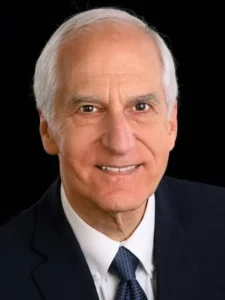
Howie Silbiger is the host of The Howie Silbiger Show on truetalkradio.com and Political Hitman on israelnewstalkradio.com. He is the Editor in Chief of The Montreal Jewish News.


Discover more from The Montreal Jewish News
Subscribe to get the latest posts sent to your email.