




By Joseph Marshall
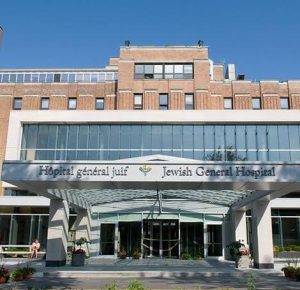
The Jewish General Hospital has officially been designated a university hospital by the Quebec government, giving formal recognition to the teaching, research and specialized medical work the institution has carried out for decades. The announcement is a significant achievement for the hospital and for the Montreal Jewish community that founded it, but it also comes at a time when much of the Jewish General’s visible Jewish character has gradually disappeared.
Health Minister Sonia Bélanger announced Tuesday that the hospital will now officially be known as the Jewish General Hospital University Health Centre, or the Centre hospitalier universitaire général juif. The designation recognizes the hospital’s role in patient care, medical education, research, innovation and the development of specialized and ultra-specialized services.
The new status does not bring an immediate increase in the hospital’s operating budget and does not change its current responsibilities. The Quebec government said the designation was granted at no additional cost to the province. It will, however, make the Jewish General eligible for research, innovation and teaching grants that were previously unavailable to it, while strengthening its ability to attract specialists, researchers and students.
The designation formalizes a role the hospital has already been performing as one of Quebec’s busiest McGill-affiliated teaching hospitals. The 637-bed institution admits more than 23,000 patients a year and handles at least 300,000 outpatient visits, 67,000 emergency visits and more than 4,000 births annually.
Dr. Lawrence Rosenberg, president and CEO of the Santé Québec West-Central Montreal Health and Social Services University Network, tied the announcement directly to the community that created the hospital.
“The story of the Jewish General Hospital is, in many ways, the story of Montreal’s Jewish community itself,” Rosenberg said. “The founders of this hospital believed that their community held both a responsibility to its past and a commitment to its future. That belief is still deeply embedded in the community today.”
The Jewish General was developed during the late 1920s and early 1930s, when Jewish doctors were often unable to find employment in Montreal’s established hospitals and Jewish patients could not always receive care in an environment sensitive to their religious and cultural needs. The Jewish community raised the money to build its own institution, with support from the provincial government, and the hospital opened in 1934.
Its founders did not create a hospital exclusively for Jewish patients. From the beginning, its doors were open to patients and employees of every religion and background. That became part of the hospital’s identity: an institution founded because Jews were excluded elsewhere, but built to serve everyone.
“This hospital began as an act of faith,” Rosenberg said. “It was built by people who were told there wasn’t room for them elsewhere, and who answered by building something better for everyone.”
That history makes the university designation particularly meaningful, but it also highlights how much the Jewish General has changed. The words “Jewish General” remain on the building, Jewish donors continue to support it and the names of prominent Jewish families can be found throughout its departments and pavilions. Its independent governance, however, ended as part of Quebec’s sweeping healthcare reorganization in 2015.
The hospital’s board of directors was dissolved, along with those of individual healthcare institutions across Quebec, and the Jewish General became part of the larger West-Central Montreal CIUSSS. An advisory committee and Board of Governors were created to protect the hospital’s cultural and linguistic heritage, maintain its ties with the community and work with the Jewish General Hospital Foundation, but final administrative authority moved to the regional healthcare network.
Hospital officials insisted at the time that the Jewish General’s distinctive identity would be protected. The Board of Governors later described its responsibility as safeguarding the hospital’s cultural identity, bilingual status, values, legacy, property and branding. The hospital itself published an article in 2017 explaining that work was underway to ensure its “unique character, legacy and values” remained intact within the larger CIUSSS structure.
The need for those assurances reflected a concern within the Jewish community that the hospital could remain Jewish in name and history while becoming progressively less Jewish in its daily operation. Over the years, much of the institution’s Jewishness has moved into the background, expressed largely through its history, philanthropy and community relationships rather than through visible institutional practices.
Kosher food has remained one of the clearest exceptions. The hospital’s Dietetics Department described the Jewish General as unique for operating a 100 per cent kosher food service, and listed maintaining a kosher environment as part of its mission. Kosher food was not simply an incidental service. The inability of Jewish patients to obtain kosher meals in other hospitals was one of the concerns that led community leaders to campaign for a Jewish hospital in the first place.
That operation is now directly affected by Quebec’s latest secularism law.
Bill 9, adopted and given assent on April 2, requires a public institution that offers food based on a religious precept or tradition to also offer an equivalent meal that is not based on that religious precept or tradition. The law does not prevent the Jewish General from serving kosher food, but it means the hospital can no longer operate an exclusively kosher food service. The provision came into force when the legislation received assent.
For patients, the practical effect may be limited. Kosher meals can continue to be prepared and served, and non-Jewish patients have always been treated at the hospital. The larger issue is what the requirement represents. One of the last visible institutional expressions of the hospital’s Jewish origins must now be altered in the name of state secularism, even though serving kosher food never prevented the Jewish General from treating people of every faith and background.
The contrast surrounding Tuesday’s announcement is difficult to miss. Quebec is honouring the hospital’s founders, celebrating the institution they built and recognizing the contribution it has made to healthcare, teaching and medical research. At the same time, decisions made through healthcare centralization and secularism legislation have steadily reduced the space in which the hospital’s Jewish identity can be expressed.
The CHU designation remains an important achievement. It gives the Jewish General greater access to grants, reinforces its academic and research mission and formally places it among Quebec’s leading university health institutions.
For Montreal’s Jewish community, however, the announcement is also bittersweet. Quebec has recognized the greatness of the institution Jewish Montreal built after being excluded elsewhere, while much of the Jewish character that made the hospital distinct has been pushed into its history.


Related
Discover more from Montreal Jewish News
Subscribe to get the latest posts sent to your email.