
By Howie Silbiger, Editor-in-Chief
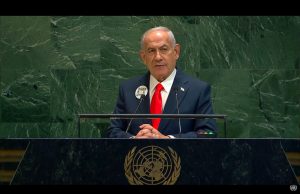
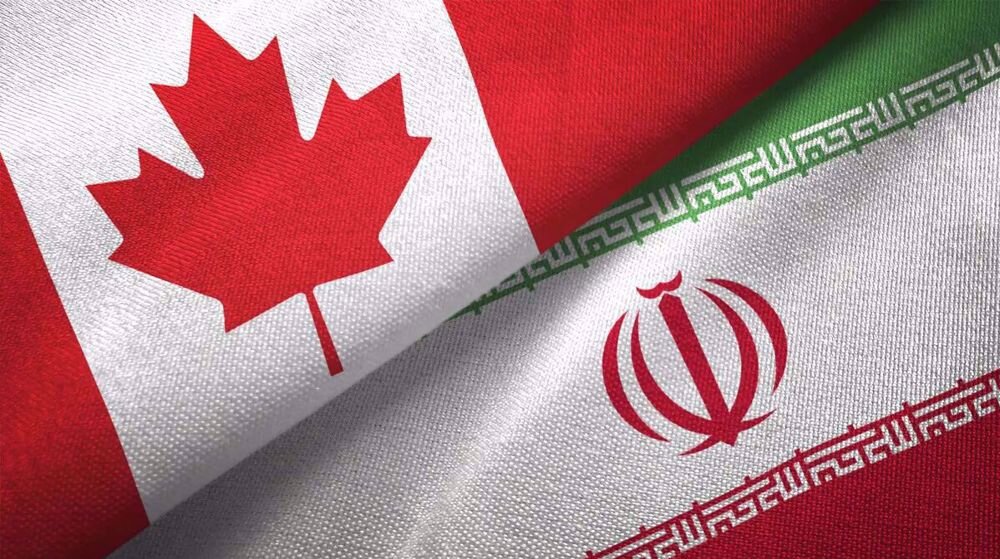
This morning in New York, Israeli Prime Minister Benjamin Netanyahu delivered a defiant, combative address to the 80th session of the U.N. General Assembly that touched on war, diplomacy, and identity. His message was both rallying cry and warning: Israel will not yield to what he called “political capitulation,” especially by Western states. In particular, he reserved a fierce rebuke for Canada, one of the nations that recently recognized Palestinian statehood. Netanyahu asserted that Israel must “finish the job” against Hamas in Gaza, rejecting notions of a partial victory. He framed the war as existential, not political, and explicitly dismissed international pressure or ceasefire calls as interference. One of the sharper moments was his attack on Canada and other Western nations who rushed to recognize Palestine. He accused them of sending a message that “murdering Jews pays off” and characterized those governments as weak, succumbing to mob pressure, and betraying the principle of justice. His line in English, “Western leaders may have buckled under the pressure… Israel won’t,” was aimed directly at Ottawa, London, Paris and Canberra.
Netanyahu added a dramatic gesture when he revealed that his speech was being broadcast into Gaza through loudspeakers and commandeered networks in hopes that the hostages might hear it. “Lay down your arms, let my people go,” he said, adding, “We have not forgotten you… we will not falter, and we will not rest until we bring all of you home.” He also mocked Western recognitions of Palestine by noting that “when the most savage terrorists on Earth are exclusively praising your decision … you didn’t do something right, you did something wrong, horribly wrong.” Netanyahu confronted the International Criminal Court arrest warrant looming over him, denied genocide, called those charges “blood libels,” and framed many diplomatic attacks as antisemitic or driven by bias. He compared recognition of a Palestinian state now to “giving Al-Qaeda a state one mile from New York” after 9/11, insisting Israel will not allow what he called a terror state imposed on it. Dozens of countries walked out of the chamber in protest, underscoring the polarizing force of his words.
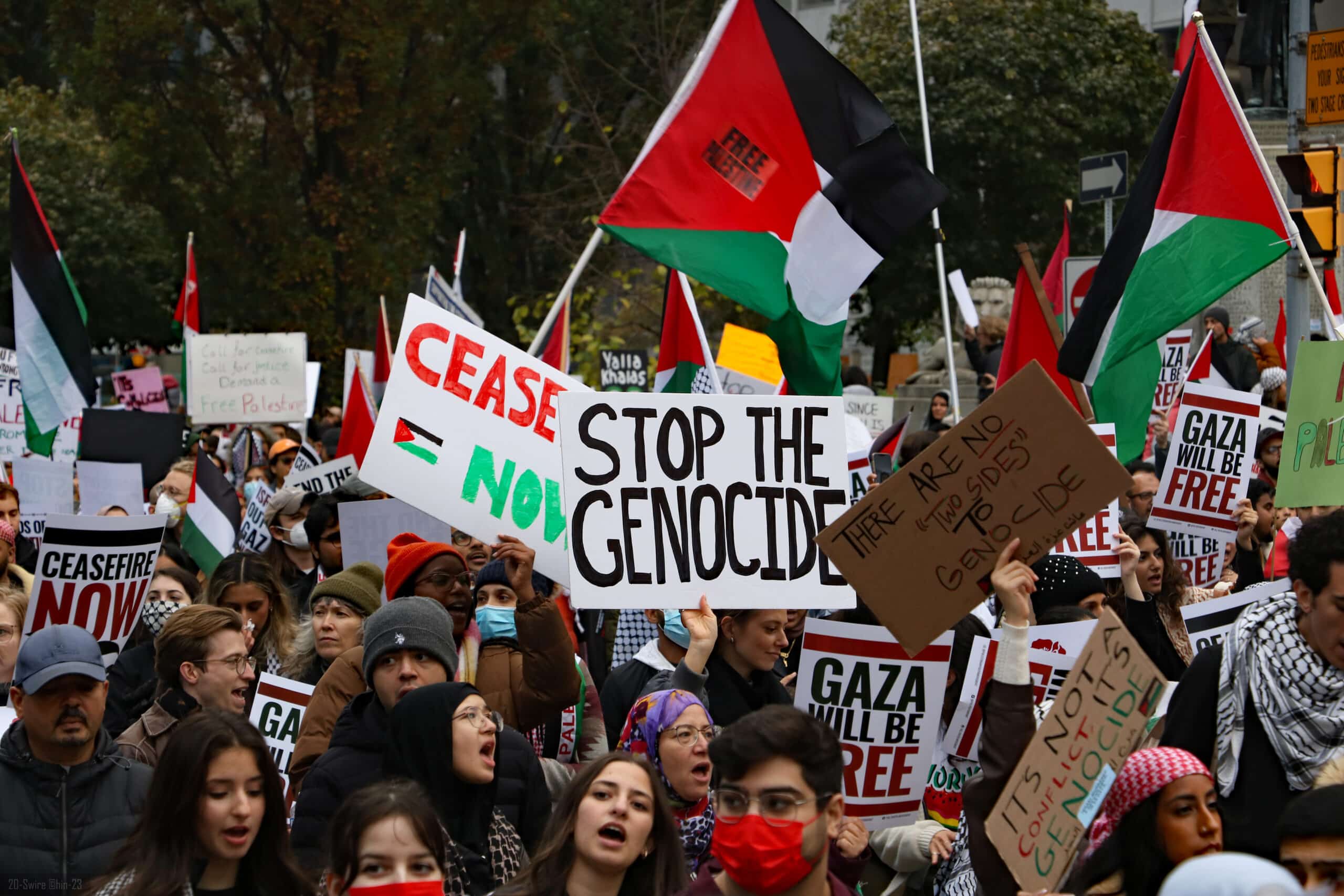
The speech capped a tense week of addresses. A day earlier, Mahmoud Abbas, president of the Palestinian Authority, denounced Israel’s war in Gaza as a genocide, demanded ceasefire and justice, and pressed for global recognition of Palestinian statehood. Abbas also stressed that Hamas would have no role in the future governance of Gaza, condemning Hamas’s October 7 massacre but insisting that Netanyahu’s vision buries any hope of a two-state horizon. On the same day, Indonesian President Prabowo Subianto took a more moderate tone, calling for a two-state solution, pledging that Israel’s security must be guaranteed, and invoking multiple religious traditions in a message of coexistence. His speech highlighted the diversity of approaches among Muslim-majority states and stood in stark contrast to Abbas’s fiery condemnation and Netanyahu’s combative rejection.
Inside Israel, criticism of Netanyahu’s performance was immediate. Opposition voices argued that his theatrics only deepen Israel’s isolation while hostages remain in peril. One op-ed from a hostage family member charged, “I know it will be full of lies, spin and deflections … The world cannot keep enabling this. We must do everything possible to end this nightmare.” For many Canadian Jews, the sting came from Netanyahu’s choice to single out Canada as complicit in rewarding terror. That line will resonate in synagogues, advocacy groups and community forums, sparking debate over whether Canada acted precipitously in recognizing Palestine or whether Netanyahu unfairly maligned a democratic ally.
For Montreal’s Jewish community, the speech raises urgent questions. Some will see it as a rallying cry to stand firm with Israel against a hostile world. Others will see it as dangerous brinkmanship that risks alienating allies while Gaza burns and hostages remain captive. Either way, the fact that Canada was explicitly named ensures the speech will not simply pass through the headlines. It will be discussed at Shabbat tables, in community boardrooms, and in political circles across the country. Netanyahu’s U.N. address was bold, uncompromising, and deeply polarizing. It painted the world in sharp contrast: Israel and its defenders against weak states, biased institutions, and terror sympathizers. For the Jewish community in Montreal and beyond, it was a reminder that Israel’s battles abroad are always, in some way, battles at home.

Leave a Reply