
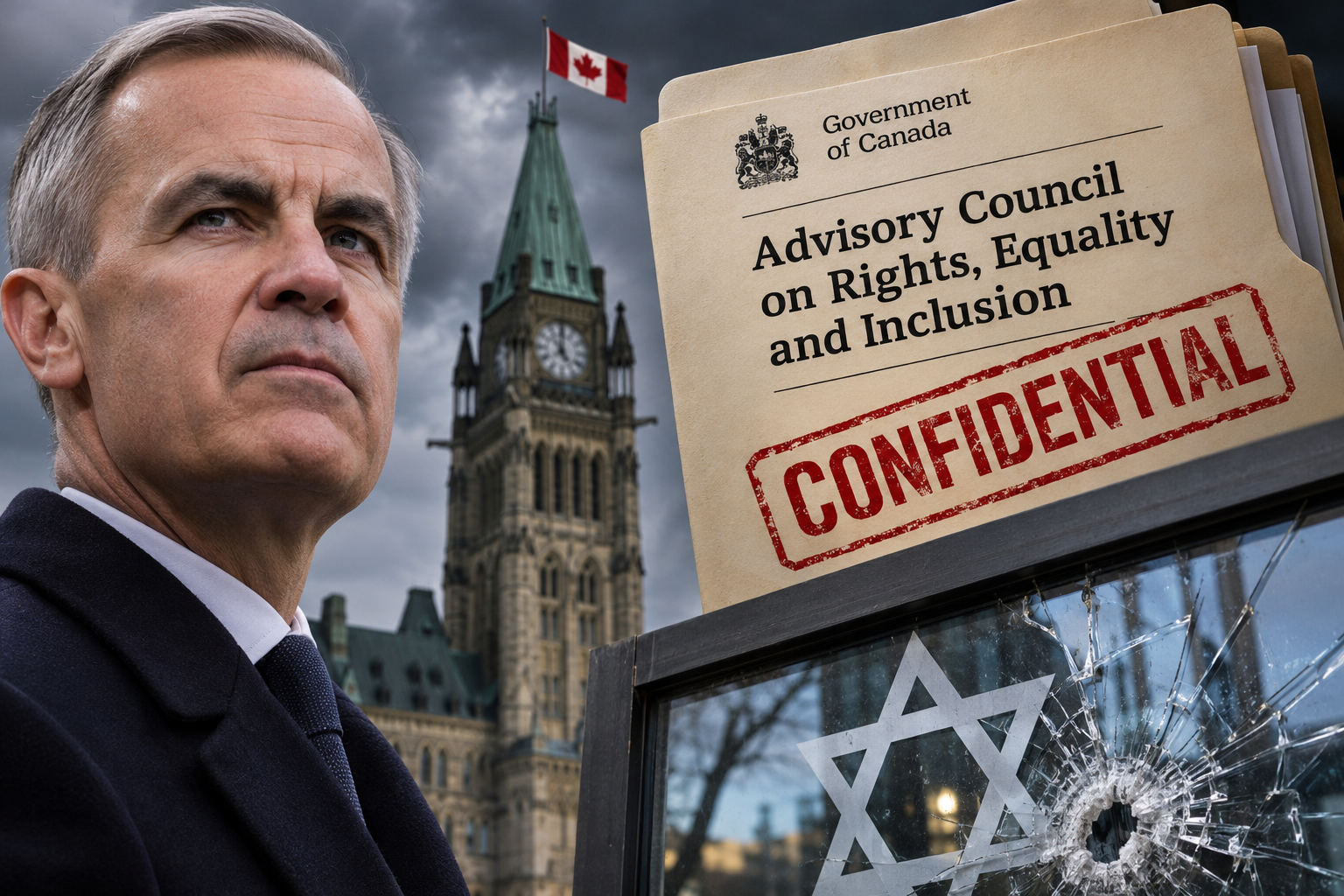
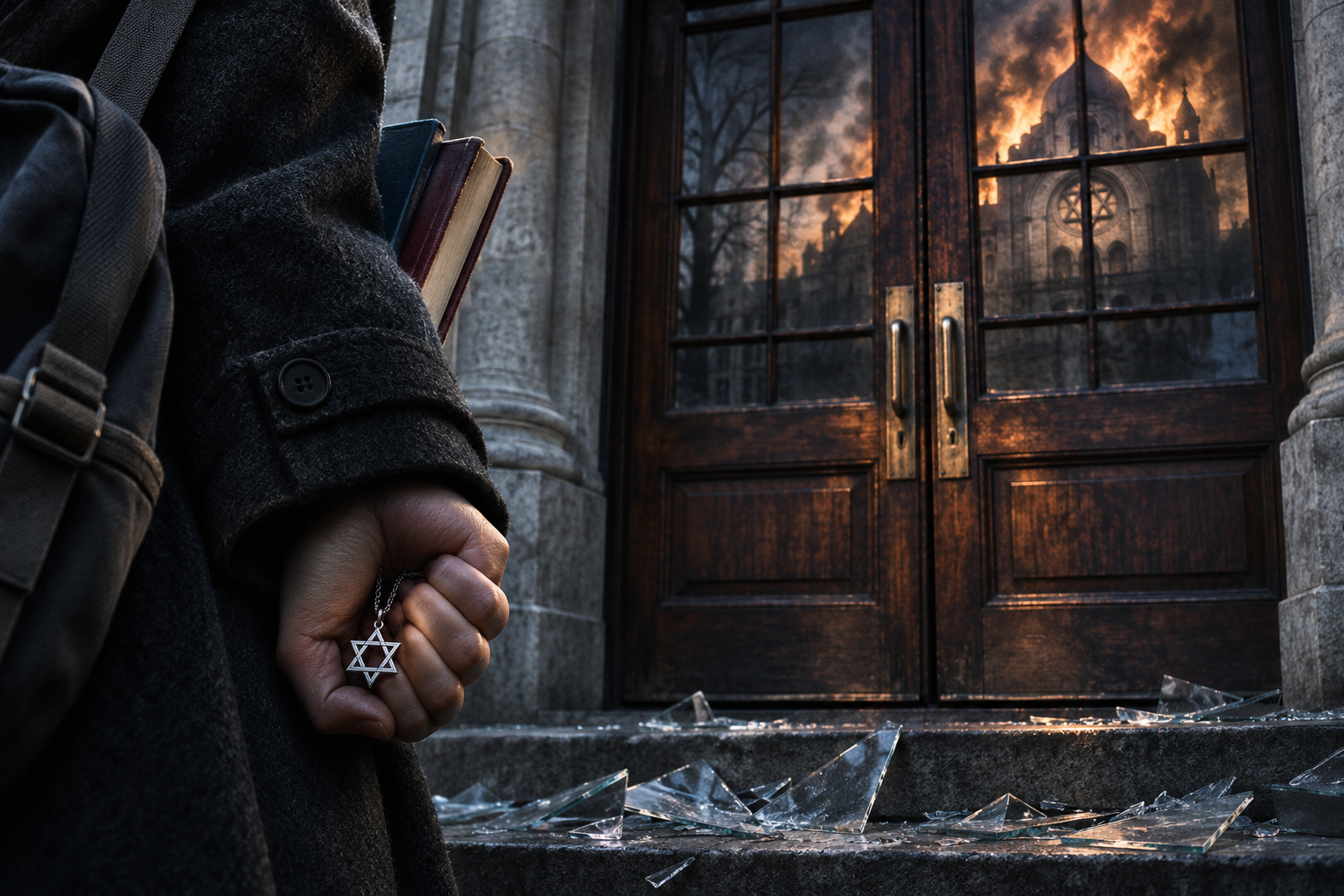
Another 108 incidents of violence and vandalism targeting Canadian Jews. That’s what B’nai Brith Canada says it has documented since Prime Minister Mark Carney stood before a Toronto synagogue in June and promised that his government was finally going to take Jew hatred seriously. Schools have been shot at, synagogues attacked, businesses vandalized, and Jewish Canadians continue to wonder when their government intends to do something that actually makes a difference.
Carney’s Liberal government responded by appointing an advisory council. Five months later, B’nai Brith says it cannot even get a meeting with the people appointed to help address the problem. And after examining the council’s official mandate, I discovered something that makes the entire exercise even more disturbing. The government actually designed this council so that it doesn’t have to tell Canadians what it is doing.
In a November 12 statement, B’nai Brith accused the Advisory Council on Rights, Equality and Inclusion of being virtually invisible since its creation. The organization, which has been documenting Jew hatred in Canada since 1982, says its attempts to engage with the council have been unsuccessful. CEO Simon Wolle wants to know what the council has accomplished while attacks against Jewish Canadians continue.
I think that’s a perfectly reasonable question. Unfortunately, the answer may be none of our business, at least according to the rules established by Carney’s Liberals.
The government’s own terms of reference state that council documents are confidential and can only be released at the minister’s discretion. Members must sign confidentiality agreements, meeting summaries require ministerial approval for publication, and only the minister is authorized to speak officially on behalf of the council. Even the annual activity report that the council is required to prepare does not have to be made public. The minister gets to decide whether Canadians should see it.
What makes this particularly outrageous is that the Senate had already recommended a very different arrangement. In April, the Standing Committee on Human Rights called for the council to report annually to both houses of Parliament on its activities and results. The senators also recommended restoring the dedicated federal Special Envoy on Preserving Holocaust Remembrance and Combatting Antisemitism, a position that had been replaced by the broader advisory council.
Carney’s Liberal government did not adopt either recommendation. Instead, it moved ahead with a council dealing with everything from racism and social cohesion to national unity, while retaining control over what information about its work would be released.
I wrote in June that the government’s approach was troubling. Carney had publicly acknowledged that Canada was failing its Jewish citizens, yet his response was to take a very specific security and civil rights crisis and place it under the umbrella of a general inclusion initiative. After years of Jewish institutions being attacked, I questioned why the Liberals believed another broadly mandated government council was an appropriate response.
Now B’nai Brith is complaining that it cannot get a meeting, and we have little public information about what has been accomplished.
There is no reason to assume that the council’s members have been doing nothing. They may have held productive discussions, consulted community organizations and prepared excellent recommendations. I have no reason to question the intentions of the people appointed to serve. However, appointing respected individuals to a committee does not automatically mean that anything useful will come out of it.
There is also the question of who gets consulted. B’nai Brith understandably believes it should be involved, considering its decades of experience. But I would be equally interested in knowing whether the council has spoken with Jewish school administrators, synagogue officials, security professionals and the business owners who have been dealing directly with attacks and threats.
As I recently wrote about Jewish communal representation, there is a tendency for governments to rely on a small group of established organizations when they want to know what the Jewish community thinks. Those organizations certainly have expertise, but they do not represent every Jewish Canadian, nor do they necessarily understand the problems faced by people responsible for protecting Jewish institutions every day.
The larger problem is that Carney’s Liberals seem to believe that establishing another government body constitutes a meaningful response to a crisis that has been developing for years. Jewish Canadians have repeatedly warned governments about threats against their schools, synagogues, businesses and community institutions. Those warnings were accompanied by actual shootings, vandalism, intimidation and criminal investigations. This is hardly a problem that has gone unnoticed or requires another prolonged exercise in discovering that it exists.
And while the federal government certainly cannot prevent every criminal attack, it can strengthen law enforcement, improve coordination between security agencies, address failures in existing legislation and ensure that people who target Jewish Canadians face meaningful consequences. An advisory council might contribute to those objectives. But it cannot replace the government’s responsibility to act.
Carney stood before Jewish Canadians in June and acknowledged that their country was failing them. He was right. What he failed to acknowledge was that his own Liberal Party had been in power throughout much of the deterioration he was describing. The government now promising to fix the problem is the same government that received years of warnings while Jewish institutions became increasingly dependent on expensive security measures simply to operate safely.
Five months later, the question is no longer whether Carney understands the seriousness of the problem. He has already told us that he does. The question is what his government intends to do about it.
The next time a Jewish school is shot at, a Jewish business is vandalized or a synagogue is attacked, a condemnation from Ottawa will not be particularly reassuring, neither will the knowledge that nine prominent Canadians may be sitting in a government meeting discussing how terrible the situation has become.
Carney’s Liberals have had years to listen, years to study the problem and years to respond to the warnings. They do not need another government committee to tell them that Jewish Canadians are being targeted. They need to start doing something about it. If the best Carney can offer is a council whose work his own government can keep secret, then perhaps he should stop being delusional in thinking that appointing a committee is the same thing as solving a problem.
Jewish Canadians are not asking Ottawa to protect them from bad publicity, they are demanding a lifeline. They are begging Ottawa to protect them from people who want to hurt them, people who they have let crop up under their very noses.
After years of Liberal promises, surely the difference shouldn’t be so hard to understand.





Leave a Reply