
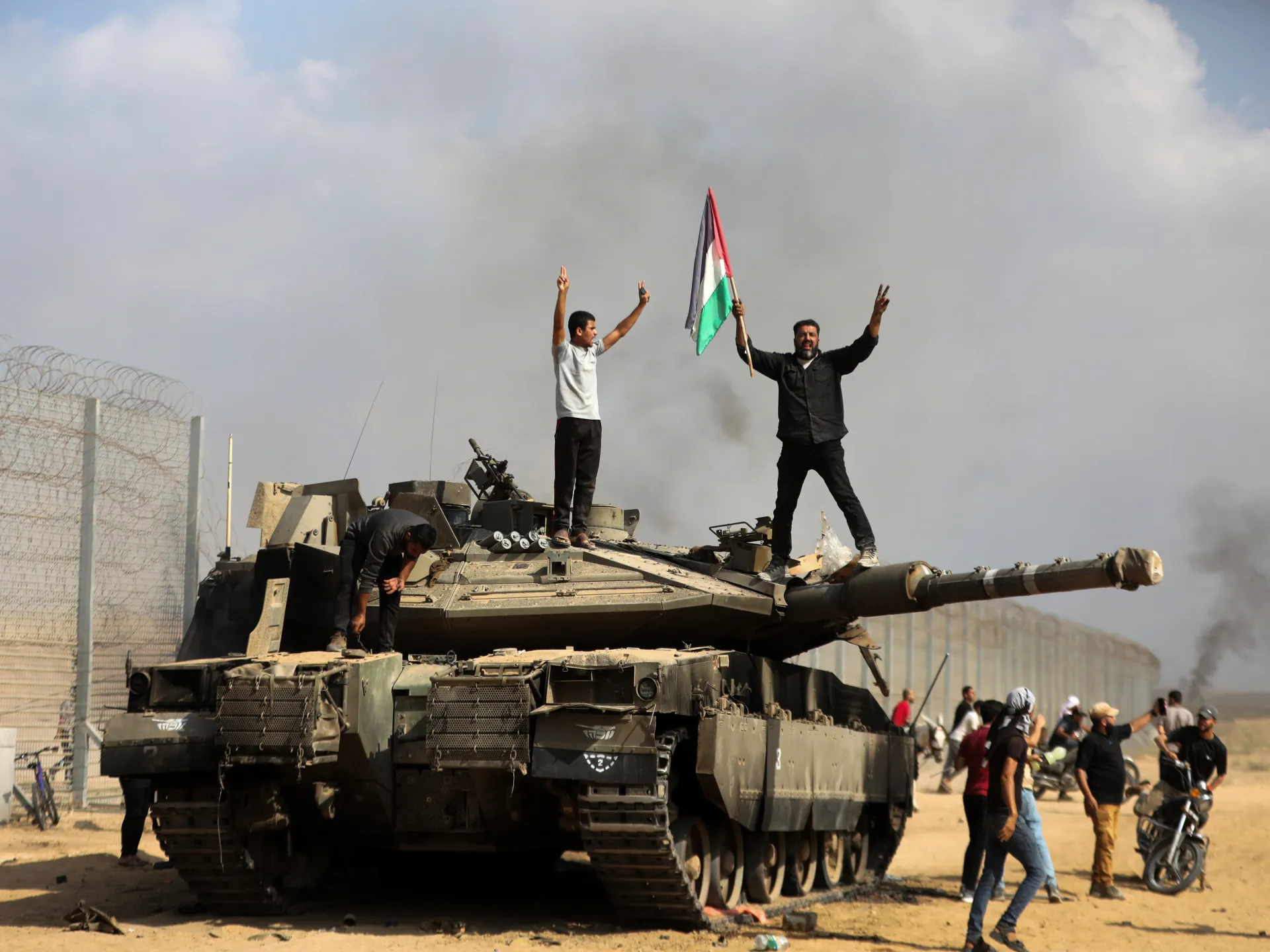
For almost three years, Israelis have been asking how Hamas managed to cross the Gaza border on October 7, 2023, murder approximately 1,200 people, take 251 hostages and overrun communities and military positions before Israel could respond. The question has usually been described as one of intelligence failure, military failure or a catastrophic misunderstanding of Hamas. The information that has emerged since the attack suggests something far more troubling. Israel did not simply fail to see what Hamas was planning. Pieces of the attack were visible well before October 7, some of them were written down, some were rehearsed in front of Israeli intelligence, some were reported by soldiers sitting along the Gaza border, and in the weeks before the massacre, Yahya Sinwar himself may have tried to send a warning through an intermediary that something enormous was coming.
That latest revelation came from Sufian Abu Zaida, a former Palestinian Authority minister and senior Fatah figure from Gaza, who said this week that he was the previously unidentified intermediary described in an investigation by Haaretz journalist Shlomi Eldar. Abu Zaida said he met privately with Sinwar in September 2023, several weeks before the massacre, while discussions were underway over a possible long term arrangement between Hamas and Israel. According to Abu Zaida, Sinwar told him that if there was no progress, he was preparing a “huge surprise” and that Israel should expect an “earthquake.” Abu Zaida said he met Sinwar again later that month and was asked whether the warning had been delivered. This time, according to the account, Sinwar spoke of a major and terrifying operation.
Abu Zaida said he took the warning seriously enough to bring it to a contact in Abu Dhabi who was close to United Arab Emirates President Mohammed bin Zayed. Haaretz reported that the information eventually reached Israel’s Shin Bet and that Emirati officials understood Sinwar’s language as a warning that Hamas was preparing for war. The same Haaretz investigation went further, reporting that bin Zayed personally contacted Prime Minister Benjamin Netanyahu approximately ten days before October 7 and warned him that Hamas was preparing a major operation. Netanyahu has denied that account completely, calling it false and saying he received no such warning from the UAE. The Times of Israel later reported that an Emirati source familiar with the matter confirmed that a warning had been passed, while former IDF chief of staff Gadi Eisenkot said checks he conducted indicated that a warning from a very senior UAE connected source had reached the Prime Minister’s Office. Abu Zaida himself has not claimed to know what happened after his warning left his hands, but he has now publicly confirmed his own part in the chain.
Even without the disputed UAE warning, there was already a great deal sitting inside Israel’s intelligence system. More than a year before October 7, Israeli intelligence had obtained a Hamas invasion plan that became known as “Jericho Wall.” The New York Times reported in November 2023 that it had reviewed the approximately forty page document. It described a massive rocket barrage, drones attacking Israeli surveillance and defensive systems along the Gaza border, Hamas fighters breaking through the barrier using motorcycles, vehicles, paragliders and on foot, military bases being overrun and Israeli communities being invaded. What was described in that document looked remarkably similar to what Hamas eventually did.
The problem was not that Israel had never seen the plan. The problem was that senior officials did not believe Hamas could actually carry it out. The document did not contain a date and Israeli officials reportedly treated it as something Hamas might aspire to do rather than something it was capable of doing. That assumption survived even when Hamas began practising parts of the plan. The New York Times obtained email exchanges showing that in July 2023, a veteran analyst with Unit 8200 warned that a Hamas training exercise closely resembled the Jericho Wall scenario. Hamas fighters practised taking over a kibbutz and military base and killing soldiers, and the analyst warned that Hamas appeared to be developing the capability to carry out the invasion plan. A colonel in the Gaza Division dismissed the scenario as “totally imaginative.”
The soldiers actually watching Gaza were also seeing changes. Surveillance soldiers stationed along the border later told Israeli media that they had reported increasingly unusual Hamas activity for months. They watched Hamas members studying the fence, training repeatedly near Israeli positions, digging, planting explosives and practising how to cross the border. Some of the women who survived October 7 said the exercises became more frequent and more sophisticated as the months went on. Their reports went up the chain of command, but the activity was not treated as evidence that a full scale invasion was being prepared.
Hamas was not even hiding all of its preparations. On September 12, 2023, less than a month before the massacre, Hamas released video of a military exercise showing fighters blowing through a mock Israeli border fence, entering in pickup trucks and moving through a simulated Israeli community. Associated Press later examined the footage and noted how closely the exercise resembled what happened on October 7. Seen after the fact, it looks like a rehearsal. At the time, it was treated as another Hamas training exercise.
There was also a separate warning involving Egypt. In the days after the attack, an Egyptian intelligence official told Associated Press that Egypt had repeatedly warned Israel that “something big” was coming from Gaza. Netanyahu denied that Israel received a specific warning from Egypt, and the exact details remain disputed, including what Egypt knew, whom it contacted and how specific the information actually was. What is not disputed is that by the evening of October 6, Israeli intelligence was picking up its own signs that something unusual was happening inside Gaza.
The IDF and Shin Bet investigations into the hours before the massacre found that Hamas operatives had begun activating Israeli SIM cards that could be used once they entered Israel. Similar activations had occurred before without an attack, which helped convince Israeli officials that the activity did not necessarily mean war was imminent. Still, the activity was serious enough that senior officers were being awakened during the night, additional intelligence gathering was ordered, drones were sent toward Gaza and a small Shin Bet counterterrorism team was dispatched south.
At 3:03 a.m., according to the Shin Bet investigation, the agency sent a warning to the IDF, police and National Security Council saying unusual Hamas communications activity, together with other indicators, could point to offensive action. Senior officials continued discussing what might be happening, but the dominant assumption remained that Hamas was not interested in a major war. The possibilities being considered involved a limited infiltration or kidnapping operation, not thousands of terrorists crossing the border.
At 6:29 a.m., there was no longer anything left to interpret.
The most damaging conclusions about what happened have not come from newspaper columnists or political opponents. They came from Israel’s own security agencies. The IDF investigation released in February 2025 found that the military had badly underestimated Hamas’s intentions and capabilities and had failed in its mission to protect Israeli civilians. The belief that Hamas preferred quiet, could be deterred and would provide enough warning before any major attack had become deeply rooted inside the defence establishment. Israel had built an enormous technological barrier around Gaza, invested heavily in surveillance and remote weapons systems and increasingly trusted that those systems, together with intelligence, would provide enough time to react.
The Shin Bet investigation was even more direct. When its findings were released in March 2025, then Shin Bet chief Ronen Bar said that if the agency had acted differently in the years before October 7 and during the night itself, “the massacre would have been avoided.” The agency acknowledged failures in intelligence gathering, analysis, coordination and the interpretation of warning signs, including those received during the final hours before the attack.
There was no single warning that said Hamas would attack at 6:29 on October 7 with thousands of terrorists. There was no note from Sinwar giving Israel the date and time, and the claims involving Egypt and the UAE are still disputed in parts. But by then Israel had enough information that the idea of Hamas being incapable of a major attack should have been dead. Jericho Wall was in Israeli hands. Hamas had trained for the operation. A Unit 8200 analyst had warned that the plan was becoming operational. Soldiers on the border had watched the training grow and repeatedly reported it. Then came the warnings attributed to Sinwar, followed by the strange activity inside Gaza on the night of October 6.
Each piece was dealt with separately. The invasion plan was too ambitious. The training was just training. The border activity was not considered enough to change the assessment. The SIM cards had been activated before. The assumption that Hamas did not want a major war kept surviving every new piece of information that should have forced somebody to question it.
That is what makes the failures before October 7 so difficult to dismiss as simply the fog of intelligence. Israel was not looking at a blank screen. It was looking at Hamas, watching what Hamas was doing, reading what Hamas wanted to do and receiving reports from its own soldiers about what was happening along the border. The problem was that almost everything was being interpreted through an assumption that had already been made.
Israel saw more than enough to be worried. It just kept finding reasons not to believe what it was seeing, until 6:29 on the morning of October 7, when Hamas crossed the border and the arguments about what it might be planning ended.



Leave a Reply