
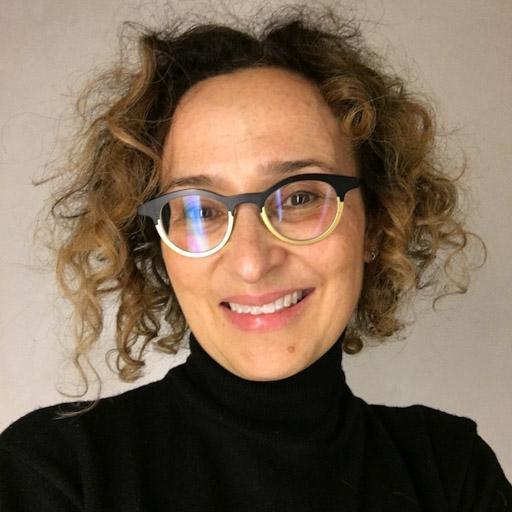
A Concordia University professor has found herself at the centre of an international controversy after delivering a lecture in the United States questioning whether Holocaust museums need to be “decolonized,” a suggestion that has drawn criticism from Jewish organizations, politicians and the United States Holocaust Memorial Museum.
Erica Lehrer, a professor of history at Montreal’s Concordia University, delivered the lecture on November 17 at Pennsylvania State University. The presentation, titled “Do We Need to Decolonize Holocaust Museums?”, was organized by Penn State’s Jewish Studies Program and examined whether Holocaust museums should adopt practices associated with efforts to reform institutions that have historically collected and displayed cultural artifacts.
The lecture’s description argued that Holocaust museums have largely escaped the scrutiny directed at other museums over their collections, institutional practices and relationships with government authorities. It suggested that these institutions could benefit from examining their own historical assumptions, methods of displaying artifacts and representations of the people whose experiences they preserve.
That was enough to provoke considerable anger, particularly over the suggestion that institutions established to document the systematic murder of six million European Jews needed to be examined through a framework commonly associated with colonialism.
The United States Holocaust Memorial Museum was among the organizations condemning the language. In a statement provided to Jewish Insider, the museum described the suggestion of decolonizing Holocaust museums as deeply offensive to survivors and the victims’ memory.
The museum also defended the role of Holocaust survivors in establishing institutions dedicated to documenting the genocide and educating future generations about Nazi persecution.
Pennsylvania Republican Senator Dave McCormick criticized the lecture and raised his concerns with Penn State President Neeli Bendapudi. The Jewish Federation of Greater Philadelphia also objected to the title, warning that the language of decolonization carries particular implications in contemporary debates involving Jewish history, Israel and Zionism.
Penn State subsequently issued a statement acknowledging the controversy and the concerns raised by the lecture’s title. The university emphasized that inviting a speaker did not constitute an endorsement of that speaker’s views.
However, the university also defended the substance of the presentation, explaining that Lehrer’s research concerned the ethical treatment of Holocaust artifacts, particularly objects taken from Jewish families and communities that were never returned to survivors or their descendants.
Tommaso Milani, director of Penn State’s Jewish Studies Program, said the lecture did not diminish the Holocaust or question the importance of institutions dedicated to preserving its memory.
Lehrer herself offered a considerably different explanation from the one that initially generated headlines.
Speaking to The Jerusalem Post, she said her research was concerned with how museums could learn from Indigenous approaches to caring for historical objects, particularly methods that maintain connections between artifacts and the families and communities to which they belong.
Lehrer explained that her own mother’s family heirlooms had been donated to a Holocaust museum, giving her a personal connection to questions about who controls historical objects and how they should be preserved.
She also raised questions about how Holocaust museums represent Jewish and non-Jewish victims, including Roma communities, and whether some exhibitions fail to communicate the full humanity of the individuals whose experiences they document.
Lehrer is not an outsider to Holocaust scholarship. She is a former research fellow at the United States Holocaust Memorial Museum, the same institution that has now criticized the terminology associated with her lecture. She previously held Concordia’s Canada Research Chair in Museum and Heritage Studies and has published extensively on Jewish memory, Holocaust representation and the preservation of Jewish heritage in Poland.
The November lecture was not even the first time Lehrer had presented the subject publicly. On April 17, seven months before the Penn State controversy, she delivered a presentation under the same title at the University of Michigan. The university’s published description contained substantially the same arguments about the need to examine the institutional practices of Holocaust museums.
What has emerged is a dispute involving two different questions. Lehrer is challenging how museums collect, preserve and display historical objects, while her critics are questioning the appropriateness of applying the language of decolonization to institutions established by Holocaust survivors.
For organizations responsible for preserving the history of the Holocaust, that distinction is particularly important. Their collections document the systematic destruction of European Jewry, and their exhibits are intended to ensure that the victims and the crimes committed against them are never forgotten.
Whether those institutions should reconsider how they care for artifacts is a legitimate subject for museum researchers. Whether describing that work as “decolonization” helps or undermines the purpose of Holocaust remembrance is another matter entirely.
For now, a Montreal professor’s choice of terminology has placed her research, her university and some of the world’s most prominent Holocaust institutions at the centre of an argument that began with the title of a lecture.







Leave a Reply