
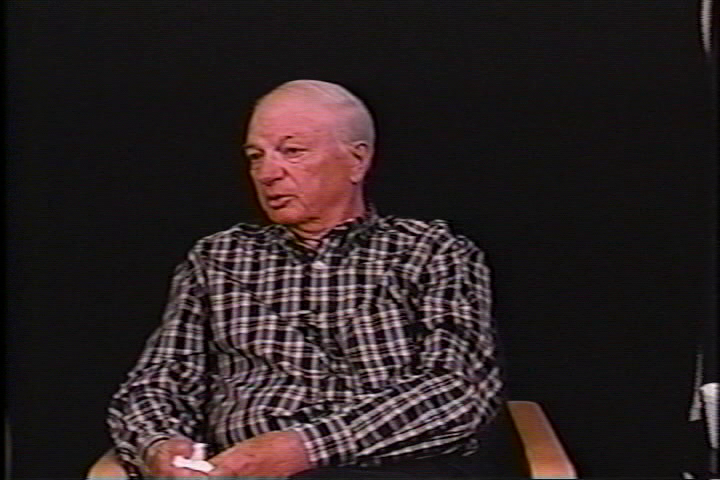
Sidney Zoltak, a Montreal Holocaust survivor, author and longtime advocate for Holocaust education who spent much of his life ensuring that future generations would never forget the destruction of European Jewry, died peacefully at his home on Saturday, October 10, 2026. Born in Poland in 1931, Zoltak survived nearly two years in hiding from the Nazis before eventually making his way to Canada, where he became a prominent figure in Montreal’s Jewish community and one of its most respected voices of Holocaust remembrance.
For decades, Zoltak shared his experiences with students, educators and community organizations, frequently accompanying young people to Poland through the March of the Living program. He served in leadership positions in Canadian Holocaust survivor organizations, advocated for survivors internationally and worked to preserve the Yiddish language and culture that the Nazis had attempted to eradicate. His commitment to Jewish education and his deep attachment to Israel remained central to his life until his death.
Born Yehoshua Zoltak in Siemiatycze, Poland, Sidney grew up in a Jewish family that operated a clothing business. His childhood was interrupted by the outbreak of the Second World War in September 1939, when his hometown came under Soviet occupation. In June 1941, Nazi Germany invaded Soviet occupied territory, bringing the German army to Siemiatycze and subjecting its Jewish population to increasingly brutal restrictions. By August 1942, the town’s Jews had been forced into a ghetto, and within months the Germans began preparing to liquidate it and deport its inhabitants to the Treblinka extermination camp.
Zoltak was just eleven years old when he and his parents, Israel and Henia, escaped through an opening in the ghetto’s barbed wire fence shortly before the liquidation began. The family spent the following months moving between hiding places, relying on the assistance of local villagers while constantly fearing discovery. Eventually, they found refuge with a Polish Catholic family whose willingness to risk their lives to protect Jews had its origins in a simple act of kindness that had taken place years earlier.
Before the war, a young Polish woman named Stanislawa had visited the Zoltak family’s clothing store hoping to purchase a coat. Unable to afford the full price, she was helped by Sidney’s mother, Henia, who allowed her to buy it at a substantial discount. Years later, while the Zoltaks were searching for somewhere to hide, Sidney’s father encountered a young shepherd named Zygmunt Kryński and asked whether his family might help them. Zygmunt brought his older sister, Stanislawa, who recognized Henia and remembered the kindness she had received at the store.
The Kryński family agreed to shelter the Zoltaks, concealing them for fourteen months, including seven months in an underground bunker where they lived without seeing daylight. The family risked execution if the Germans discovered what they were doing, yet continued to protect the Jewish family until liberation by the Soviet army in July 1944. In 2011, the Kryński family was recognized by Yad Vashem as Righteous Among the Nations for its actions during the Holocaust.
When Zoltak returned to Siemiatycze following liberation, he discovered that the Jewish community in which he had grown up had virtually disappeared. Of approximately 7,000 Jews who had lived in the town before the war, fewer than seventy remained. His family’s home was occupied by others, and none of the classmates or childhood friends he had known before the war had survived. Most had been murdered after being deported to Treblinka, while others were killed attempting to escape or remain in hiding.
The destruction of his childhood community remained with him throughout his life. During one of his visits to Treblinka with students participating in March of the Living, Zoltak explained that the extermination camp was the only place where he could have a reunion with the children he had known. Standing among the memorial stones, he remembered classmates and friends who had never been given the opportunity to grow up, raise families or rebuild their lives.
Following the war, the Zoltaks left Poland and eventually reached Italy, where they lived in displaced persons camps. His father died in 1945, leaving Sidney and his mother to continue rebuilding their lives without him. In Italy, Sidney resumed his education and completed vocational training, receiving a diploma in electrical work in March 1948. Later that year, he and his mother immigrated to Canada, settling in Montreal, where members of her family were already living.
Montreal became Zoltak’s permanent home. He established a successful career in the insurance business and became deeply involved in Jewish communal and cultural activities. In 1954, he married Ann Dickstein, a fellow Holocaust survivor originally from Ukraine. Together they raised two sons, Irwin and Larry. The family suffered a devastating loss when Irwin died in 1973, and Sidney would later endure the death of his beloved wife, Ann.
Although Zoltak built a successful life in Canada, he never abandoned his responsibility to those who had not survived. He became actively involved in the Canadian Jewish Holocaust Survivors and Descendants organization, eventually serving as its president, and represented survivors on the board of the Conference on Jewish Material Claims Against Germany, which advocates for restitution and assistance for victims of Nazi persecution. He also served in leadership roles at the Montreal Holocaust Memorial Centre, including co-chairing its Yom Hashoah and remembrance committees from 1993 to 2007.
His work in Holocaust education brought him into contact with thousands of young people, particularly through the March of the Living program, which takes Jewish students to the sites of former ghettos, concentration camps and extermination centres in Poland before continuing to Israel. Zoltak participated in numerous trips, speaking directly to students about his childhood, his escape from the Nazis and the almost complete destruction of his hometown. For students who had learned about the Holocaust through textbooks and classroom discussions, hearing from someone who had lived through those events offered an understanding that could not be obtained from historical records alone.
He also maintained a remarkable relationship with the Polish family that had saved his life. In 1997, more than half a century after the war, Zoltak returned to Poland with members of his family to reunite with his rescuers. He subsequently returned on other occasions, introducing younger generations of his family to descendants of the Kryński family. In 2019, three generations of the two families gathered at the farm where he had once hidden from the Nazis, an extraordinary reunion between people whose family histories had become permanently connected during the Holocaust.
Zoltak documented his experiences in his 2013 memoir, My Silent Pledge: A Journey of Struggle, Survival and Remembrance, recounting his childhood in Poland, the years spent hiding, the destruction of his community and the difficult process of rebuilding his life after the war. His testimony was also recorded by the Montreal Holocaust Museum, and in 2016 he participated in an extensive Yiddish oral history interview with the Yiddish Book Center. His relationship with his rescuers was documented on film, preserving another part of his extraordinary personal history.
Beyond Holocaust education, Zoltak was committed to the preservation of Yiddish culture. He was involved with the Dora Wasserman Yiddish Theatre and maintained a lifelong appreciation for Yiddish music and performance. In 2018, he helped bring to fruition Remember! Gedenk! Yiddish Ghetto Songs, a recording project featuring sixteen songs and stories associated with Jewish life during the Holocaust. The project, presented with performers from the Dora Wasserman Yiddish Theatre, was launched at Montreal’s Segal Centre for Performing Arts.
The recording had its beginnings more than two decades earlier, when Zoltak and several friends recorded Yiddish folk songs as a keepsake for their grandchildren. What began as a private effort to preserve songs for his own family eventually developed into a public project intended to ensure that the music of the ghettos would remain accessible to future generations. For Zoltak, Yiddish was part of the Jewish world he had known before the war, and preserving its music was another way of remembering those who had been murdered.
His family described him as a devoted Zionist whose love for Israel shaped the upbringing of his children and grandchildren. His attachment to the Jewish state was reflected both in his communal involvement and in his continued participation in educational programs connecting the memory of the Holocaust with Jewish life in Israel.
In announcing his death, his family remembered his dedication to educating young people about the horrors he had experienced as a child, describing a man whose hope for a better world continued to motivate him whenever he addressed audiences of all ages. His participation in March of the Living remained particularly important to him, and the family requested that memorial donations be directed to the organization’s Montreal program.
Zoltak is survived by his son Larry and daughter-in-law Janet Goldstein, his grandchildren Jason, Melissa and Matthew, and their respective partners Taylor, Jake and Jamie. He was predeceased by his wife Ann, his son Irwin, and his parents Israel and Henia.
His funeral will take place on Monday, October 12, at noon in the care of Paperman & Sons.


Leave a Reply