
By Joseph Marshall
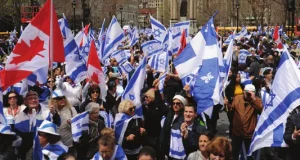
Thousands gathered in downtown Montreal this week to mark Yom Ha’atzmaut, as the Jewish community celebrated Israel’s 78th year of independence at Place du Canada while a smaller but vocal pro Palestinian protest took place within metres of the event. The annual celebration, a fixture in the city for more than two decades, drew thousands into the square, with Israeli flags, music and speeches marking the day. It remains one of the largest public Yom Ha’atzmaut gatherings in Canada and a central moment for Montreal’s Jewish community.
This year carried a different tone, unfolding against the backdrop of the ongoing war following the October 7 attacks. For many in attendance, the gathering was as much about showing up as it was about celebrating.
“We came out because this matters right now,” attendee Markus Shabtai told the Montreal Jewish News. “People feel it. This isn’t something you stay home for.”
Yonatan Benzarkan was more direct. “If Israel doesn’t fight this war, it doesn’t exist. It’s that simple.”
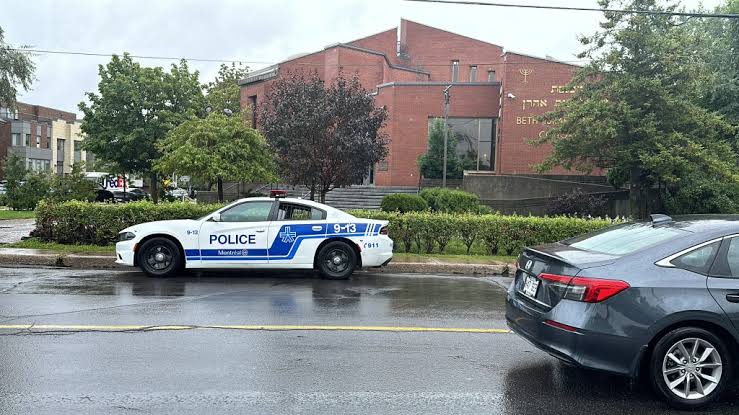
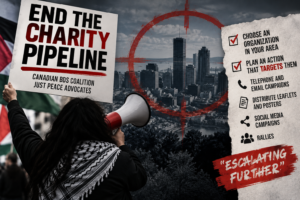
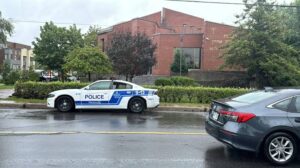
Within close proximity, pro Palestinian demonstrators gathered, chanting slogans and holding signs critical of Israel and its military campaign in Gaza. Police maintained a visible presence between the two groups, keeping them separated as chants carried clearly across the street.
“This isn’t something to celebrate,” one protester who asked to remain nameless, said. “People are dying. We’re here to make sure that’s not ignored.”
The contrast in scale was clear, but the proximity ensured that neither side could ignore the other, a dynamic that has become increasingly common in Montreal.
“Only in Montreal do you get this. Thousands celebrating and a protest planted right beside it,” attendee Miriam Cohen said. “Every time, it’s the same setup.”
The city has long been a focal point for demonstrations tied to the Israeli Palestinian conflict, a pattern that stretches back decades, including incidents such as the Concordia University Netanyahu riot, when a planned appearance by Israel’s prime minister was cancelled amid violent protests. Since the start of the current war, that activity has intensified, with repeated rallies, marches and campus demonstrations organized through established networks, including groups such as Solidarity for Palestinian Human Rights. Against that backdrop, major Jewish community events, including Yom Ha’atzmaut, are now routinely accompanied by counter protests staged nearby.
“No country in the world would tolerate what Israel has been dealing with,” said attendee Frank Farkas, “People talk about Gaza like this is happening in a vacuum. It’s not.”
Jennifer Levy pointed to the broader regional picture. “This isn’t just Gaza. This is Iran, Hezbollah, Hamas. It’s all connected. Israel is fighting all of it.”
Federal Liberal MP Anthony Housefather has said in recent months that “Israel was merely defending itself,” a position echoed by many in attendance.
For those at the rally, the decision to gather publicly carried added meaning this year.
“We’re celebrating our country, and they’re standing across the street trying to shut it down,” said Yehudah Minkolovich, “that tells you everything.”
The party lasted several hours with speeches, songs and dancing. It concluded without major incident, with both groups dispersing under police supervision.


Discover more from The Montreal Jewish News
Subscribe to get the latest posts sent to your email.