


By Joseph Marshall
Two Jewish sisters who escaped the Warsaw Ghetto, lived under false Catholic identities and later fought the Germans during the Warsaw Uprising have finally been identified by their real names more than 80 years after the war.
For decades, the girls were known only as “Marysia” and “Stefcia,” names that appeared in accounts of the Jewish children who survived outside the Warsaw Ghetto by selling cigarettes and carrying messages through the streets of the occupied city. They were, in fact, Miriam and Edna Szurek, two sisters whose identities became buried beneath the false names they needed to stay alive.
The connection was made by Janet Bond Brill, Edna’s daughter-in-law, while researching Little Edna’s War, a memoir based on hours of recorded testimony given by Edna later in life. Brill used family documents, wartime photographs, Polish Home Army identification cards, German prisoner records and postwar files to connect the names in the historical accounts to the two Jewish sisters.
Miriam and Edna were born in Warsaw and lived with their family at 18 Miła Street inside the Warsaw Ghetto. The address would later become known as the location of the main command bunker used by Jewish fighters during the 1943 Warsaw Ghetto Uprising.
Their mother died of starvation in the ghetto. Miriam and Edna were eventually smuggled to the so-called Aryan side of Warsaw, where they survived with the help of false papers obtained by their older brother, Yakov. The documents belonged to two Polish Catholic sisters who had died years earlier.
Miriam became Krystyna-Marja Skółkowska. Edna became Stefania Skółkowska.
The papers gave them a chance to survive, but survival depended on more than carrying the right documents. The girls had to live as Catholics, learn the prayers, attend church and respond naturally to names that were not their own. One wrong answer or moment of hesitation could expose them as Jews.
They later joined the Polish underground. Miriam became known as Marysia, while Edna used the underground name Kajtek. The girl later remembered as Stefcia had lived under three separate identities before she was 10 years old: Edna Szurek, the Jewish child she had been born as; Stefania Skółkowska, the Catholic girl whose papers kept her alive; and Kajtek, the young resistance courier.
When the Warsaw Uprising began on August 1, 1944, Miriam was 15 and Edna was nine. The uprising was launched by the Polish Home Army in an attempt to drive the Germans from Warsaw before Soviet troops reached the city. It was separate from the Jewish uprising inside the Warsaw Ghetto the year before.
Both girls took part in the fighting.
Miriam worked as an armed courier, carrying messages and supplies through the city while German troops attempted to crush the revolt. Edna also carried dispatches and was given a gun. Her age allowed her to move through areas where an adult courier would have immediately attracted attention.
Edna was wounded by a grenade but remained with the resistance until the uprising collapsed after 63 days of fighting. On October 2, 1944, the day the Polish Home Army surrendered and the day Edna turned 10, she was awarded the Polish Cross of Valor and a decoration recognizing her combat wounds.
She may have been the youngest decorated soldier in the history of the Polish Home Army.
After the surrender, Miriam and Edna were captured by the Germans and sent through the Stalag X-B prisoner of war camp at Sandbostel before being transferred to Oberlangen, a camp used to hold women from the Polish resistance. Both sisters survived the war.
Their story appeared in Joseph Ziemian’s book The Cigarette Sellers of Three Crosses Square, which documented Jewish children who escaped the Warsaw Ghetto and survived in hiding while selling cigarettes and working for the underground. The sisters, however, were identified only by their wartime names.
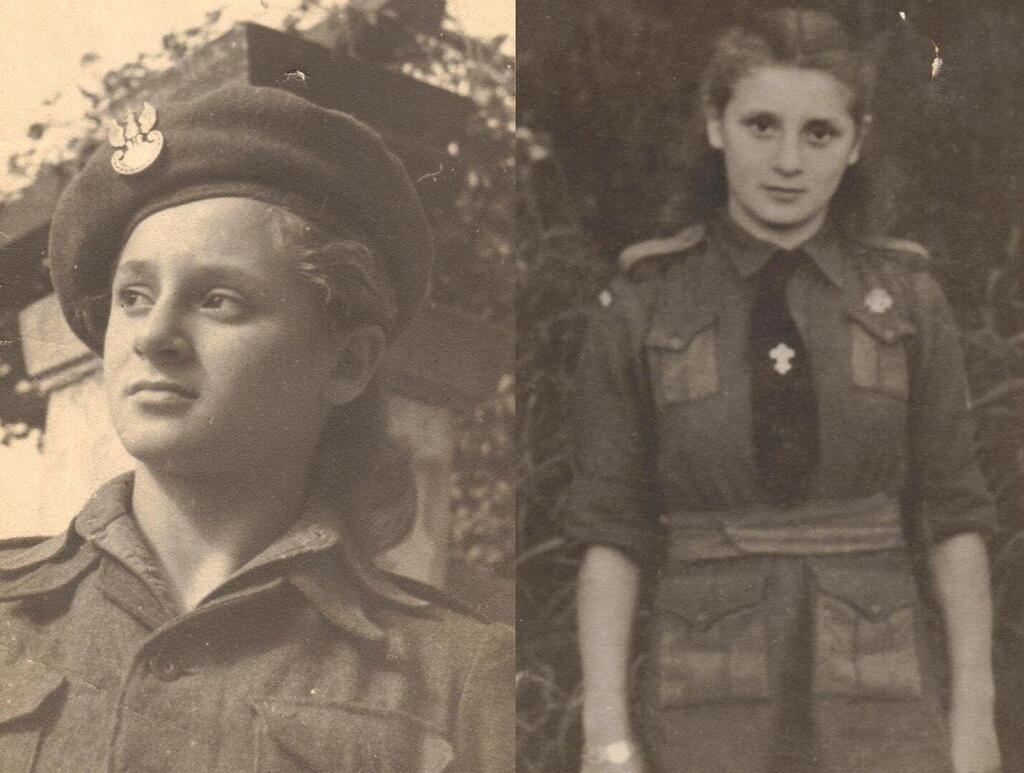
A photograph of Edna wearing the beret of the Polish Home Army was also preserved, but the girl in the photograph was known only as Stefcia. In at least one record, she was simply described as “Unknown Stefcia.”
The evidence connecting the girls to Miriam and Edna had not disappeared. It was scattered across family collections, archives and records written in different languages under different names.
One of the most important pieces was a Hebrew edition of Ziemian’s book presented to Miriam by Yad Vashem in 1963. The dedication recognized her as one of the children whose story appeared in the book, proving that her connection to Marysia had once been known, even though it was later lost to the wider public.
Another important clue was a newspaper clipping Edna had kept among her belongings. It included the photograph of the girl in the Polish Home Army beret beside the Hochman brothers, two Jewish children who also survived by selling cigarettes in Warsaw. The caption identified the girl as Stefcia, while the article referred to “Marysia and Stefcia-Kajtek” serving in the courier unit.
The photograph, the Catholic identity and the underground name all pointed to the same child.
Brill presented the evidence to Fundacja Życie Żydowskie, the Polish foundation behind the Papierosiarze project, which preserves the history of the Jewish cigarette sellers of Three Crosses Square. The foundation accepted the documentation and asked Brill to prepare biographies of Miriam and Edna for its historical records.
For more than eight decades, the sisters were remembered under names created to protect them from the Germans. Those names helped them survive, but they also followed them into history.
Marysia and Stefcia were not unknown children. They were Miriam and Edna Szurek, two Jewish sisters from Warsaw who escaped the ghetto, joined the resistance and fought the Germans while they were still children.


Discover more from Montreal Jewish News
Subscribe to get the latest posts sent to your email.