
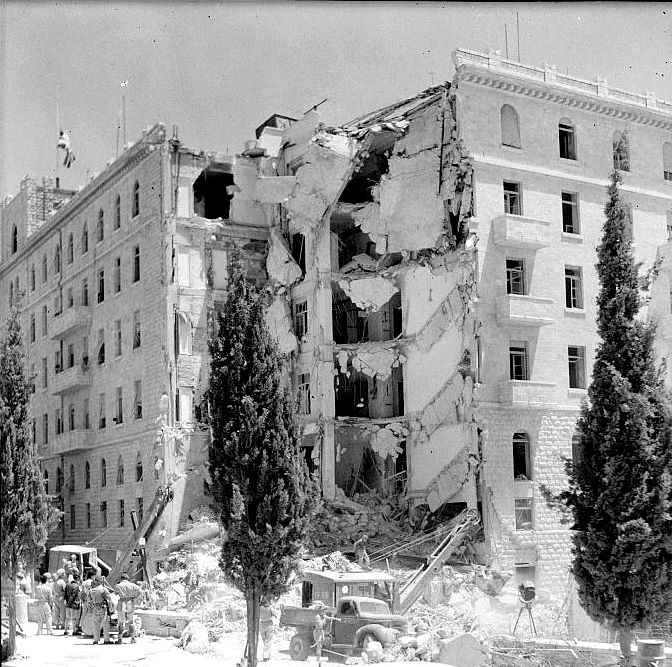
On July 22, 1946, the Irgun bombed the southern wing of the King David Hotel in Jerusalem. Eighty years later, on July 22, 2026, Jews will be preparing for Tisha B’Av. The timing is hard to ignore.
Tisha B’Av is the day we remember the destruction of Jerusalem, the loss of Jewish sovereignty and the long exile that followed. The bombing of the King David Hotel belongs to a very different chapter of Jewish history: the period when Jews decided they were no longer prepared to leave their future in the hands of other nations.
The King David Hotel attack was not random. The southern wing housed the headquarters of the British administration in The Mandate of Palestine, along with military and intelligence offices.
Three weeks before the bombing, Britain initiated a crackdown known as Black Sabbath and had raided Jewish communities, arrested Zionist leaders and continued restricting Jewish immigration to The Mandate of Palestine. Documents seized from the Jewish Agency during Black Sabbath had also been brought there.
The Holocaust was over, but Jewish survivors were still sitting in displaced-persons camps in Europe while the British decided how many would be permitted to enter the Jewish homeland. Refugee ships were intercepted. Jews trying to reach The Mandate of Palestine were arrested and placed in detention camps.
After everything that had happened in Europe, Jews were once again being told that their survival depended on the permission of someone else.
The Irgun attacked the centre of British rule. Its fighters brought explosives into the hotel in milk churns and placed them beneath the government offices. Warning calls were made to the hotel, the French Consulate and The Palestine Post. The French Consulate responded to the warning and warned the British to evacuate the hotel.
The British high command were warned. They scoffed and refused to evacuate the hotel. At 12:37 p.m., the bombs exploded and the southern wing collapsed. Ninety-one people were killed, including British soldiers and mandate citizens including both Arabs and Jews.
The death toll turned the attack into one of the most controversial acts of the Jewish revolt. The Irgun was branded a terrorist organization and Menachem Begin was branded a terrorist leader. That is still how much of the world chooses to remember it.
What is often treated as a footnote is that the Irgun warned the building before the explosion. The intention was to destroy the headquarters of the British government and the documents being held there, not to fill the hotel with bodies.
The warnings failed. People died. But the warnings were made. That was the kind of Jewish force that was beginning to emerge. These were men who were prepared to fight, but who still understood that there was a difference between attacking a government headquarters and deliberately targeting civilians.
These were men who had seen what happens to Jews when other people controlled their fate, who were told to wait until the British completed setting up the Mandate for the Jews. Quite simply, they were finished waiting.
The Jewish people had spent years begging governments to open their borders while Jews were being slaughtered in Europe. Those governments refused. After the war, Britain still expected Jews to accept restrictions on entry into their own homeland.
The bombing did not end British rule on its own, but it became one of the most powerful blows of the Jewish revolt. Less than two years later, Britain was gone and the State of Israel was declared.
This year, the anniversary of the King David Bombing falls on Erev Tisha B’Av. Tomorrow night, Jews will sit on the floor and read Eicha. We will mourn the Temples, Jerusalem and the centuries in which Jews had no country, no army and no control over what happened to them.
The men who bombed the King David Hotel understood that history very well. Many of them had watched European Jewry disappear while the world looked away. They had no interest in returning to the same arrangement.
Tisha B’Av reminds us what happened when Jerusalem was destroyed and Jews were scattered. July 22, 1946, reminds us of the generation that decided the scattering had gone on long enough.
Howie Silbiger is the Editor-in-Chief of The Montreal Jewish News. He is also the host of The Howie Silbiger Show on truetalkradio.com and Political Hitman on Israelnewstalkradio.com



Leave a Reply