


By Joseph Marshall
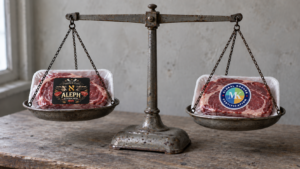
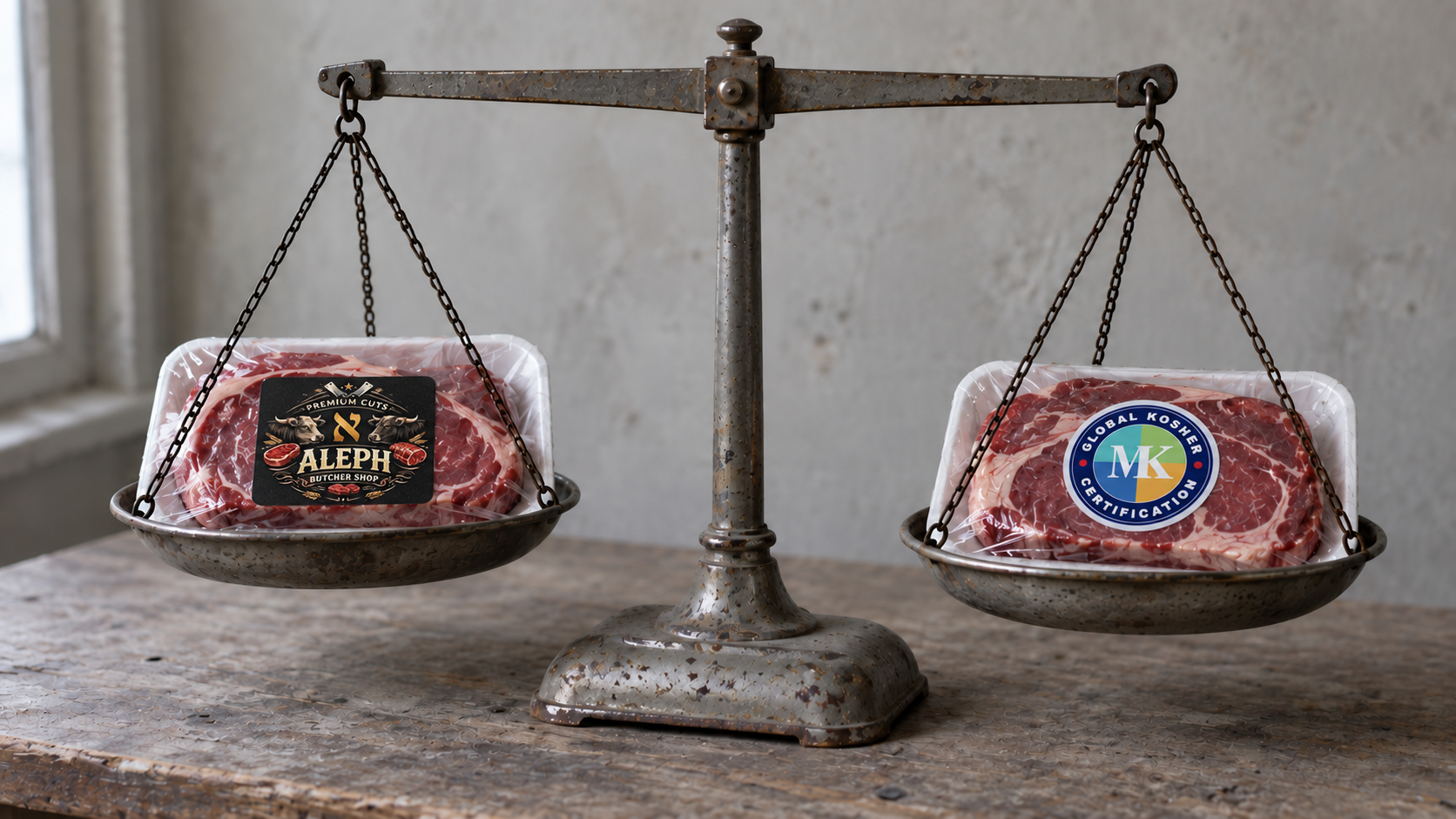
Aleph Meats says its KSR certified meat is being kept out of Montreal grocery stores, catering businesses and event venues because those establishments operate under MK certification. The Jewish Community Council of Montreal says it does not prohibit businesses from obtaining another kosher certification, but requires meat sold or served under its supervision to undergo its own approval process. Their filings before the Competition Tribunal set out different accounts of the restrictions, their purpose and their effect on businesses selling kosher food.
The proceeding began August 13, when Aleph applied for permission to bring a case under sections 77 and 79 of the Competition Act, concerning exclusive dealing and abuse of dominance. The JCC filed its written representations and an affidavit from executive director Rabbi Saul Emanuel on September 10, asking that the application for leave be dismissed with costs. The Tribunal has not decided whether Aleph may proceed with the full case or ruled on the competing allegations.
Aleph operates a butcher shop on Cavendish Boulevard in Côte Saint Luc and uses certification from KSR, Kosher Supervision of the Rabbinat, under Rabbi David Sabbah. In its proposed application, the company says the JCC’s involvement extends beyond certifying food producers to supervising the businesses that prepare, distribute and sell their products. Aleph alleges that the JCC uses contractual restrictions and informal pressure to prevent those businesses from buying products carrying another kosher certification.
The businesses and institutions identified in Aleph’s filing include Montpak International, the IGAs on Cavendish Boulevard, Van Horne Avenue and Côte Saint Luc Road, Cité Cachère, several synagogue event venues and Les Salons Chagall. Aleph says these restrictions deny it access to customers and prevent other certifiers from competing for the businesses supplying them. It also says a formal demand sent to the JCC on June 20 did not produce a response or a change in conduct.
The JCC disputes both the allegation of exclusivity and the evidence offered to support it. Its response says Aleph has not produced a contract containing the restriction it describes, has not established that it approached all the businesses it names and relies principally on two recordings and an email exchange. It also questions why Aleph apparently did not pursue retailers serving Jewish customers that operate without MK certification.
In Rabbi Emanuel’s affidavit, the JCC distinguishes between certification of an individual product and certification of a location where food is prepared or handled. A supermarket can sell a packaged MK certified product without itself holding MK certification, he says, and that applies to meat packaged before arriving at the store. A restaurant, butcher shop or supervised supermarket department, however, must meet MK’s requirements for the products and preparation covered by its certification.
For products other than meat, Rabbi Emanuel says the JCC accepts some outside Orthodox certifications when it considers their standards compatible with its own. For meat, whether packaged or unpackaged, it requires its own verification regardless of any other certification. He states that “a merchant or restaurant cannot maintain MK certification if the meat it uses has not been approved by MK.”
Rabbi Emanuel says this does not prevent a product or business from carrying more than one certification. The JCC submitted photographs of meat packaging bearing multiple certifications, which it says demonstrate that another organization’s approval does not disqualify a product from receiving MK certification. Its position is that outside certification cannot replace MK’s own supervision and approval.
Aleph’s memorandum approaches the issue through access to the market. It argues that reliable kosher certifications serve the same commercial purpose for many consumers, even where religious practices differ, and that businesses choosing another certifier should be able to sell to establishments already serving those consumers. It also points to supermarkets that sell both kosher and non kosher food, arguing that separately packaged meat carrying another kosher certification should be able to appear on their shelves.
The JCC rejects the premise that kosher certification is a standardized service whose providers can be treated as interchangeable. Rabbi Emanuel says there are differences of opinion between MK and KSR over the appropriate kosher standards. In the JCC’s written response, lawyer Jean El Masri argues that Aleph chose not to seek MK certification but wants access to its benefits without complying with its requirements.
The IGA Van Horne evidence receives attention from both sides. Aleph’s memorandum reproduces a conversation in which a store representative says bringing in Aleph’s products could cost the store its MK certification and the customers who rely on it. According to the transcript presented by Aleph, Boyarsky specifically asks about wrapped products placed in display cases rather than meat handled at the deli counter, and the representative maintains that the restriction applies.
The JCC says the recording was made without the employee’s knowledge and that his account is contradicted by the actual agreement with the store. It filed that agreement as an exhibit to Rabbi Emanuel’s affidavit, with its written response also stating that the contract places this type of decision with Sobeys.
The agreement’s Schedule A requires the establishment to follow kashrus requirements specified by the Vaad Ha’ir and identifies the Vaad Ha’ir as its sole kashrus authority and certifying agency, with decisions that are final and binding. Another provision confines the sale of specified fresh prepackaged kosher foods, including meat, poultry, deli products, fish and prepared foods, to the designated kosher counter. It also permits prepared foods from other MK establishments when sealed and marked with MK identification.
Rabbi Emanuel says the agreement contains no exclusive dealing clause and requires compliance with the JCC’s kosher standards. Aleph’s original memorandum, filed before the JCC supplied the agreement, says it expected to obtain the relevant contracts through the discovery process if the case proceeds. Its argument is that restrictions on purchasing and selling competing products can constitute exclusive dealing whether imposed through written contracts or informal arrangements.
Aleph also relies on a voice message attributed to a representative of Cité Cachère, reproduced in its memorandum: “you know that I’m under the ‘MK’, so I cannot use or sell your meat and you know that.” The JCC says the message does not establish exclusive dealing and is consistent with its requirement that meat used by a business under MK supervision receive MK approval.
For banquet halls, Rabbi Emanuel describes a separate requirement. He says a kitchen used for food preparation outside MK standards must undergo a thorough cleaning and preparation process before it can again be used for an MK certified event. Because repeating that process after each event catered by a business without MK certification is not viable, he says, banquet halls under MK supervision must hold events where all food and preparation are MK certified. Aleph includes access to event venues among the restrictions it wants the Tribunal to remove.
The Montpak dispute concerns arrangements for slaughter rather than retail sales. Aleph lists the slaughterhouse and meat processor among the businesses it says it cannot access and relies on an email exchange as evidence. Rabbi Emanuel says Boyarsky sought an arrangement involving KSR during slaughter operations supervised by MK and COR, which Montpak declined on the ground that it would not be fair to those organizations.
The JCC denies directing Montpak not to deal with Aleph. Rabbi Emanuel says MK’s role is limited to supervising slaughter, that it has neither an exclusivity agreement nor a written contractual relationship with Montpak, and that the correspondence contains no threat or instruction from MK requiring Montpak to refuse Aleph’s business.
The parties also disagree over the size of the market and Aleph’s claimed losses. Aleph defines the relevant market as kosher certification services for commercial food products and establishments in Greater Montreal, estimating the JCC’s share at between 85 and 95 percent. Its memorandum cites 173 local establishments carrying MK certification compared with 34 carrying KSR certification, and says the KSR list contains no grocery stores or event venues.
In his affidavit, Aleph president Menachem Boyarsky puts the company’s annual revenues at approximately $2.4 million and says revenues of $100 million could reasonably be expected if it could expand into the outlets it says are presently inaccessible. On that basis, he says Aleph is being deprived of roughly 98 percent of its potential market. He also says the business was built for a larger scale, has incurred expenses on that basis and could close without access to those additional outlets.
Rabbi Emanuel challenges those figures, noting that Aleph began operating toward the end of April and had been open for approximately four months when it filed its application. He says no financial document supports the $2.4 million figure and that the affidavit does not explain whether it refers to gross or retail sales. He also disputes the $100 million projection.
The JCC affidavit states that Montreal gross sales of MK certified beef and poultry amounted to less than $40 million in 2025. It supplies letters from three producers, listing approximately $17.8 million for Kosher Mehadrin, $6.93 million for Metzelei or Glatt’s and $12.79 million for Marvid Poultry. The Marvid letter specifies that its figure covers the financial year ending May 31, 2025, while the other two letters identify their figures by year.
Using those figures, Rabbi Emanuel argues that Aleph’s projection would require other producers and merchants to stop selling, Orthodox customers to purchase Aleph products without MK certification and meat consumption to more than double. He also disputes the claim that Aleph is confined to a single outlet, naming retailers outside MK supervision, including Lipa’s, Walters, Motty’s, several Maxi and PA locations, Walmart on Décarie and two Costco locations. These are outlets he identifies as not subject to MK’s purchasing requirements, not businesses shown in the affidavit to have agreed to stock Aleph products.
Aleph argues that the alleged restrictions affect consumers as well as its own sales, reducing product choice, protecting certification fees from competition and impeding the expansion of other certifiers. The JCC responds that Aleph has not supplied reliable economic evidence connecting its certification requirements to an improper competitive purpose or a substantial reduction in competition. Its written representations state: “Harm allegedly suffered by the Applicant is not, by itself, evidence of harm to competition.”
The JCC also questions Boyarsky’s motives, referring to a May 2025 Court of Quebec judgment involving another company associated with him and the judicial confirmation of an arbitration award from the Rabbinical Tribunal of Montreal. Rabbi Emanuel attaches that judgment and cites passages in which the judge rejected aspects of Boyarsky’s account and questioned his credibility in that dispute. He alleges that the present proceeding is a reaction to the earlier judgment and the JCC’s position concerning the arbitration. That allegation forms part of the JCC’s evidence and argument, rather than a finding by the Competition Tribunal about the reasons for Aleph’s application.
Alongside its factual objections, the JCC argues that the relief Aleph seeks would interfere with religious determinations. It cites the Supreme Court decisions in Syndicat Northcrest v. Amselem and Highwood Congregation v. Wall, arguing that religious controversies cannot properly be decided by the Tribunal and that intervention would infringe its religious freedom and that of Orthodox community members.
Aleph’s requested orders would require the JCC to remove formal and informal restrictions preventing slaughterhouses, grocery stores, caterers and venues from dealing with suppliers carrying other kosher certifications. It also seeks temporary relief while the proceeding is underway, payments based on benefits derived from the challenged conduct for distribution among affected parties, an administrative monetary penalty and costs. Its application invokes a penalty provision with a ceiling calculated by reference to $25 million, three times the benefit derived from the conduct or, where that benefit cannot reasonably be determined, three percent of annual worldwide gross revenues. These are remedies Aleph is requesting, not penalties the Tribunal has imposed.
Before those requests can proceed to a full determination, Aleph must obtain leave. Its memorandum relies on both the claimed direct and substantial effect on its business and the public interest. The JCC says neither route has been supported by sufficiently credible evidence and asks that the proceeding end at that stage.
On September 17, Justice Jocelyne Gagné allowed Aleph to amend its materials and submit additional evidence by September 30. The JCC may file an amended response and limited additional affidavit evidence by October 13, after which Aleph may reply within seven days of receiving that response. The order addresses the completion of the written record, with the parties’ allegations and requested remedies still before the Tribunal.


Discover more from The Montreal Jewish News
Subscribe to get the latest posts sent to your email.