
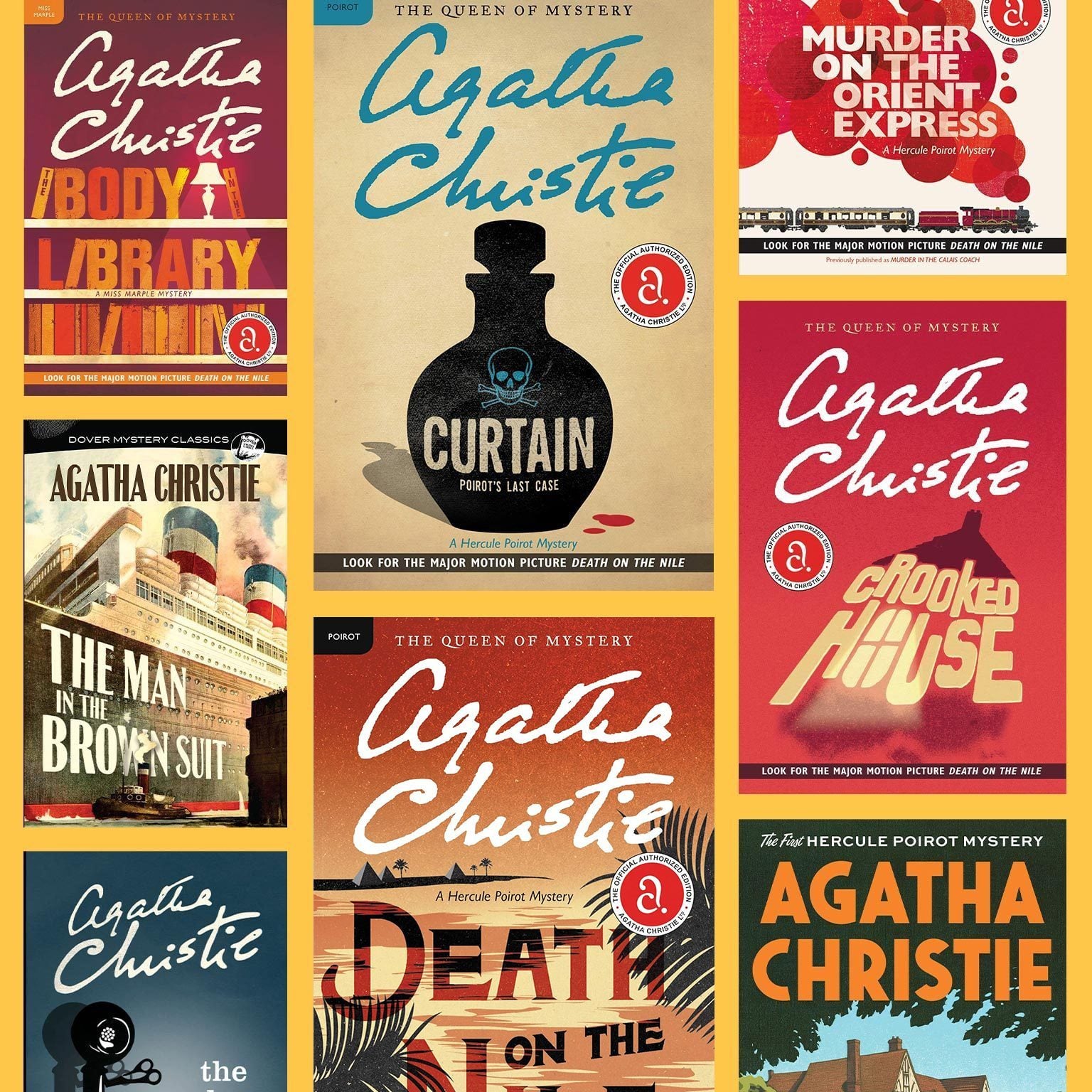
Agatha Christie, the bestselling mystery writer whose novels have entertained generations of readers, routinely portrayed Jews as greedy, dishonest and suspicious outsiders, often using antisemitic stereotypes to mislead readers about the identity of a murderer. According to new research from the University of Copenhagen, the prejudice was so deeply embedded in her writing that it continued even after the Holocaust, although in a less obvious form.
Historian Sofie Lene Bak examined Christie’s detective novels as part of a broader study into antisemitism in European society following the Second World War. Her findings, published in Scandinavian Jewish Studies, reveal how one of the world’s most celebrated authors incorporated anti-Jewish prejudices into stories that have sold more than two billion copies and remain popular in books, television and film.
In Christie’s 1932 novel Peril at End House, a character describes a wealthy man by remarking that he is Jewish but surprisingly decent. His money, expensive automobile and Jewish identity are presented together, reinforcing the familiar stereotype of Jews as wealthy and materialistic. The suggestion that being a decent person was somehow unusual for a Jew apparently required no further explanation for Christie’s readers.
Bak discovered that Jewish characters were frequently introduced as suspicious figures, people whose foreignness, wealth or behaviour made them appear capable of murder. They were often distractions, deliberately placed in the story to draw attention away from the real criminal. Christie could exploit the prejudices of her audience, knowing that readers might naturally suspect the Jewish character before discovering that somebody else had committed the crime.
What makes Bak’s findings particularly disturbing is that Christie’s treatment of Jews did not end with the Second World War. Although her language became less explicit, the stereotypes survived, including in a novel published just five years after the liberation of the Nazi death camps.
In A Murder Is Announced, published in 1950, Christie introduced Mitzi, a German cook who had survived Nazi persecution. While the character is never explicitly identified as Jewish, Bak argues that her background makes the connection unmistakable. Mitzi is portrayed as paranoid, unpleasant and unreliable, with other characters questioning whether her accounts of suffering under the Nazis were even true.
Millions of Jews had just been murdered in Europe, entire communities had been destroyed, and survivors were still struggling to rebuild their lives. Yet Christie created a character associated with Nazi persecution whose experiences were treated as something to be doubted and whose behaviour was apparently intended to entertain her readers.
Bak describes Mitzi as a brutal caricature, suggesting that Christie intended the character to provide comic relief. It was an extraordinary portrayal in a book published only five years after the Holocaust, particularly from a writer whose enormous popularity gave her considerable influence over how ordinary readers viewed the world.
The researcher also found that while Christie sometimes challenged prejudices against other foreigners in her novels, anti-Jewish stereotypes were frequently allowed to stand without criticism. Jews could be depicted as greedy, calculating or untrustworthy, with those characteristics treated as an ordinary part of the fictional world.
Christie’s writing has not escaped scrutiny in more recent years. Some offensive references have been removed from newer English-language editions, while film and television adaptations have eliminated or substantially altered Jewish characters. Bak, however, does not favour rewriting the original books, arguing that preserving the passages allows readers to recognize the prejudices that existed when they were written.
For decades, millions of readers searched Christie’s novels for clues about the murderer, carefully examining the behaviour of every suspect. What many apparently overlooked was how often a Jewish character became suspicious simply by being Jewish.
Christie died in 1976, having become one of the most successful writers in history. Her novels remain fixtures in bookstores and libraries, while new adaptations continue to introduce her characters to younger generations. Her literary reputation has survived almost untouched, despite passages that expose attitudes toward Jews which today would be recognized immediately as antisemitic.




Leave a Reply