
By Howie Silbiger – Editor-in-Chief
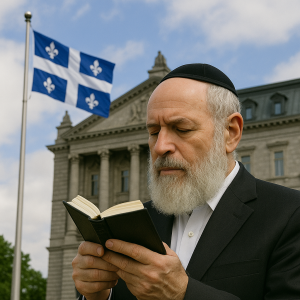
The Quebec government is preparing to introduce legislation that would ban prayer in public, a move framed as a response to Muslim street gatherings but one that has serious consequences for the Jewish community as well. Minister of Secularism Jean François Roberge confirmed that the bill will be tabled this fall, rejecting the advice of an advisory commission that had recommended leaving regulation to municipalities. Premier François Legault made clear last December that he does not want to see prayers in parks or streets, saying worship should happen inside churches or mosques, not in public spaces.
For Jews in Quebec, the effects of such a law would be immediate and far reaching. Outdoor prayer is not rare or incidental in Jewish life, it is embedded in tradition. One of the most visible examples is the Tashlich service during the High Holidays, when Jews gather beside a body of water to symbolically cast away their sins. Many Jews in Montreal go to public park fountains or natural rivers and lakes in the city for this ritual, which by its very nature cannot take place indoors.
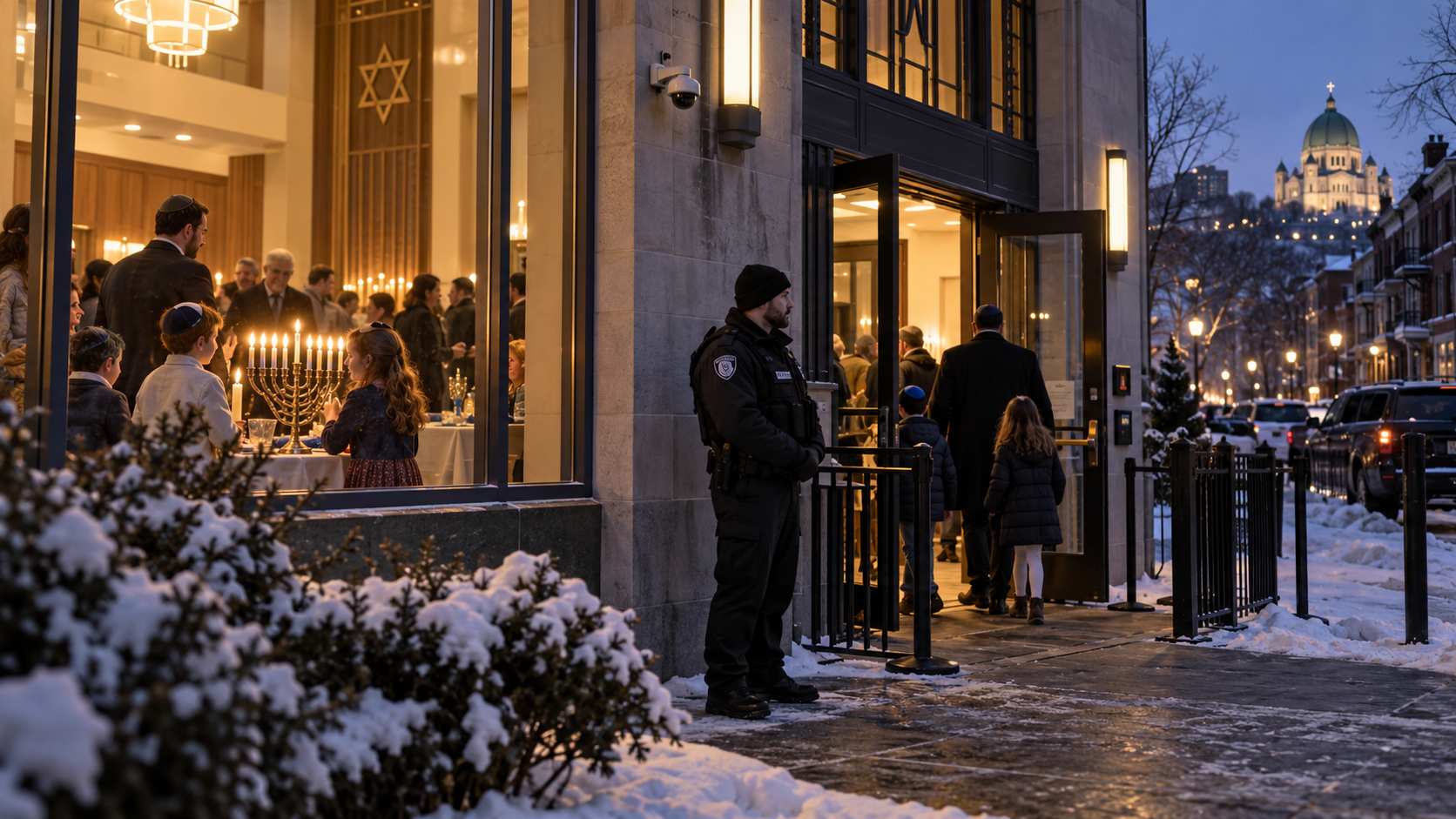
Another upcoming holiday that depends on public space is Simchas Torah. On that day Jews dance in the streets with Torah scrolls, celebrating and singing together. The streets around synagogues in Montreal and elsewhere often fill with people expressing joy in their faith. A blanket ban on public prayer would place these celebrations at risk of fines or even criminalization. During the COVID pandemic, when synagogues were closed, Jews often held prayers outside in front of their homes and places of worship. These gatherings were not protests or political statements but essential acts of faith.
The move to legislate against public prayer follows the same path as Law 21, Quebec’s so-called secularism law. That law was promoted as a restriction on Muslim women wearing hijabs and niqabs in public service, but it swept far wider. Orthodox Jewish men wearing kippas and Sikh men wearing turbans were equally barred from public service jobs. What was sold as a defense of secularism has in reality been a broad attack on religious visibility. Many fear this new prayer ban is the next step, an attempt to scrub faith entirely from Quebec’s public spaces.
This struggle does not exist in isolation. Around the world, governments have taken aim at religious practice under the banner of neutrality and modernity. France outlawed headscarves and yarmulkes in schools and public offices, claiming to defend secularism while humiliating Jews and Muslims in the process. Germany has repeatedly debated bans on kosher and halal slaughter, striking at the core of Jewish and Muslim dietary laws. In the former Soviet Union, Jews were forbidden from studying Torah openly or gathering for prayer, their religion driven underground in the name of progress. In Spain centuries earlier, Jewish processions and festivals were outlawed before the Inquisition forced Jews to convert, flee, or die. Again and again history shows that laws introduced to control or conceal one community’s expression of faith end up crushing many others.
The pattern is loud and familiar. What begins as discomfort with Muslims praying in public, risks criminalizing Jews who gather for Tashlich by the Lachine canal or their local public park, who circle their synagogues with Torah scrolls on Simchas Torah, who turn to the streets when synagogues are closed or full. Across centuries and continents, the pattern has repeated: when the state decides where and how religion may be practiced, it is never only one faith that pays the price.
The Centre for Israel and Jewish Affairs expressed support for action against what it described as radicalized street prayers, but Jewish leaders and communities are already warning of unintended consequences. Civil liberties groups argue the law would trample rights guaranteed under the charters, shrinking Quebec into a province where faith is allowed only in private, never in public. The Liberals have pointed out that municipalities already have the tools to regulate gatherings and that no evidence has been presented showing public prayer is on the rise.
The broader context is a global war on visible religion. In China, entire faith communities are surveilled and controlled. In Western Europe, religious dress and food laws are steadily curtailed. In North America, Jewish and Christian students alike have seen prayer and observance pushed out of schools and campuses. Quebec now positions itself on the front line of this struggle, moving from restricting symbols to banning prayer itself.
What is at stake is not only the right of Muslims to pray in Montreal streets but the ability of Jews to live their religion openly. Tashlich, Simchas Torah, and countless moments of communal devotion could be erased from public life. The question is no longer whether Quebec is reinforcing secularism but whether it is joining a long and troubling history of governments that, under the pretense of neutrality, have waged war on faith.


Leave a Reply