
A new exhibition at the Jewish Museum in New York is displaying several objects from a medieval Jewish treasure that was buried in the German city of Erfurt during the Black Death and remained hidden for roughly 650 years.
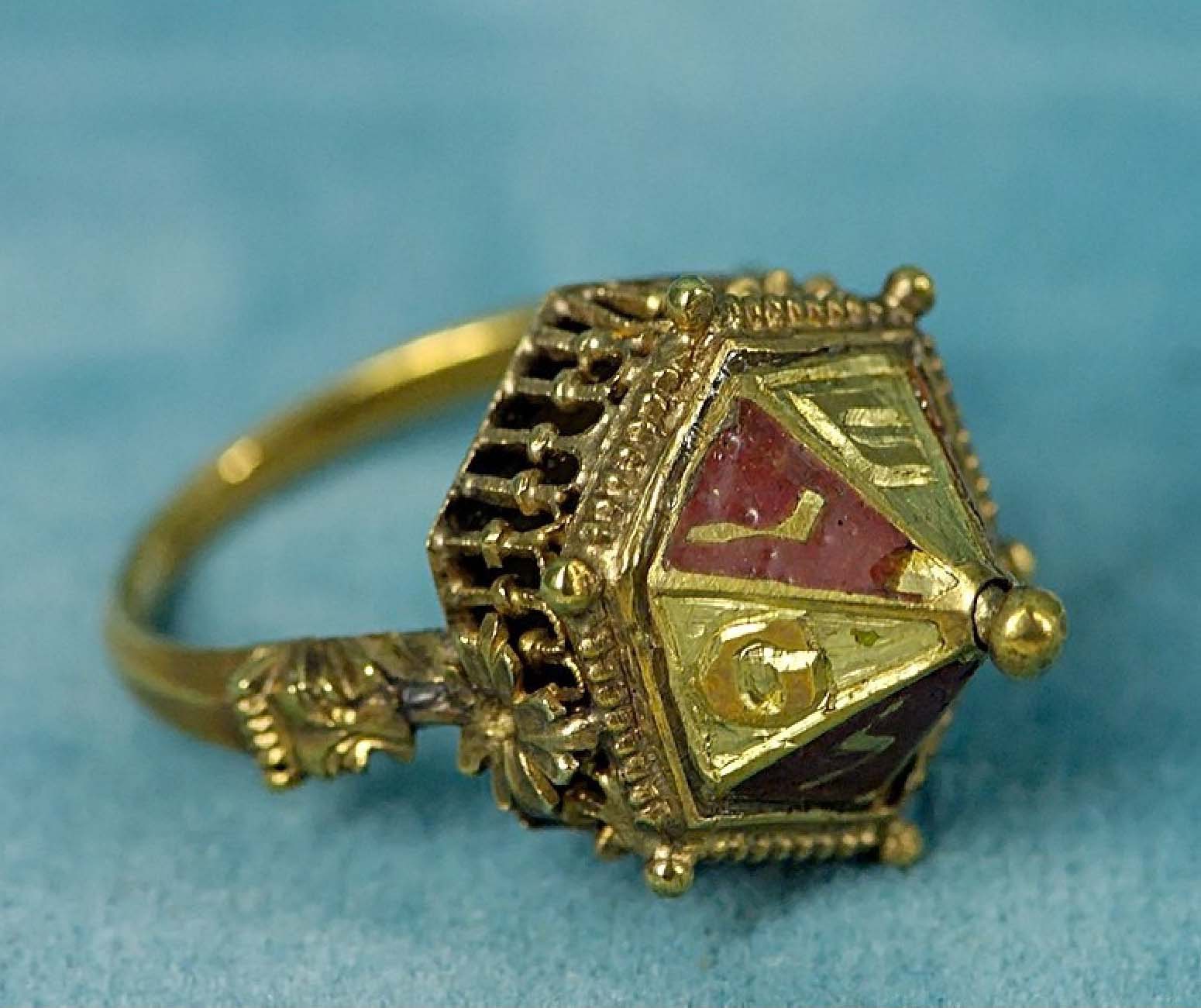
The Erfurt Treasure was discovered in 1998 during construction work near the city’s medieval synagogue. Archaeologists recovered 3,141 silver coins, 14 silver ingots, silver vessels and more than 700 pieces of jewellery and metalwork. The collection weighed close to 30 kilograms and included one object that immediately identified at least part of it as Jewish: a gold wedding ring bearing the Hebrew words Mazal Tov.
The collection had been buried at a time when Jews across Europe were being accused of poisoning wells and deliberately spreading the plague. The accusations were false, and Pope Clement VI publicly rejected them, pointing out that Jews were dying from the disease as well and that the plague had spread into places where no Jews lived. That did little to stop the violence.
In town after town, Jews were arrested, tortured and killed. Confessions extracted under torture were circulated as evidence that Jews had poisoned wells, while debts owed to Jewish lenders were cancelled and Jewish property was seized. In Strasbourg, hundreds of Jews were burned. Similar attacks took place across parts of Germany, France and Switzerland.
Erfurt’s Jewish community was attacked on March 21, 1349. The community had existed in the city for generations and included merchants, moneylenders, property owners and established religious institutions. Surviving medieval records have allowed historians to reconstruct parts of the Jewish quarter and identify the owner of the property where the collection was eventually found.
His name was Kalman von Wiehe.
Kalman was a Jewish moneylender and the last documented Jewish owner of the property before the massacre. There is no surviving record stating that he personally buried the valuables, but historians consider him the most likely owner because of the location of the discovery, the dating of the objects and the property records connected to the house.
If the attribution is correct, Kalman or someone in his household hid a significant amount of portable wealth shortly before the Jewish community was destroyed. It was never recovered by its owner.
The wedding ring is one of the best known pieces in the collection. It is a large ceremonial ring made of gold and topped with a miniature Gothic structure. Medieval Jewish wedding rings of this kind were generally used during the ceremony rather than worn as everyday jewellery. Its Hebrew inscription leaves little doubt about what it was made for.
A similar discovery was made in Colmar, France, in 1863, when another medieval Jewish cache was found hidden inside the wall of a house on the old Rue des Juifs. That collection also contained coins, jewellery and a Jewish wedding ring bearing the words Mazal Tov. Historians believe it too was hidden during the same wave of Black Death persecutions.
The repeated discovery of these caches provides a rare look at what happened inside Jewish homes while the persecutions were unfolding. The historical record documents massacres, confiscations and expulsions, but the buried objects show another part of the story. Families who understood that they were in danger hid valuables in places where they believed they could retrieve them later.
Several pieces from the Erfurt collection are now part of the Jewish Museum’s Sacred Splendor exhibition in New York, which brings together more than 160 Jewish and Christian objects from medieval Central Europe. Seven objects from Erfurt are included, returning part of the collection to New York for the first time since 2009.
The exhibition runs through February and gives visitors a chance to see objects that spent centuries underground after being hidden during one of the darkest periods in the history of European Jewry.





Leave a Reply