

Few phrases have done more damage to modern Jewish discourse than “tikkun olam.” That may sound strange. After all, who could possibly be against repairing the world? The problem is not the concept itself; the problem is what many people have turned it into.
Traditionally, tikkun olam was never a vague call to support every fashionable social cause of the day. It was never a replacement for Judaism. It was not a substitute for Torah, mitzvot, Jewish learning, Jewish continuity, or Jewish peoplehood. Yet somewhere along the way, many Jews began treating tikkun olam as if it were the entirety of Judaism.
The results have not been encouraging.
For decades, countless Jewish organizations, institutions, and activists poured enormous energy into fixing the world’s problems. They championed causes that had little to do with Jewish life and often had nothing to do with the Jewish community. They marched for others, fundraised for others, organized for others, dedicated themselves to making society more just, fair, equitable and compassionate.
Don’t get me wrong, there is nothing inherently wrong with any of that, the question is what happened when Jews needed those same allies in return. The answer has been painful.
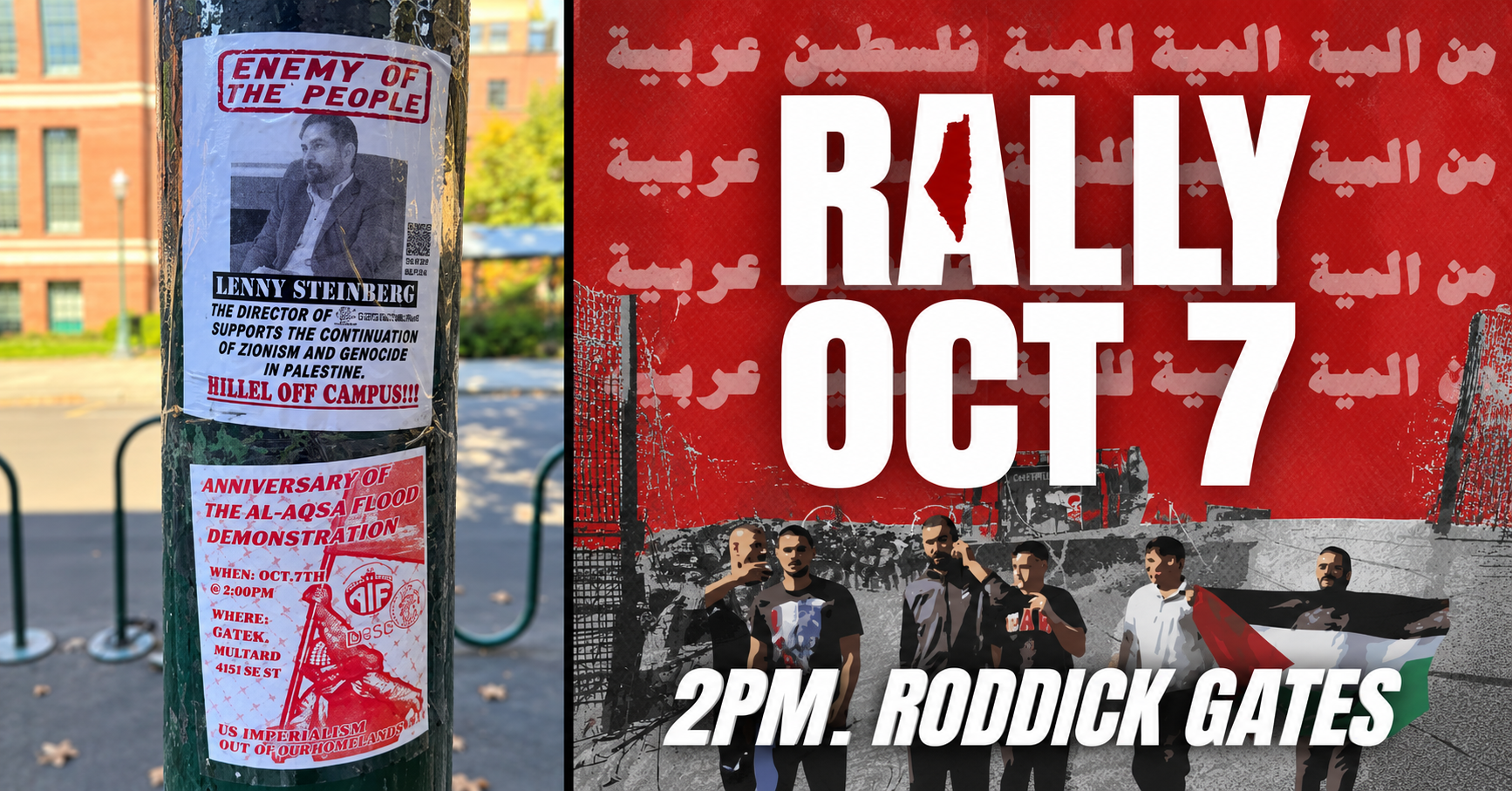
Since October 7, Jewish communities around the world have been forced to confront an uncomfortable reality. Many of the movements, organizations, activists and coalitions that Jews spent decades supporting either remained silent when Jews were attacked or actively turned against them.
Some justified the murder of Jewish civilians, while others minimized it. Many could not even bring themselves to condemn it without qualification. The same people who spoke endlessly about inclusion suddenly discovered exceptions. The same groups that claimed to stand against hatred often found elaborate explanations for why anti Jewish hatred was somehow different. The same activists who insisted that every minority deserved protection had very little to say when Jews were threatened, assaulted, harassed, attacked or excluded.
This should force a serious re-examination of what tikkun olam has become.
Too often, it has functioned as a one-way transaction. Jews are expected to show up for everyone else, but everyone else is under no obligation to show up for Jews. That is not repairing the world, it is simply making Jews responsible for everyone else’s problems while treating Jewish concerns as optional.
Judaism never taught that Jews should neglect their own community in pursuit of universal causes, in fact, Jewish tradition says precisely the opposite. Judaism teaches that the poor of your city come first, your family comes first, your community comes first, responsibility starts at home.
A healthy Jewish community should care about the broader world. Jews should be generous, compassionate and help others. These values are deeply rooted in our tradition, but none of those obligations require us to ignore our own needs.
There is a difference between helping repair the world and pretending the world will love us if we help enough. One is a Jewish value, the other is an illusion.
The events of the last few years have exposed that illusion in painful detail. Many Jews are beginning to realize that acceptance cannot be purchased through activism, alliances, or good intentions. Jewish security ultimately depends on strong Jewish communities, strong Jewish institutions, and Jews who are willing to stand up for themselves.
Maybe it is time to stop treating tikkun olam as the center of Judaism and return it to its proper place, an important Jewish value, but not the defining one.
Judaism is fractured. Before repairing the world, perhaps it is time for a little Tikkun HaKehillah.
Howie Silbiger is the host of The Howie Silbiger Show on truetalkradio.com and Political Hitman on israelnewstalkradio.com. He is the Editor in Chief of The Montreal Jewish News



Leave a Reply